

Lucia Sanchez
Filmmaker
Spring 2027
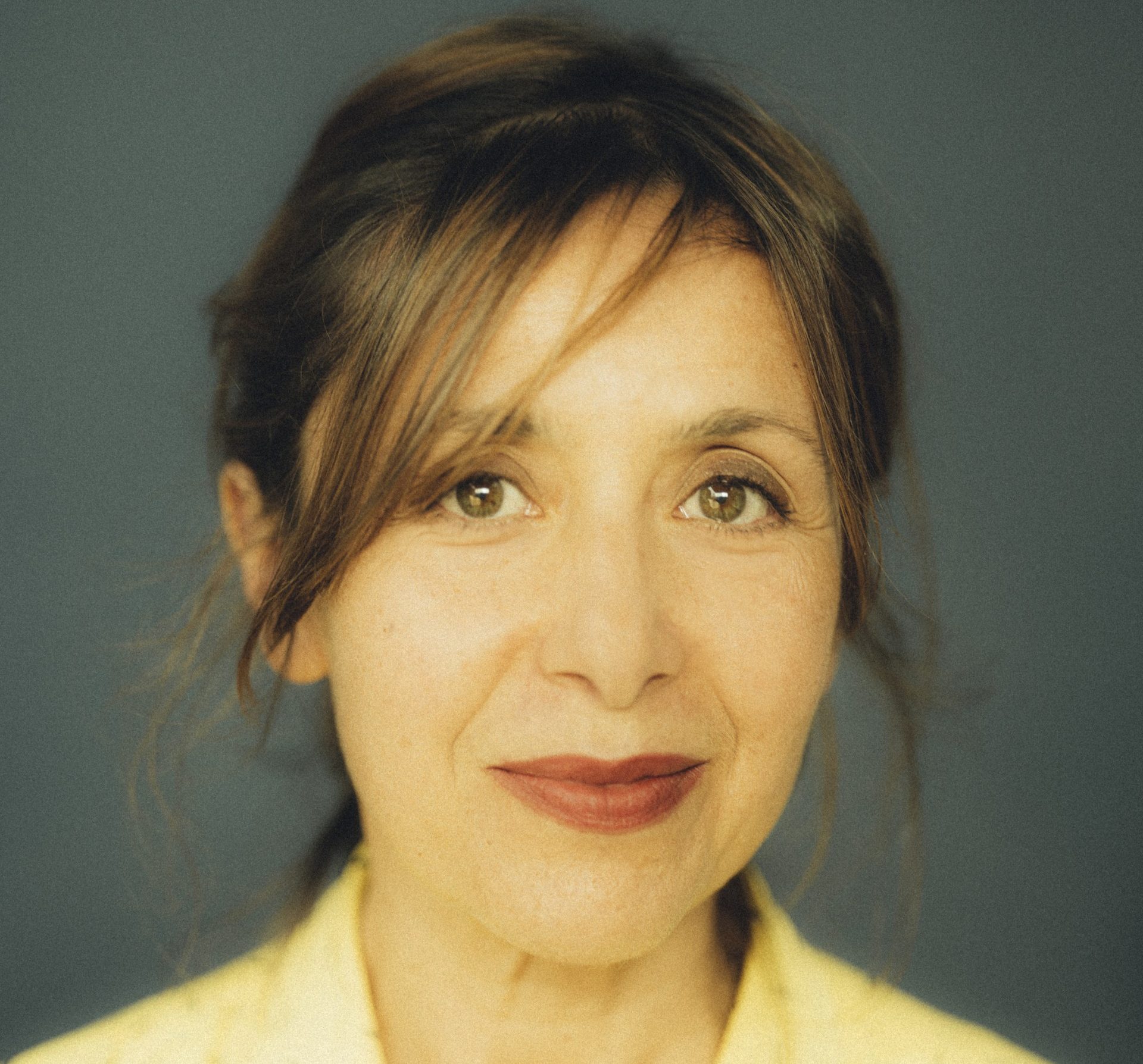
- Cinema
- New York

“My project for Villa Albertine is the development of a film devoted to Victoria Kent and Louise Crane. At the intersection of documentary, historical investigation, and cinematic essay, the film explores their romantic, intellectual, and political relationship, as well as the forms of resistance they devised in exile.”
I am a Spanish actress and film director based in Paris. For more than twenty years, I have developed a cinema at the intersection of reality and fiction, in which documentary investigation informs a search for cinematic forms.
Trained in directing at the EICTV in Havana, I have made around twenty films exploring working-class and popular settings, questioning—with humour and critical distance—the contradictions of our societies. While observing the present remains central to my work, I have become increasingly interested in figures relegated to the margins of history. Through them, I seek to understand how their commitments resonate with contemporary issues and offer other ways of narrating the twentieth century.
I am currently making I Have Always Said “We”, devoted to a major figure of Spanish anarchist feminism whose first and last names I share. This coincidence became the starting point for a personal investigation into Mujeres Libres, a feminist movement long relegated to the margins of narratives of the Spanish Civil War. By retracing their struggle, the film examines the mechanisms through which historical forgetting is produced.
This work now continues with a project devoted to Victoria Kent and Louise Crane, which shifts this reflection toward Republican exile. Through their trajectories, I pursue the same research into forms of resistance, networks of solidarity, and intellectual communities invented by women whose roles history has long minimized—or even erased.
Alongside her work as an actress, Lucía Sanchez has directed more than twenty documentaries, including Las Amigas—winner of the Best Director Award at the Dakino Film Festival—Profanations—winner of the Audience Award at the Créteil International Women’s Film Festival—Mafalda, Come Back!, selected at FIDBA in Buenos Aires, and Pick-up, a wordless film co-produced by La Lucarne–Arte and selected at Visions du Réel in Nyon and the International Film Festival Rotterdam. Her view of French society runs through a significant part of her work, observing the rituals and contradictions of everyday life with humour and formal freedom.
My project for Villa Albertine is the development of a film devoted to Victoria Kent and Louise Crane, based on their shared trajectory across Spain, France, and the United States. At the intersection of documentary, historical investigation, and cinematic essay, the film explores their romantic, intellectual, and political relationship, as well as the forms of resistance they devised in exile.
I discovered Victoria Kent through Cuatro años en París, her account of life in hiding in occupied France. This reading became the starting point for a reflection on the traces left by Francoism beyond Spain’s borders. Following her path, I discovered Louise Crane, the American patron with whom she shared her life for more than thirty years. Together, they founded Ibérica por la libertad in New York: an essential journal of Spanish exile that circumvented Francoist censorship, circulated prohibited information, and sustained a space for intellectual debate at a time when Western democracies were restoring relations with Franco’s regime.
Through this publication, I discovered a network of exiled artists and intellectuals who, from New York, continued to keep another Spain alive. It is this community—as much as the destinies of Victoria Kent and Louise Crane—that the film now seeks to make visible.
The film will bring this history to life through its traces: correspondence, archives, photographs, and landscapes, as well as images of the New York intellectual life that surrounded their political engagement.
The Villa Albertine residency will enable me to consult archival collections devoted to Victoria Kent and Ibérica, notably at Yale, while continuing this investigation in New York and in other locations connected to their history. Meetings with historians, archivists, and specialists in Spanish exile will inform both the film’s writing and its visual approach. By the end of the residency, I hope to have assembled a body of archival material, location research, and encounters that will allow me to complete the screenplay and define the film’s visual framework.
The second part of Victoria Kent’s life unfolded in the United States. Her meeting with Louise Crane gives the project its full transatlantic dimension. In the 1950s and 1960s, their New York apartment became a discreet refuge for writers, intellectuals, and European exiles; it was there that Ibérica por la libertad was conceived and circulated.
I wish to carry out this research in New York, as well as in several institutions and locations that structure the story. At Yale’s Beinecke Library, I will consult the Louise Crane–Victoria Kent Collection, whose exceptional richness includes correspondence, diaries, address books, editorial archives, and files devoted to support networks for Spanish refugees. These documents will allow me to reconstruct their political engagement, as well as the intimate texture of their lives.
I also wish to seek out film archives that could help restore the world in which they moved: literary salons, receptions, New York artistic circles, Spanish exile networks, and the intellectual communities that gravitated around Ibérica.
Finally, I will travel to Woods Hole, Massachusetts, where Louise Crane and Victoria Kent stayed at the Crane family home, and to Redding, Connecticut, where they are now buried side by side. By bringing archives into dialogue with the places they inhabited, I aim to bring forth an embodied memory in which landscapes, spaces, and material traces become the true witnesses of their history.
In partnership with

Elda Productions