

Hanako Murakami
Artist
April-June 2026
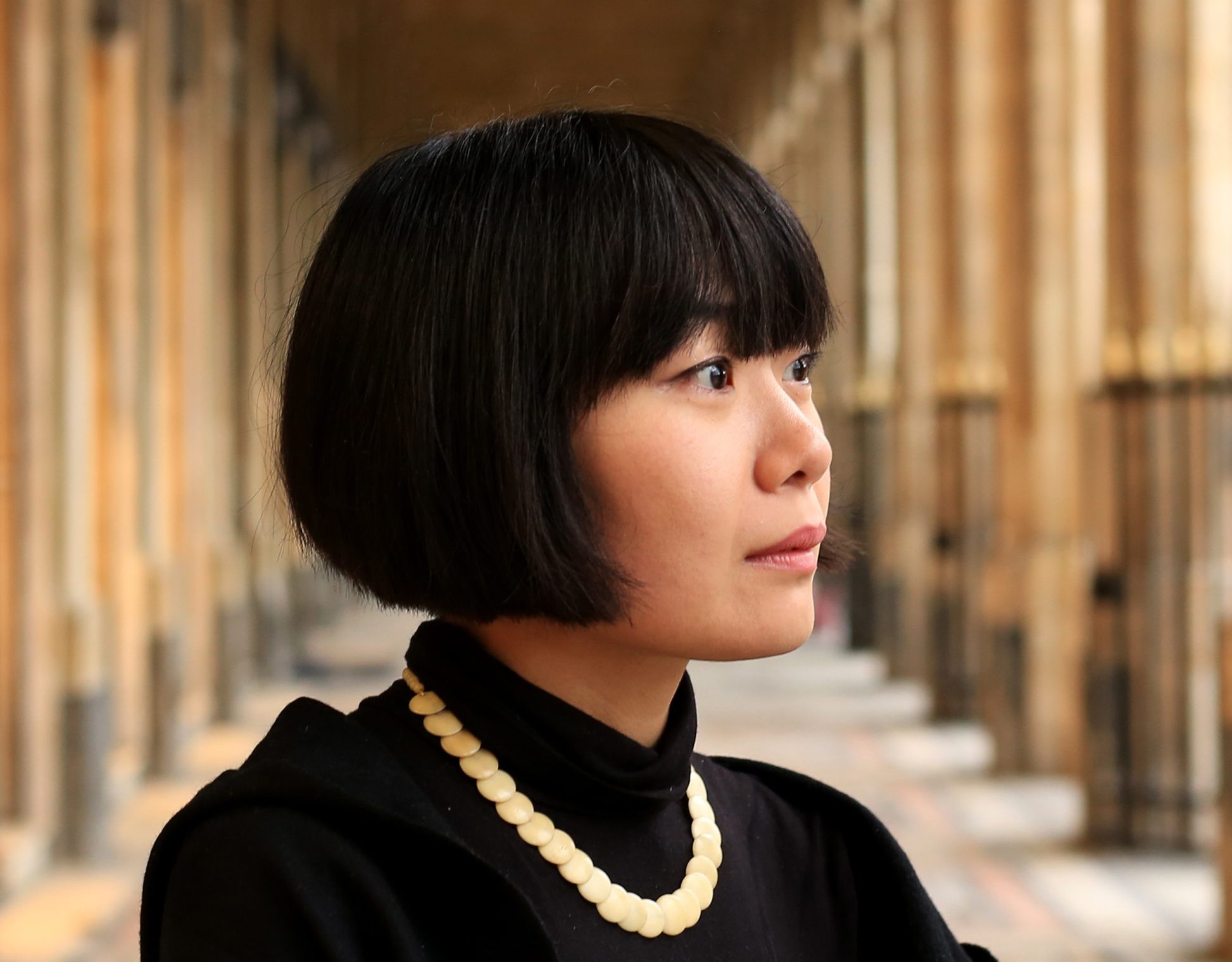
- AI
- New York

“Can the gaze be a creative force?”
I am a visual artist and researcher with a background in philosophy, art, and new media. My work unfolds at the intersection of image, attention, and the memory of techniques. For several years, I have pursued a long-term inquiry into the origins of photography — not as a closed chapter of history, but as an open and evolving field.
I explore gestures of invention, forms of intuition, and regimes of visibility that have shaped our relationship to reality. This has led me to delve into the archives of photography’s multiple pioneers — Niépce, Talbot, Daguerre — and to trace the subtle correspondences between light, gaze, and thought. My practice takes the form of installations, objects, texts, or altered images, sometimes incorporating contemporary technologies.
The project I wish to develop in New York offers a reinterpretation of photographic history through the notion of the “incandescent gaze” — a gaze that not only sees, but acts, burns, and shapes. This approach draws on Plato, for whom vision arises from the meeting of an inner light of the soul and the outer light of the world, and on Marcel Duchamp’s claim that “the viewer makes the painting.” I seek to consider vision not as passive reception, but as an active force — one capable of generating, altering, or even erasing the image itself.
Hanako Murakami is an artist and researcher whose work unfolds at the intersection of image, thought, and technology. Recipient of the CNAP’s national commission Image 3.0 and supported by the ADAGP, she has presented her work in major exhibitions including Nineteenth-Century Photography Now at the Getty Museum (2024); From Here to There at Japan Society, New York (2020); La Photographie à l’épreuve de l’abstraction at FRAC Normandie (2020); and Conception at the Rencontres d’Arles (2019). She lives and works in Paris.
My project for Villa Albertine offers a reinterpretation of the invention of photography through contemporary technologies such as artificial intelligence and eye-tracking. Rooted in a philosophical inquiry into vision, it explores seeing not as a passive act of reception, but as an active, creative force capable of shaping reality.
Drawing on Plato’s theory of vision — which describes sight as the interaction between an inner light and the outer light of the world — and on Marcel Duchamp’s assertion that “it is the viewer who makes the painting,” the project challenges conventional definitions of image and gaze. By combining AI with eye-tracking technologies, I aim to turn the gaze into a generative tool, one that does more than simply contemplate.
The project grows out of my long-term research into the origins of photography and theories of perception. In the nineteenth century, figures such as Niépce and Daguerre sought to fix the ephemeral. Today, artificial intelligence opens a new paradigm: that of dynamic, responsive images, shaped by the very presence of the viewer.
During my residency in New York, I will pursue research at the intersection of the history of photography and contemporary vision science, in collaboration with institutions such as Columbia University, Cornell Tech, and the Rochester Institute of Technology. My goal is to produce a series of experiments and installations in which images come into being, transform, or vanish in response to the gaze — an attempt to make the gaze not merely a witness, but a gesture that creates.
New York stands at the crossroads of technological innovation and artistic research, making it a particularly fertile ground for my project. The city brings together leading institutions conducting advanced research in artificial intelligence, computer vision, and human–computer interaction — all fields I draw upon to reconfigure the relationship between image and gaze. The residency would allow me to access specialized laboratories while immersing myself in a stimulating interdisciplinary ecosystem where engineering, visual arts, and critical thought intersect.
In parallel, I wish to deepen a line of inquiry I have pursued for several years into historical photographic processes, notably by reconnecting with the George Eastman Museum in Rochester, where I was in residence in 2018. This link between the origins of photography and its contemporary reconfigurations lies at the heart of my practice: understanding how emerging technologies extend, shift, or re-enact the founding gestures of the image.
I am also interested in philosophical and cognitive approaches to visual perception, and I hope to meet with researchers in the humanities and neuroscience to enrich the theoretical framework of my work. Finally, New York’s major cultural institutions — museums, photographic centers, and international partners — provide an ideal setting in which to situate this project within a living dialogue between history, technology, and creation.
In partnership with

Maison Européenne de la Photographie

Fidji Simo
CEO, Applications at OpenAI
Fidji Simo is CEO, Applications at OpenAI, where she leads the company’s applications such as ChatGPT, and all of its operations – including product development, engineering, sales, finance, marketing, legal, and people teams. A seasoned consumer technology leader, she has spent more than 15 years driving product, strategy, and operations for some of the world’s most influential companies.
Before joining OpenAI, Simo was Chief Executive Officer and Chair of Instacart, guiding it through its successful public offering. Prior to Instacart, she spent a decade at Meta, where she built Facebook’s advertising business and led the Facebook app.
Simo remains Chair of Instacart’s board and also serves on the Board of Directors at Shopify. She is the co-founder of Chronicle Bio, a tech‑bio company on a mission to cure complex chronic conditions.
Originally from the south of France, Simo holds a Master of Management from HEC Paris and completed her final year at UCLA Anderson School of Business. She now lives in California with her husband and daughter.