

Youssef Nabil
Artist, Photographer, Filmmaker
March - May 2027
- Visual Arts
- Los Angeles
- New York

“I now wish to capture jazz culture and Hawaiian Hula dance, creating a time capsule of sorts in the signature slow pace of my cinematographic shots.“
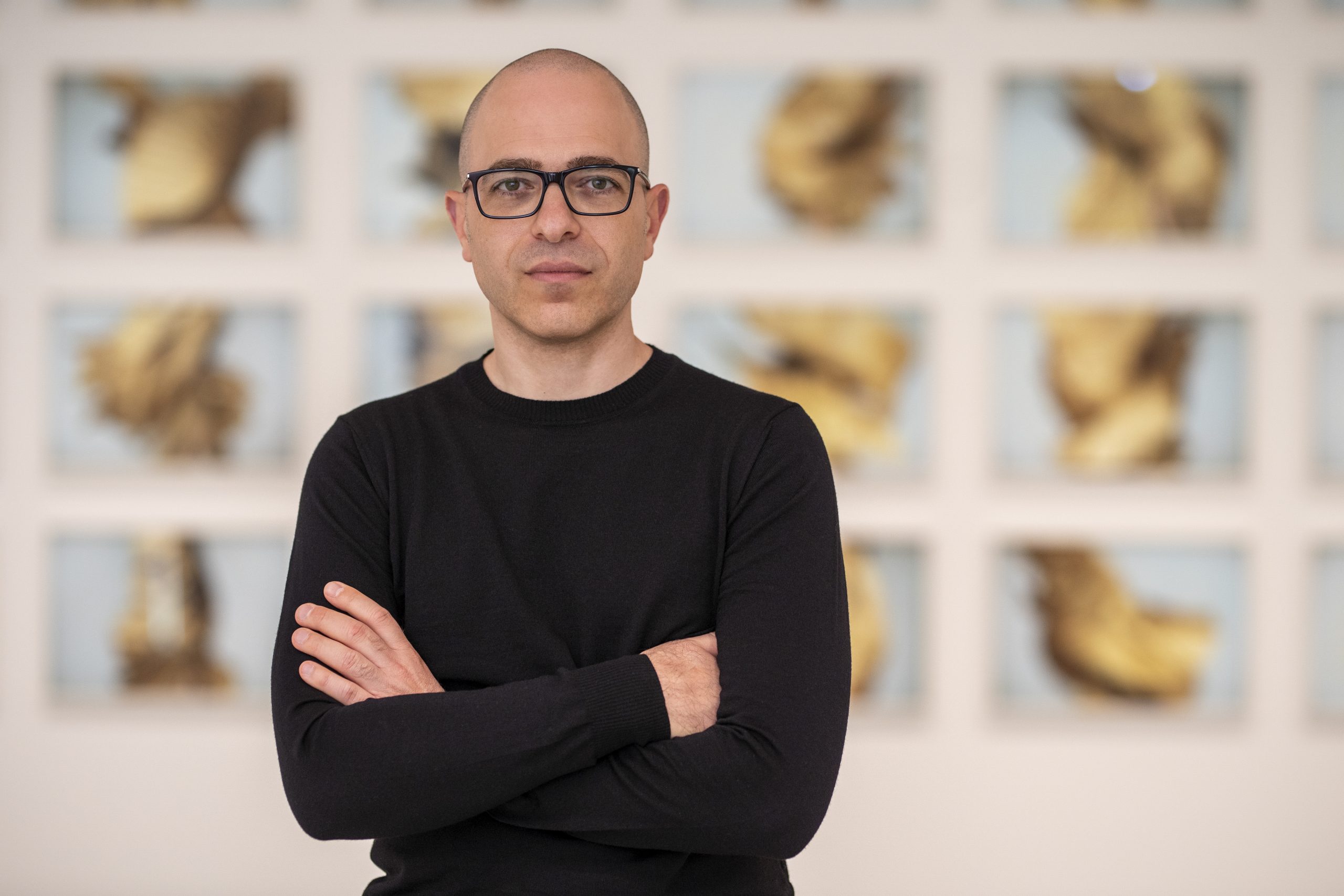
My name is Youssef Nabil, I am an artist who uses photography and film to present a version of the world drawing on the passage of time, inspired by XXth century cinema. My photographic technique consists in hand painting gelatin silver prints, harkening back to the craftsmanship of the technicolor films. This ethereal color veil allows me paint the reality I stage, changing the colors to my liking. I began my career in 1992 by staging tableaux in which my subjects acted out melodramas recalling film stills from the golden age of Egyptian cinema. My photographs provide an escape from reality, funneled through my cinematographic sensibility. My early works are populated by my personal icons, from movie stars to artists and friends, who become subject characters of my stories.
Over the years, I have further invested in my longstanding relationship with cinema writing and directing 5 films: You Never Left, 2010, I Saved My Belly Dancer, 2015, Arabian Happy Ending, 2016, The Beautiful Voyage, 2021, and The Room, 2025. With the support of the Villa Albertine, I wish to embark in another filmic project research in New York, Los Angeles and Hawaii.
With my film I Saved My Belly Dancer, 2015, I strived to preserve the image of the belly dancer from my childhood. Following the 2011 revolutionary events in Egypt, belly dancing, once celebrated, has increasingly been restricted and even banned, deemed immoral by the new regime. Refusing to accept its disappearance, I wanted to immortalize this ancient tradition. In an entirely different context, I now wish to capture jazz culture and Hawaiian Hula dance, creating a time capsule of sorts in the signature slow pace of my cinematographic shots.
Youssef Nabil’s international solo and group exhibitions include notably: in the USA, at the Pérez Art Museum in Miami, the LACMA, the Studio Museum in Harlem and Aperture Foundation in New York, the Smithsonian National Museum of African Art and Kennedy Center in Washington, D.C., the (SCAD) in Savannah and in Atlanta, and the North Carolina Museum of Art in Raleigh; in France, Maison Européenne de la Photographie in Paris, the Rencontres de la Photographie in Arles. In 2020/2021, Youssef Nabil had his first retrospective exhibition at the Palazzo Grassi in Venice, titled Once Upon A Dream. In 2026, he is the first Arab and the first African artist to have a solo exhibition at the Musée d’Orsay in Paris.
My project for Villa Albertine centers around a subject central to my practice, which I seek to explore in an entirely new direction. Dance, and particularly belly dancing has represented an important motif in my work which I have represented thoroughly. Dance has been a vehicle through which I have conveyed ideas of nostalgia, culture, and identity.
With the support of Villa Albertine, I intend to start a new project revolving around dance and music and the exploration of their cultural underpinnings. I plan to conduct research on two separate topics, jazz culture and traditional Hawaiian dancing, and start documenting the project in the same trip.
Jazz culture represents a rich depiction of identity which had a lasting impact on the US and the world. The art of hula, or Hawaiian dancing, represents a transmission of history and a symbol of Hawaiian culture throughout the globe. Both are lenses through which I seek to represent a people, and an important history.
The pastel tones in my work, the result of coloring the image by hand, imbue my images with a dreamlike dimension befitting to the atemporal representation I want to present. I thus envision to immortalize these two longstanding traditions through my work.
This project would be a visual tribute through film and photography of both cultures and dances. A celebration of identity and memory and a harbinger of joy and nostalgia.
In New York, I would like to delve into jazz culture itself, immersing myself specifically in Harlem and meet the people who keep jazz culture alive. In Los Angeles, I plan to visit the Academy of Motion Picture Arts and Sciences Library to study the cinematographic representation of both jazz dancing and Hawaiian dancing. I also intend to explore the resources of their costume department, one of the most fascinating in the world. Finally, in Hawaii I would get to meet Hawaiian dancers, and further experience their culture in person.
New York and Hawaii are places I connect with most in the United States. Conversely, it is both the grit of New York and the incredible landscapes of Hawaii that draw me to them.
Though I have lived in New York for many years, I was too involved with the city to consider it as a subject for photography. Having the hindsight of living in New York, I want to go back now that the city is no longer where I am based, to experience it as a visitor, learned in the experience of my time there.
Hawaii is a place I connected with instantly upon first discovering it. I have never explored anywhere quite like it. The sunsets and the ways in which the moon reflects on the water there have been important inspirations for my work. I have developed a strong sensibility for the colors of the island which I now want to capture in film. The connection with Hawaiian dance is also personal. Visually, I instantly felt reminded with belly dancing which initially drew me to it.
In partnership with
Galerie Nathalie Obadia