

Salomé Gasselin
Musician
January-February 2027
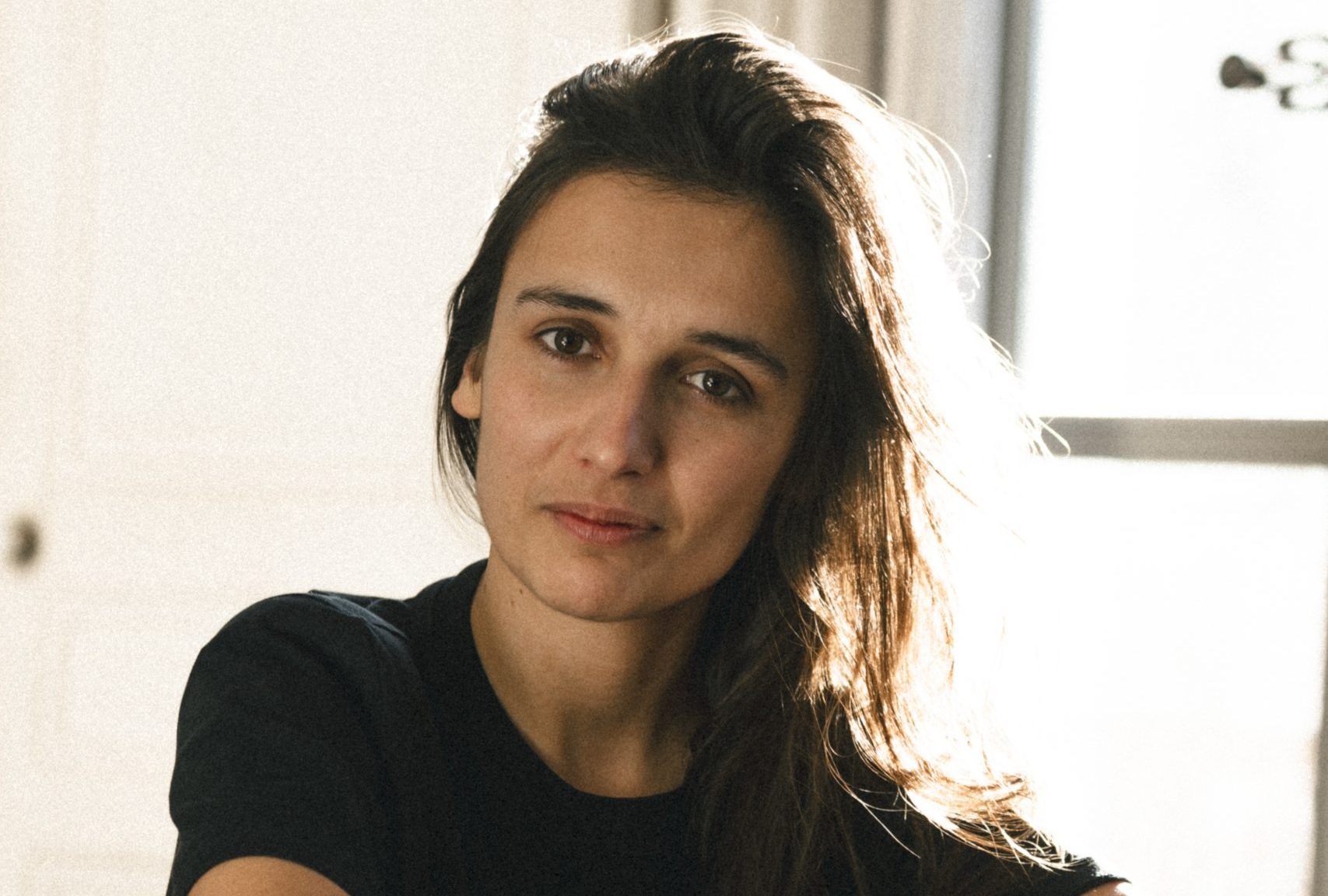
- Classical Music
- New York


“I would like to delve into part of the 17th-century English repertoire for solo viola da gamba, while tracing the singular history of Barak Norman and this legendary instrument.”
It all begins with a sound: the sound of a tractor in the vineyards, the sound of cows on the farm where I was born, and then, when I was about ten years old, the sound of a viola da gamba coming from a conservatory corridor after a violin lesson. Resonant, compelling, and warm, that sound spoke directly to my gut and to my soul. Its magic still works on me today.
I receive sound and voices as messages delivered by intravenous infusion, before my mind has had time to sift through them. Convenient. These successive revelations led me to study with teachers in Angers, Lyon, The Hague, Salzburg, and Paris, and then to meet instrument makers, journalists, writers, musicians, and music lovers, all of whom have shaped my taste and my approach to performing what is commonly called early music—though I do not particularly like that term.
Across Europe, Asia, and the United States, I perform chamber music and appear as a soloist, alongside musicians who spread this sound like a joyful contagion. I have also taught the viola da gamba, notably in Marseille—a vibrant city that has left a deep impression on me.
What interests me in this ancient instrument is the paradoxical freshness of its sonic material and of the repertoire associated with it. It finds its full meaning in the present and can even tell us something about the way we inhabit the world today.
What could be better than a residency with a witness from the past in a global city—both a symbol of modernity and of the avant-garde—to continue tuning my ears and adjusting my inner needle through an intravenous line?
Salomé Gasselin is an artist on the rise, putting the viola da gamba in the spotlight. Winner of Victoires de la Musique Classique 2024, she also won the grand prize at the 2020 Gianni Bergamo Music Award in Lugano and second prize at the 2020 Bach-Abel Competition. She has recently performed her own project at venues including the Philharmonie de Paris, the MA Festival in Bruges, and the National Philharmonic of Ukraine in Kyiv. Her albums Récit (2023) and Mystères (2025) have been critically acclaimed. She plays a bass viol made by Simon Bongars in Paris in 1655.
Ten years ago, in a private collection in Manhattan, I encountered the most beautiful viola da gamba I have ever had the chance to play—an instant and profound love affair. Made by Barak Norman—the Stradivarius of viola da gamba makers—this instrument fits my body perfectly and possesses such a distinctive sound that it still resonates in my mind today. This residency at the Villa offers me precious time with it.
Bringing together instrumental practice, archival research, and contemporary creation, I will explore the present-day resonances of the viola da gamba repertoire.
I would like to delve into part of the 17th-century English repertoire for solo viola da gamba, while tracing the singular history of Barak Norman and this legendary instrument. Rather than seeking at all costs to uncover a forgotten masterpiece, I hope that something new will emerge through my own approach to this English music of the past. Indeed, playing this living witness will inform my practice and transform my understanding of early repertoire. It is a unique opportunity to grasp, through the physical legacy of sound, what words and treatises cannot fully convey: a dialogue between intuition and reflection. Visits to the Metropolitan Museum of Art’s collection and conversations with leading figures in American musicology will nevertheless help me map out the historical contexts through which the instrument has travelled.
To extend the instrument’s story—of which New York is now a part—I have invited composers who shape the sound of this city to write for it. These forthcoming encounters and the exchanges that follow will lie at the heart of my residency. Writing a new chapter in the instrument’s history with them will, I hope, give rise to a programme developed over time, in close contact with these remarkable instruments, witnesses, and musicians.
What if this instrument could awaken—not as a museum piece, but as a living New York voice? New York is the soundscape of this early viola da gamba. This jewel seems to have had no choice but to belong to the world’s financial capitals. Born in London, “at the sign of the bass viol,” between St Paul’s Alley and St Paul’s Churchyard, at the very heart of the seventeenth-century city, it is now preserved in the city that embodies modernity and the future.
This paradoxically expresses my understanding of early music as something alive and spontaneous, the very opposite of museology. Performing this repertoire requires freedom, improvisation, and curiosity in order to understand music written four hundred years ago.
New York also offers the resources that matter to me: archives, libraries, the Metropolitan Museum’s instruments, and an exceptionally rich and diverse musical scene. My research will take shape through dialogue with curators, American musicologists, and the Viola da Gamba Society of America. Beyond the early-music scene, I would also like to engage with alternative communities—jazz, improvised music, and experimental music—where this seventeenth-century instrument might find uniquely suited interlocutors.
I hope to work with artists such as Doug Balliett, Bill Frisell, and John Zorn, who embody the sound of New York from the very place where I am writing. This viola da gamba in New York is what Hannah Arendt calls, in Between Past and Future, “an unexpected freshness that tells us things for which no one has yet had ears.” I am eager to experience it.
In partnership with
Societe Generale Foundation
The Societe Generale Foundation contributes to the development of a more inclusive and sustainable society by supporting initiatives that generate a positive social impact in the fields of Education, Culture and the Environment. Driven by an entrepreneurial spirit, it provides support to structures of general interest and cultural organizations that carry out projects with a high impact potential, whether they are incipient or large-scale initiatives. The Foundation operates in France, at both national and regional level, and also supports multi-country or internationally oriented projects.
As a major partner of Villa Albertine’s residencies, the Societe Generale Foundation is committed, through this exceptional partnership, to supporting the career development of artists and promoting artistic excellence. It contributes to transatlantic dialogue through the arts and to the international reach of French culture. The Foundation particularly supports the development of classical music within the residencies through a dedicated call for projects, continuing a commitment spanning nearly 40 years in this field. This partnership also builds upon the Societe Generale Group’s ongoing support of contemporary art for the past 30 years, notably through a collection of nearly 1,800 works — paintings, graphic arts, photographs and sculptures — by French and international artists. Through these commitments, Societe Generale reaffirms its dedication to artistic creation and excellence, in France and internationally.
For more information, visit https://fondation.societegenerale.com/en.
L’agence management
L’Agence Management is a Paris-based agency that supports and represents artists, developing their projects through production, dissemination, networking, and the coordination of collaborations with cultural institutions in France and internationally.