

Myriam Rabah-Konaté
Radio producer, dancer, writer, and translator
May-June 2027
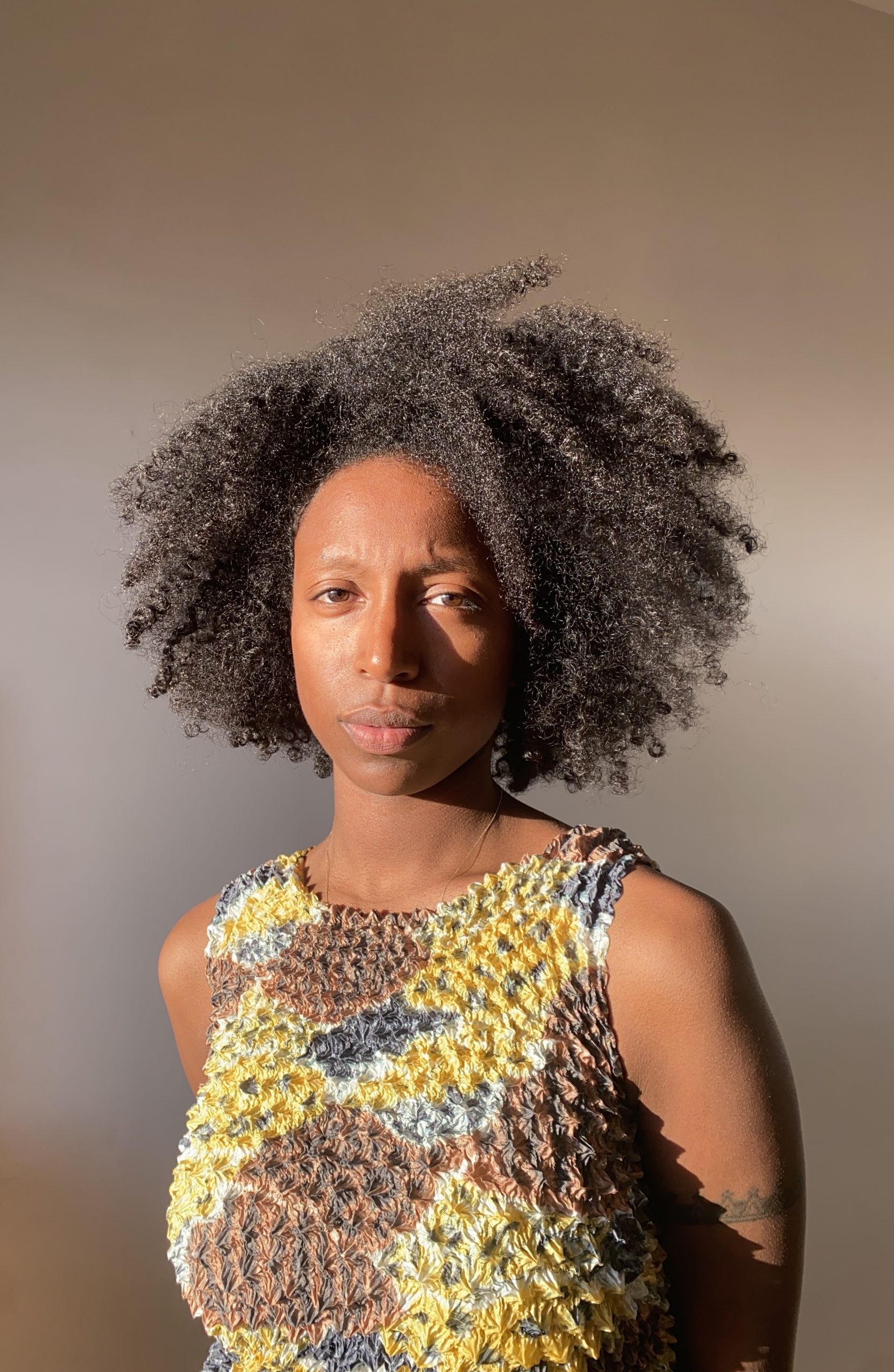
- Performing Arts
- New York
“I would like to consider sensation as a form of embodied memory of racial experience, and to understand how it can become material for creation and reflection.”
I am a multidisciplinary artist: a sound documentarian, dancer, writer, and translator. I work across different media to think through, experience, and give form to what holds my attention, obsesses me, and raises questions for me. Transmission is central to my work. I regularly lead projects with young people, in which listening, movement, and storytelling become materials for creation and shared experience.
I am interested in what settles and remains within us: memories, places, stories, and sensations. I seek to understand how an intimate, situated experience can resonate with broader histories. My artistic practice has developed through self-teaching, intuition, and experimentation, following a background in social sciences and my encounter, ten years ago, with Contact Improvisation—a dance practice based on physical listening, touch, and the sharing of weight.
In 2024, I co-translated Undrowned: Black Feminist Lessons from Marine Mammals by Alexis Pauline Gumbs, a project that extended my reflections on the body, memory, and racialized experiences. Through dance, I explore the conditions in which bodies meet, touch, and move together.
My Villa Albertine residency builds on these ongoing inquiries. It will allow me to continue my research on African American artists working at the intersection of dance, improvisation, and somatic practices. This research will result in a documentary performance bringing together archives, dance, and storytelling.
Myriam Rabah-Konaté is a sound documentarian, dancer, writer, and translator. Since 2023, she has worked as an executive producer for France Culture, where she has notably produced Listening to La Muette: Histories and Memories in Drancy, What Disappears: Mapping a Nostalgia for the 93, and Maryse Condé in Sisterhood: Through Pages, Gestures, and the Unseen.
A long-standing collaborator of artist Nezha Rhondali, she develops multidisciplinary artistic projects with her between France and Morocco. She co-wrote The Nile, River of the Pharaohs and co-translated Undrowned: Black Feminist Lessons from Marine Mammals.
In 1983, Ishmael Houston-Jones and Fred Holland presented Untitled Duet in New York for the eleventh anniversary of Contact Improvisation. This practice spread during the 1970s and 1980s as an open and universal form of dance. Houston-Jones and Holland offered a deliberately “incorrect” version of it, accompanied by a manifesto that remained unpublished for several decades:
“We are Black.
We will wear street clothes.
We will wear heavy boots.
We will play a loud, abrasive sound score.
We will have non-performative conversations.
We will fuck with the flow.
We will stay out of physical contact as much as possible.”
By refusing contact, flow, and certain implicit norms of the practice, the Wrong Contact Manifesto questions the racial and power dynamics that shape spaces in which bodies meet. It brings to light what is tacitly at stake in encounters between skins, and the ways in which a long history can be inscribed there sensorially. This gesture is the starting point for my project, Everything Our Skin Remembers.
I wish to explore experimental, improvised, and somatic dance practices developed by African American artists in the 1980s, as well as their contemporary continuities and transformations. I would like to meet artists, collectives, texts, and places that have contributed to the emergence and circulation of these questions. In particular, I want to consider sensation as a form of embodied memory of racial experience, and to understand how it can become material for creation and reflection.
My research will bring together dance practices, interviews, archival research, writing, and translation. I want to place this research in the United States in dialogue with my own experience as a Black dancer in France, weaving a transatlantic reflection on the inheritances, representations, and bodily memories that shape Black experiences.
New York is the foundational terrain for this research: both the birthplace of Contact Improvisation and a historic centre for numerous experimental African American artistic practices. I would like to meet artists who took part in this history, as well as those who continue it today, including Ishmael Houston-Jones and mayfield brooks. I also hope to visit Danspace Project, where Houston-Jones developed several projects in the 1980s, including Untitled Duet and Parallels, a programme devoted to Black choreographers working beyond the established categories of African American dance. I also wish to discover studios and venues where improvisational practices and somatic approaches are taught, transmitted, and reinvented today.
In Durham, North Carolina, I would like to explore the rich body of Afro-feminist thought and practice that has developed around questions of the body, care, racial memory, and social justice. In particular, I hope to meet Alexis Pauline Gumbs, adrienne maree brown, and Prentis Hemphill, whose writings hold an important place in my translation and research practice.
In both cities, I aim to privilege forms of encounter grounded in experience: taking part in collective practices, exchanging with artists, spending time in spaces of transmission, consulting archives, and pursuing on-site choreographic exploration, writing, and translation.
In partnership with

Plateforme Parallèle