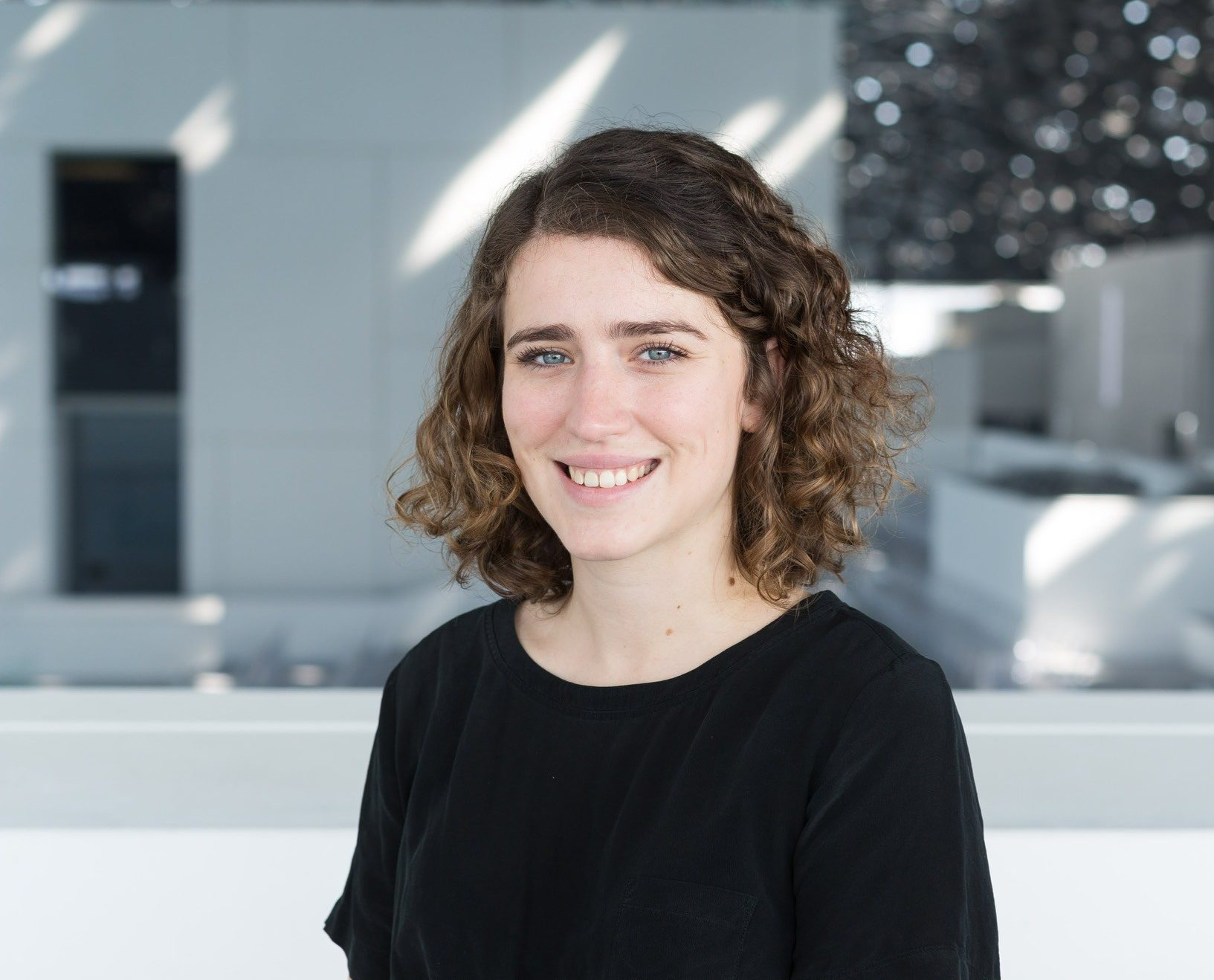
Louise Contant
Chief curator
October - december 2027
- Museums
- Houston

“As an archaeologist and curator (and diver), I have long been fascinated by how we tell the stories that lie beneath the surface, both literally and figuratively. How do we preserve and exhibit artifacts that carry complex histories?”
Born in a Paris suburbs, raised by (photo)journalists whose work was to tell stories, and based in Paris, I am a museum curator and archaeologist who has lived and worked extensively abroad. My path began on land: I trained first as an art historian, then as an archaeologist, learning to read the traces left by those who came before us. Drawn to the water, I developed my skills in technical and professional diving until I could join the two ends of that thread, bringing archaeology beneath the surface.
Alongside this, I have always moved between archaeological institutions and others rooted in contemporary art. For me, these worlds were never separate or sequential: they nourish one another. What connects them is a lifelong fascination with the dialogue between past and present, the correspondences between eras, the cycles that repeat, and the traces we leave behind. My years living and working in different countries have shaped this sensibility, teaching me to see heritage through multiple cultural lenses. Today, at musée national de la Marine, I direct collections and research, with expertise in museographic design. I am developing projects around the blue humanities, with French and international partners who enrich and diversify our perspectives. In this spirit, I am the curator of our major 2026–2027 exhibition, Into the Deep, which explores humanity’s relationship with the ocean depths from antiquity to the present day, taking a global perspective at the intersection of art and science.
All these threads converge in La Belle: a 17th-century French shipwreck preserved in American collections under a singular binational agreement, bearing traces of a colonial expedition that transformed lives. How do Texas museums tell this story, and what might French institutions learn from their approaches? How can we approach and care for this transnational heritage in our globalized world? This fascination, rooted in both my fieldwork and my curatorial practice, now serves as the starting point for my residency project at Villa Albertine.
Louise Contant is head of collections and research and chief curator at Musée national de la Marine, where she curates the 2026–2027 exhibition Into the Deep. Trained in art history and archaeology, she also studied English and Arabic. She has worked on terrestrial and underwater excavations as well as museums and contemporary art institutions including Louvre Abu Dhabi. A professional diver and university lecturer (ICP, Paris 1 Panthéon-Sorbonne), she champions field- and collection-based applied research, interdisciplinary practice, and museums as spaces for cultural dialogue. She serves as a reviewer for the International Congress of Maritime Museums, its on the advisory board of the Centre for International Heritage Activities and is the national correspondent for the European Museum Forum’s EMYA.
La Belle and her ghosts: underwater heritage and Franco-American museum narratives
As an archaeologist and curator (and diver), I have long been fascinated by how we tell the stories that lie beneath the surface, both literally and figuratively. How do we preserve and exhibit artifacts that carry complex historical narratives?
In 1686, La Belle, the ship used by explorer Cavelier de La Salle, sank in Matagorda Bay, Texas, during France’s attempt to establish a presence in Louisiana and the Mississippi Basin. Rediscovered in 1995, it became the subject of a singular 2003 Franco-American agreement: a long-term loan that preserves French ownership with musée national de la Marine while entrusting conservation and display, respectively, to Texas A&M University in College Station and the Bullock Texas State History Museum in Austin.
Recovered almost intact, the wreck is a mute witness: objects do not narrate, they are made to narrate. This is where archaeology gives way to museography. The same artifact reads as evidence, relic, or unintentional monument. And France and Texas need not read it alike.
During my residency, I want to explore how museums on both shores of the Atlantic tell this story. Which narratives are foregrounded, and which remain in the background? What does this binational arrangement reveal about how we care for shared heritage? A central thread is the balance museums strike between celebrating a technical feat, conveying historical context, and addressing the many communities for whom this heritage holds meaning, voices the objects cannot speak.
I will combine exhibition analysis, archival research, and fieldwork – examining conservation strategies, scenography, interpretive texts, and object choices across institutions, interviewing culture and diplomatic professionals and local communities, while investigating the practical workings of the agreement.
The residency could lead to two concrete outcomes: a report assessing this transnational stewardship and proposing models transferable to other binational heritage projects, and an exhibition synopsis showing how findings might translate into renewed public programming around La Belle.
Texas draws me for reasons that go well beyond the simple fact that La Belle‘s artifacts rest there.
What fascinates me first is a contrast in cultural models. In the United States, heritage institutions and policies are largely shaped at the state level (the Bullock is Texas’s official history museum) and sustained by distinctive funding and public-engagement traditions. Set against France’s centralized approach, this offers a revealing lens on how two nations care for a cultural heritage they legally share. The Franco-American agreement governing La Belle makes this tension concrete: who decides on conservation, new displays, or loans? How have institutions coordinated across nearly three decades and an ocean?
I am equally drawn to the Texas coast as a living landscape of memory. Around Matagorda Bay, where the ship sank, regional museums, historical societies, and coastal communities keep their own relationship to the story of French exploration and colonization – one that rarely reaches Parisian galleries.
I hope to meet experts, museum curators, conservators, and directors; the maritime archaeologists and conservators who recovered and treated the wreck, especially at Texas A&M; historians of French exploration; diplomats and cultural officials who managed the agreement; and community stakeholders, including Indigenous Nations representatives where welcomed.
Beyond Austin and the Bullock, I plan to visit Texas A&M in College Station, coastal museums in Corpus Christi, Victoria, and Rockport, and the wreck site itself. I also hope to engage with contacts at the French Embassy for a comparative and diplomatic perspective, with possible visits or conversations with Louisiana institutions working on France’s colonial heritage.
In partnership with

Musée national de la Marine
The Musée national de la Marine houses one of the most beautiful and oldest collections in the world, tracing over 250 years of maritime and naval adventures. A public administrative institution under the supervision of the Ministry of the Armed Forces, it is located in five cities across the national territory: in Paris at the Palais de Chaillot-Trocadéro, and in the ports of Brest (at the Château), Port-Louis (in the Citadel), Rochefort, and Toulon. It also has a conservation and resource center. Its networked presence allows it to maintain strong connections with local maritime cultures and to promote an active policy of exhibitions and events, making this institution a vibrant place for raising awareness about today’s and tomorrow’s maritime challenges.
Follow the Musée national de la Marine on Instagram, Facebook, X, and LinkedIn.
musee-marine.fr/en