

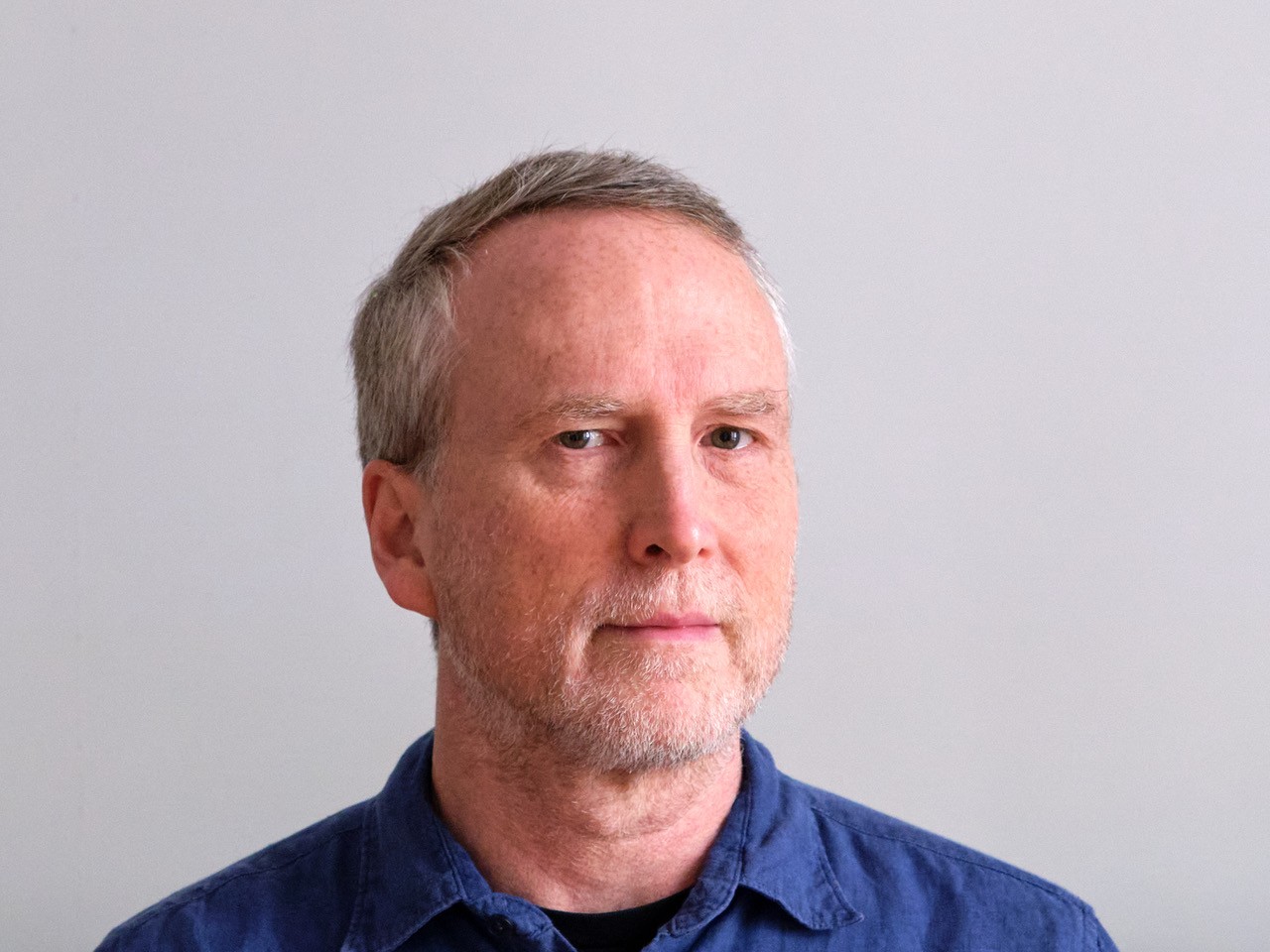
Jeff Guess
Artist
Winter 2027
- AI
- Los Angeles

“I plan to do research into how American competitive team sports act as experimental testing grounds for quantification, predictive algorithms and agentic AI and how these methods for producing statistical bodies become generalizable models, applicable to other areas of a society organized around datafication.”
My artistic work spans photography, custom software, moving images, performance, installation, sound pieces and texts. It is an investigation into the conditions of possibility of the technical image and its multifarious entanglements with language and voice, opening onto a broader exploration of the relations between bodies, technical infrastructures and computation.
I am particularly interested in how different disciplines and areas of life are quickly becoming enmeshed with algorithms and artificial intelligence, and my works often trace the cybernetic history of this massive capture. Each project requires inventing its own experimental method for addressing these histories critically.
Alongside exhibited works, I frequently create lecture-performances that comment upon or situate other pieces. There the spoken narrative interacts with real-time, voice-activated programs, so that the account is continually visualized and recontextualized by the machine listening to it.
At the Villa Albertine I will examine the algorithmisation of professional team sports, meeting the specialists in the field implementing the technologies that produce and leverage statistical bodies.
Jeff Guess is an artist, teacher, researcher and curator. He has been exhibited at the Centre Pompidou (Paris), SFMOMA (San Francisco), Jeu de Paume (Paris), Red Brick Art Museum (Beijing), MUCEM (Marseille), CaixaForum (Madrid, Barcelona), MAK Center for Art and Architecture (Los Angeles), Fondation Cartier (Paris), and the Fonderie Darling (Montreal). His work can be found in the collections of the Centre Pompidou, SFMOMA, Centre national des arts plastiques, the Frac Midi-Pyrénées, Espace Gantner and the Musée Carnavalet.
For my residency in Los Angeles I plan to do research into how American competitive team sports act as experimental testing grounds for quantification, predictive algorithms and agentic AI. What interests me is how these methods for producing statistical bodies become generalizable models, applicable to other areas of a society organized around datafication.
Sports franchises have integrated artificial intelligence at every level of operations, to optimize and micro-manage performance, augment coaching strategies and enable data-driven talent identification, while simultaneously reshaping logistics, streamlining ticket sales and intensifying fan engagement. I want to examine these developments up close, and also to trace how their logics intersect with those of the military, the health sector and the entertainment industry.
I am particularly interested in how AI-driven, real-time data collection and increasingly fine-grained algorithms have accompanied and enabled a decisive shift in the cultural and economic position of sports gambling, transforming it into an overwhelmingly pervasive American cultural phenomenon – and how this in turn has opened the door to prediction markets, where one can bet on virtually anything.
The Villa Albertine residency will allow me to take another step in my work on professional team sports and computation, allowing me to meet a wide range of actors implementing these paradigms, making my research more concrete and situated.
I intend to write a critical text, and a lecture-performance, that would become the basis for a series of works.
Los Angeles is the sports capital of the world with twelve major franchises, more than any other city. It is also home to some of the premier university athletic programs, USC and UCLA, and it will also be host to the 2028 Olympics. Southern California is where a great deal of the Artificial Intelligence based quantification tools used in sports analytics is developed and deployed, where team sports become a laboratory for testing new technologies.
A major focus will be on meeting the people working on the application of AI and sports analytics to track atheltes. But I am also interested in the sites where this takes place, training facilities, specialized companies and also sports arenas. Crypto.com Arena, Cosm, and above all, the Intuit Dome are conceived as AI-enhanced fan-experience spaces which deploy biometric and identity-driven concessions, automated crowd-flow management and resource allocation, and facial recognition used in live in-venue betting.
I will be a Visiting Scholar in the MA Aesthetics and Politics program at the California Institute of the Arts. I look forward to all of these future exchanges !
In partnership with

Fidji Simo
CEO, Applications at OpenAI
Fidji Simo is CEO, Applications at OpenAI, where she leads the company’s applications such as ChatGPT, and all of its operations – including product development, engineering, sales, finance, marketing, legal, and people teams. A seasoned consumer technology leader, she has spent more than 15 years driving product, strategy, and operations for some of the world’s most influential companies.
Before joining OpenAI, Simo was Chief Executive Officer and Chair of Instacart, guiding it through its successful public offering. Prior to Instacart, she spent a decade at Meta, where she built Facebook’s advertising business and led the Facebook app.
Simo remains Chair of Instacart’s board and also serves on the Board of Directors at Shopify. She is the co-founder of Chronicle Bio, a tech‑bio company on a mission to cure complex chronic conditions.
Originally from the south of France, Simo holds a Master of Management from HEC Paris and completed her final year at UCLA Anderson School of Business. She now lives in California with her husband and daughter.
École Nationale Supérieure d’Arts Paris-Cergy
The École nationale supérieure d’arts de Paris-Cergy (ENSAPC) is a public higher-education institution for the arts, operating under the supervision of the French Ministry of Culture. It trains artists and creative practitioners who are active on the international scene.

CalArts – MA: Aesthetics and Politics