

Discover French Animation: CinéSchool’s Recommendations for Young Cinephiles
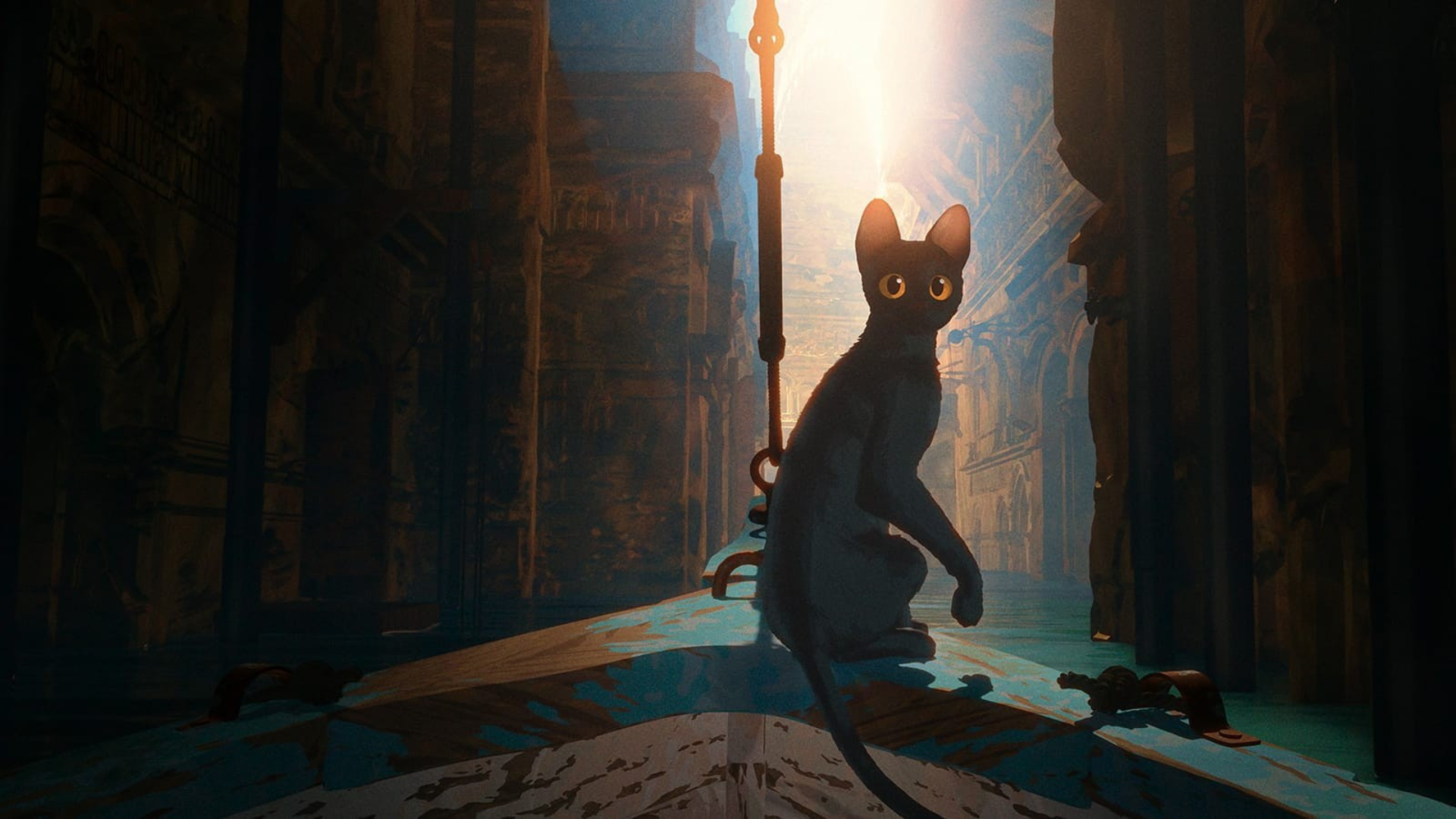
Flow © Janus Films
This October, CinéSchool invites young cinephiles and families across the United States to explore the creativity and diversity of French animation through a selection of films and series for all ages.
From playful adventures and beloved characters to imaginative worlds and acclaimed feature films, this selection offers something for every age and taste. Whether you are discovering French animation for the first time or are already a fan, there is a world of cinema to enjoy.
The selection is presented as part of MyFrenchAnimationDays, an initiative developed by Unifrance to showcase French animation and bring it to audiences around the world. The initiative coincides with the Fête du Cinéma d’Animation in France and International Animation Day on October 28.
Taking place from October 11 to 31, MyFrenchAnimationDays will include discovery workshops in schools, special screenings in theaters, and an online talk bringing together French animation professionals.
Browse our recommendations and discover your next animated favorite!
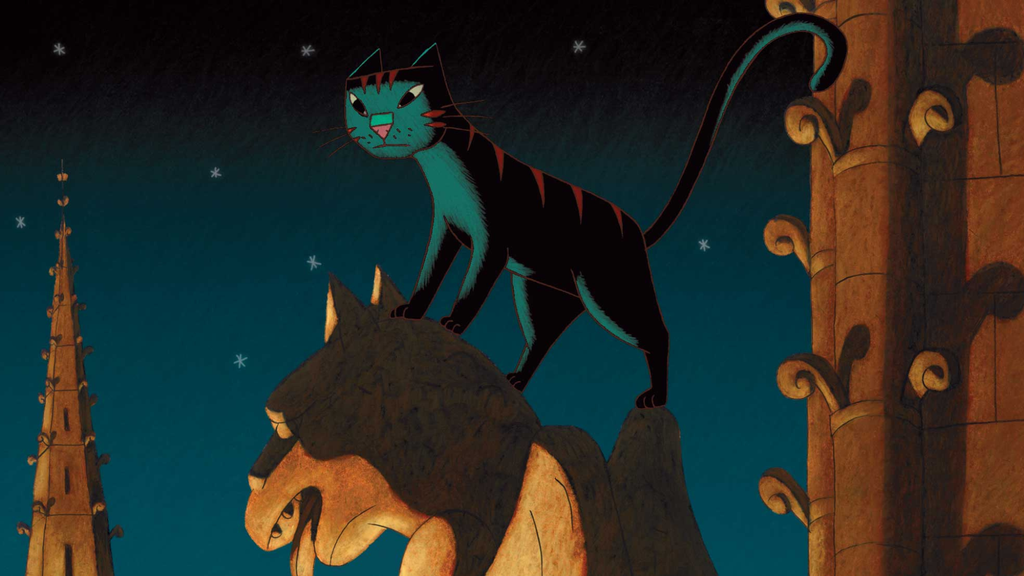
A Cat in Paris © GKIDS
A Cat in Paris (Une vie de chat)
Directed by Jean-Loup Felicioli & Alain Gagnol, 2010, 1h10, France-Belgium / PG, recommended for ages 9+
Dino is a cat that leads a double life. By day he lives with Zoe, a little girl whose mother is a detective in the Parisian police force. But at night Dino sneaks out the window to work with Nico – a slinky cat burglar with a big heart, whose fluid movements are poetry in motion as he evades captors and slips and swishes from rooftop to rooftop across the Paris skyline. Nominated for the Academy Award for Best Animated Feature (2012).
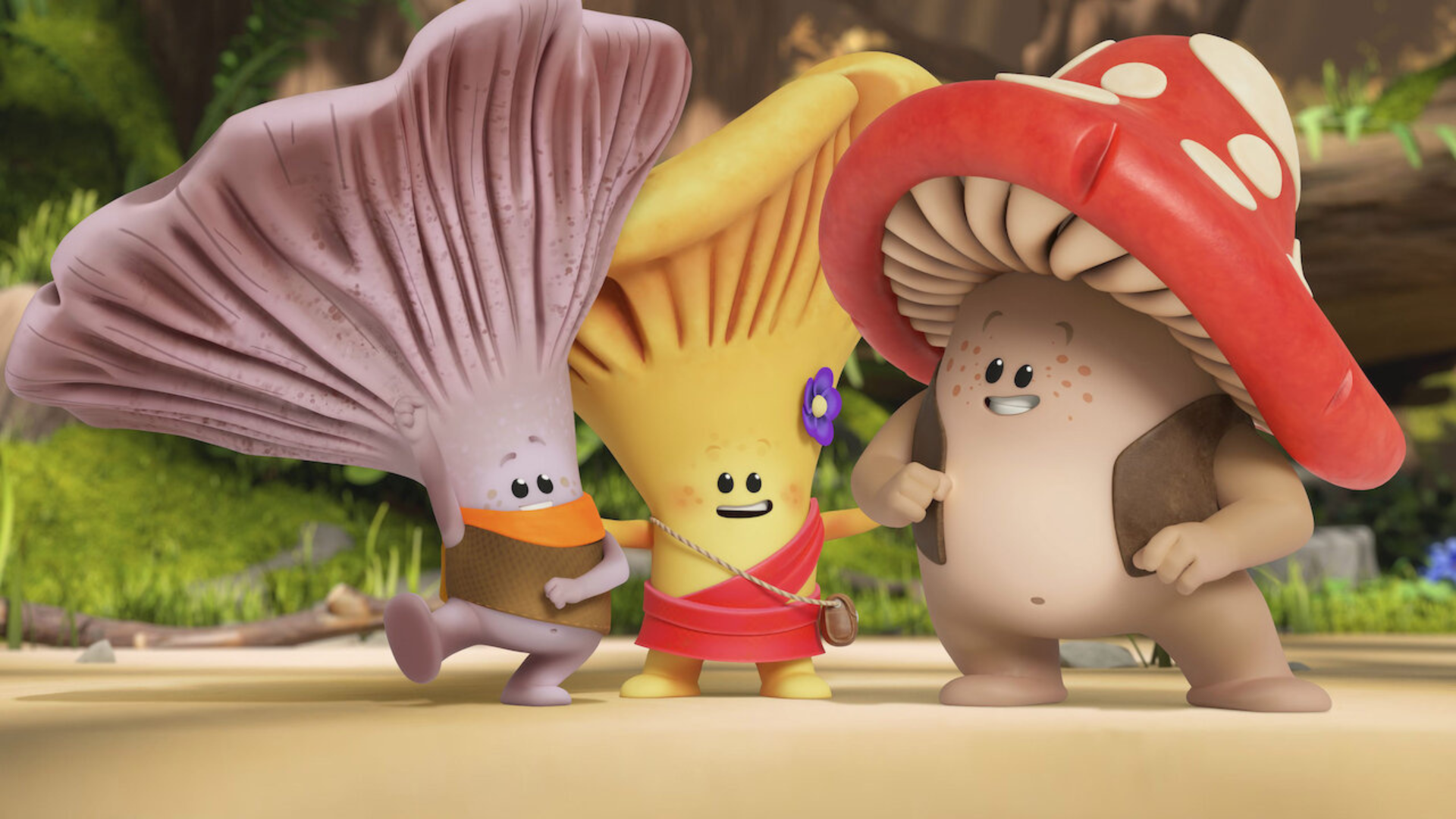
Mush-Mush & the Mushables © Netflix
Mush-Mush & the Mushables (Mush-Mush & les Champotes)
Created by Elfriede de Rooster, directed by Joeri Christiaen, 2020-2024, animated TV series, 2 seasons, TV-Y, recommended for ages 4+
Mush-Mush and his friends are tiny guardians of the forest who go on adventures in a wondrous and wild world of nature.
Available on Netflix
Tip: Be sure to click on “Audio & Subtitles” and select audio in French.
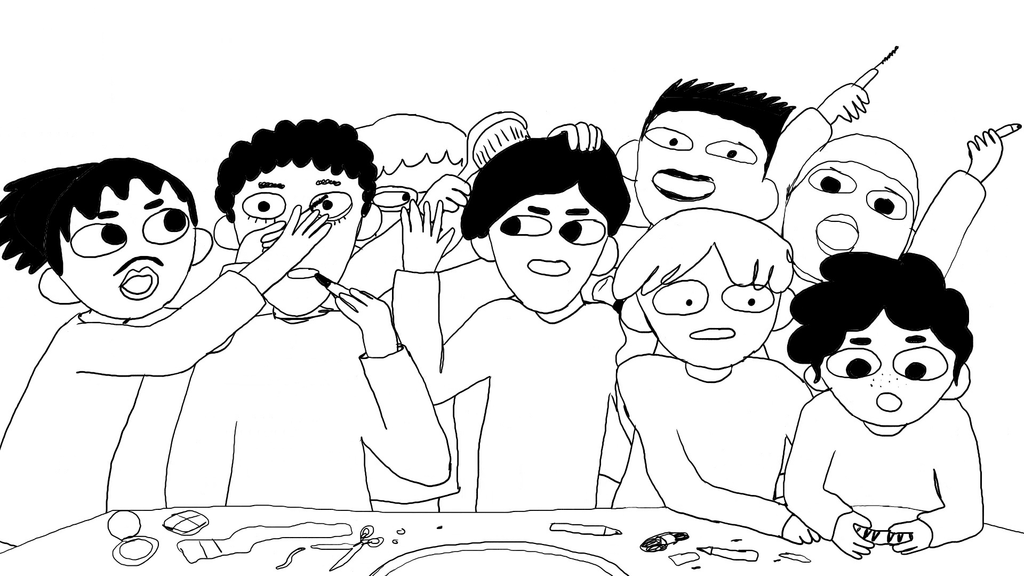
Samuel © Arte
Samuel
Created and directed by Émilie Tronche, 2024, animated TV series, 1 season, TV-14, recommended for ages 14+
Samuel, a shy 10-year-old, starts a diary to make sense of his feelings as he faces first loves, complicated friendships and the start of middle school.
Discover an interview with director Emilie Tronche.
Available on Netflix
Tip: Be sure to click on “Audio & Subtitles” and select audio in French.
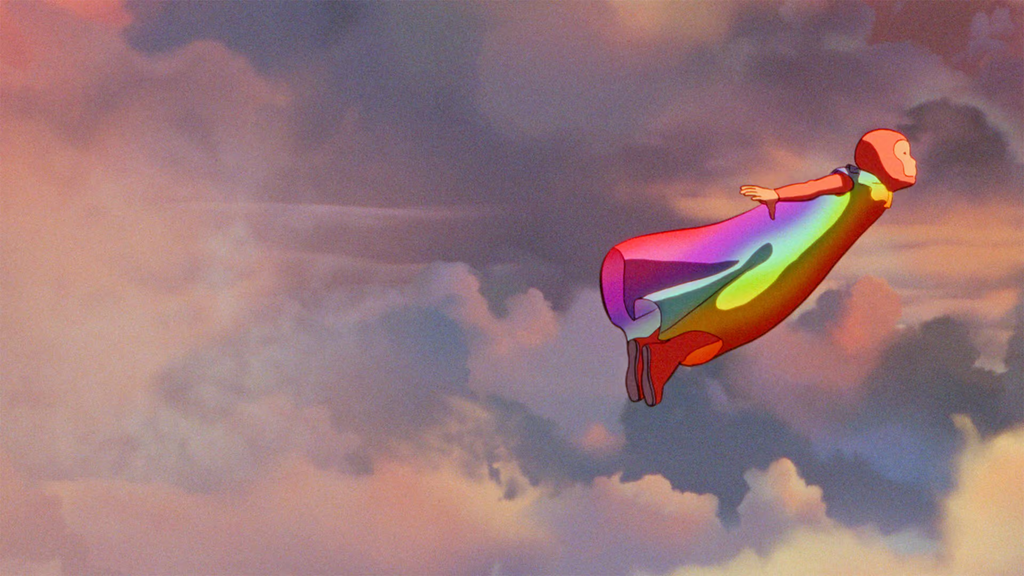
Arco © Janus Films
Arco
Directed by Ugo Bienvenu, 2025, 1h28, France-United Kingdom-United States / PG, recommended for ages 8+
Arco is a boy from a peaceful, distant future who accidentally travels back in time and discovers a world in peril. As Arco develops a touching friendship with a young girl named Iris, they band together and, along with her trusted robot caretaker Mikki and a band of characters voiced by Will Ferrell, Andy Samberg and Flea, set out on a quest to get Arco home. Nominated for the Academy Award for Best Animated Feature (2026).
Discover an interview with director Ugo Bienvenu.
Available on Disney+ | Hulu | Amazon Prime Video | Apple TV | Fandango | Google Play | YouTube Movies & TV
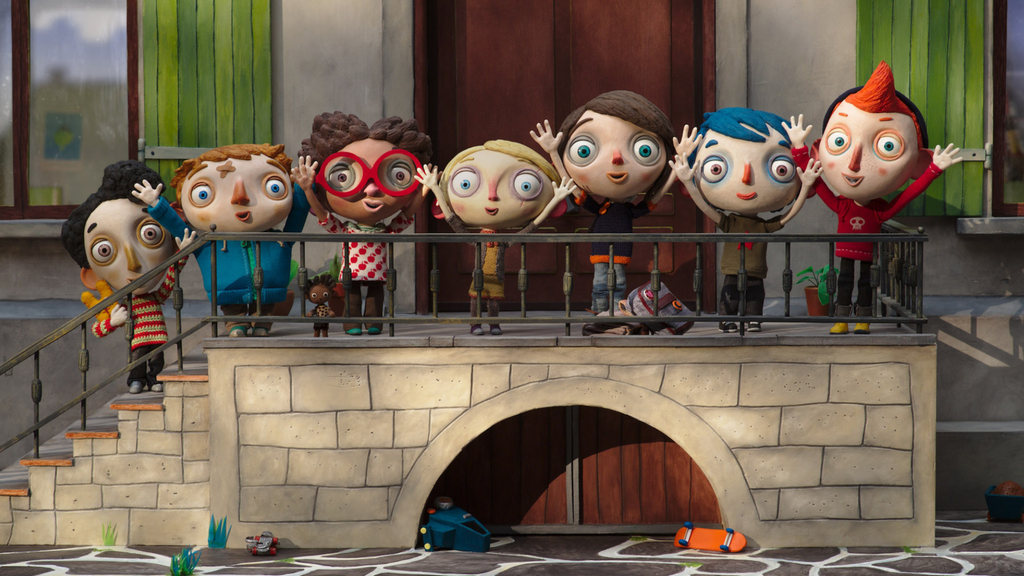
My Life as a Zucchini © GKIDS
My Life as a Zucchini (Ma Vie de courgette)
Directed by Claude Barras, 2016, 1h06, France-Switzerland / PG-13, recommended for ages 12+
After his mother’s sudden death, Zucchini is befriended by a police officer, Raymond, who accompanies him to his new foster home, filled with other orphans his age. At first he struggles to find his place in this at times strange and hostile environment. But with Raymond’s help and his newfound friends, Zucchini eventually learns to trust and love, as he searches for a new family of his own. Brought to life through memorable character designs and expressive stop-motion animation, the story soars with laughter, sorrow, and joy, and stands as a testament to the resilience of the human heart. Nominated for the Academy Award for Best Animated Feature (2017).
Available on Amazon Prime Video | Apple TV | YouTube | Google Play | Fandango | Kanopy
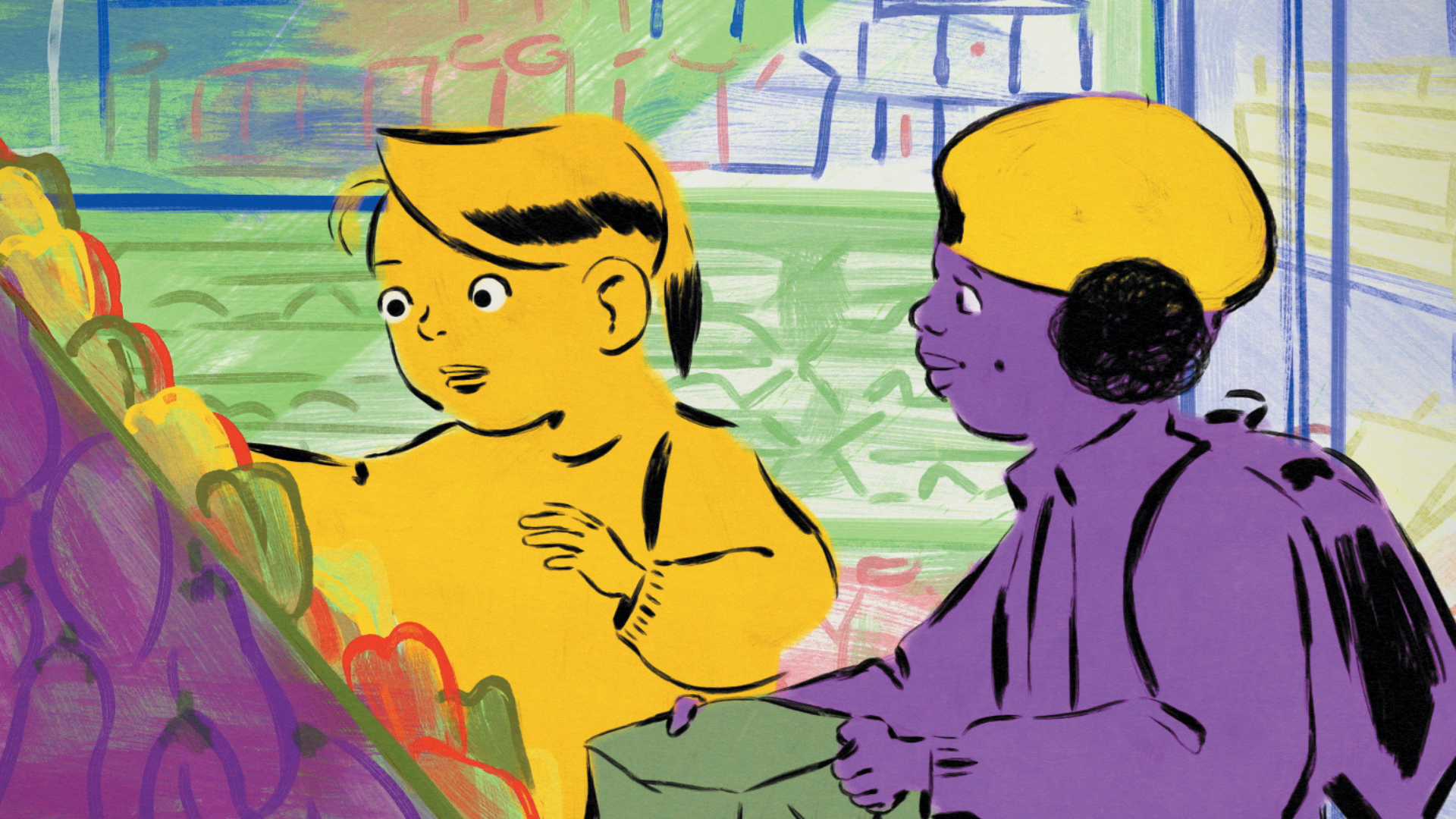
Chicken for Linda! © GKIDS
Chicken for Linda! (Linda veut du poulet !)
Directed by Chiara Malta & Sébastien Laudenbach, 2023, 1h13, France-Italy / Not Rated, recommended for ages 10+
Paulette feels guilty after unjustly punishing her daughter Linda and would do anything to make it up to her. Linda immediately asks for a meal of chicken with peppers, which reminds her of the dish her father used to make. But with a general strike closing stores all across town and pushing people into the streets, this innocent request quickly leads to an outrageous series of events that spirals out of control, as Paulette does everything she can to keep her promise and find a chicken for Linda.
Discover an interview with directors Chiara Malta and Sébastien Laudenbach.
Available on Apple TV | Amazon Prime Video | Fandango | YouTube Movies & TV | Google Play
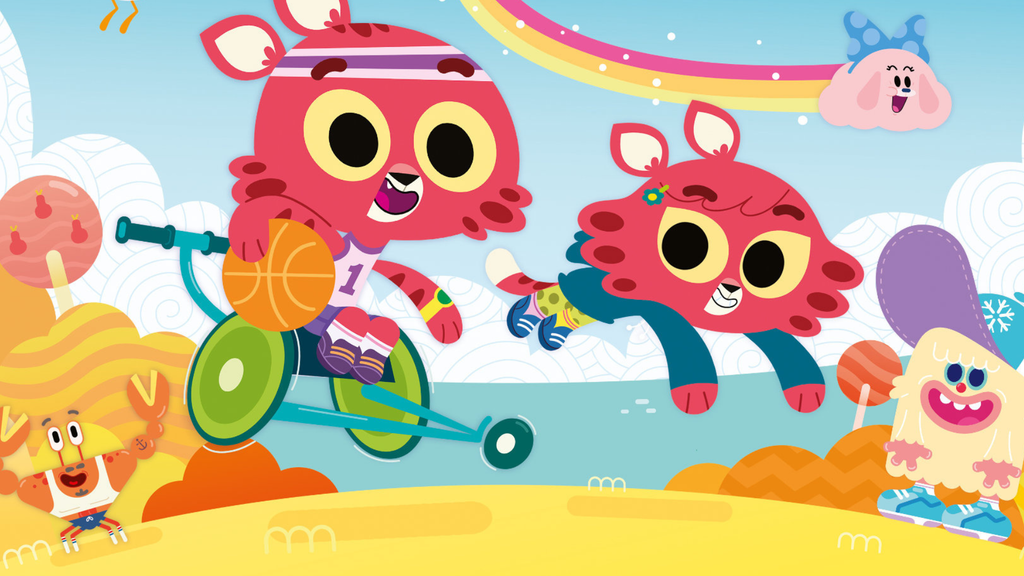
Paprika © Xilam
Paprika
Created by Marion Billet & Baptiste Lucas, directed by Jean Cayrol, 2018, animated TV series, 1 season, recommended for ages 3+
Learn to draw, count, sing and play with the Paprika twins, Stan and Olivia, and friends as they turn everyday events into grand adventures.
Available on Tubi
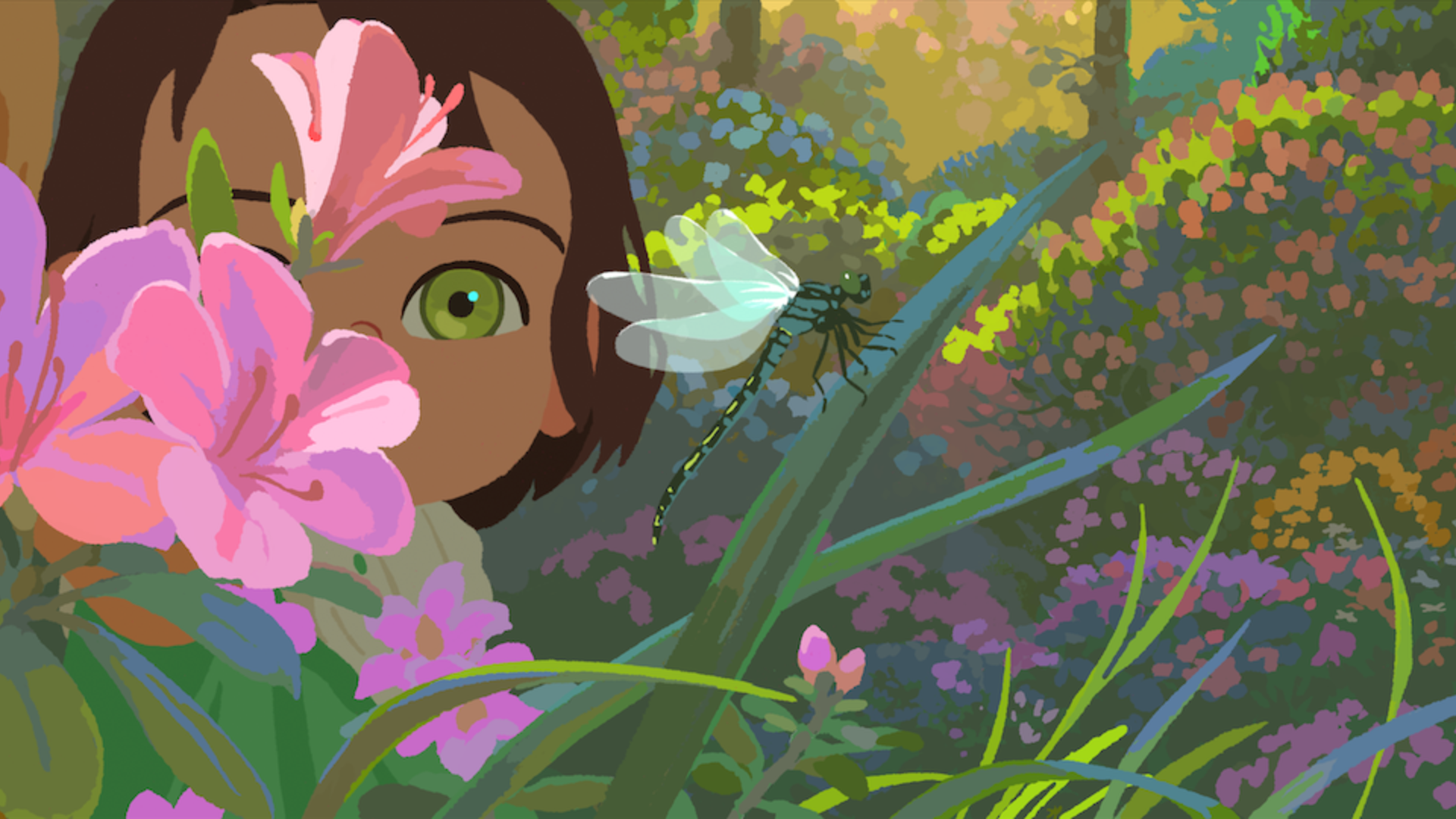
Little Amélie or the Character of Rain © GKIDS
Little Amélie or the Character of Rain (Amélie et la métaphysique des tubes)
Directed by Maïlys Vallade & Liane-Cho Han, 2025, 1h17, France / PG, recommended for ages 9+
When Amélie takes a miraculous bite of chocolate, she awakens to all the world’s wonders. As she explores her home in post-war Japan, she bonds with housekeeper Nishio-san, discovering new delights in this visually stunning, unforgettable story. Nominated for the Academy Award for Best Animated Feature (2026).
Discover an interview with directors Maïlys Vallade and Liane-Cho Han.
Available on Amazon Prime Video | Apple TV | YouTube Movies & TV | Google Play | Fandango
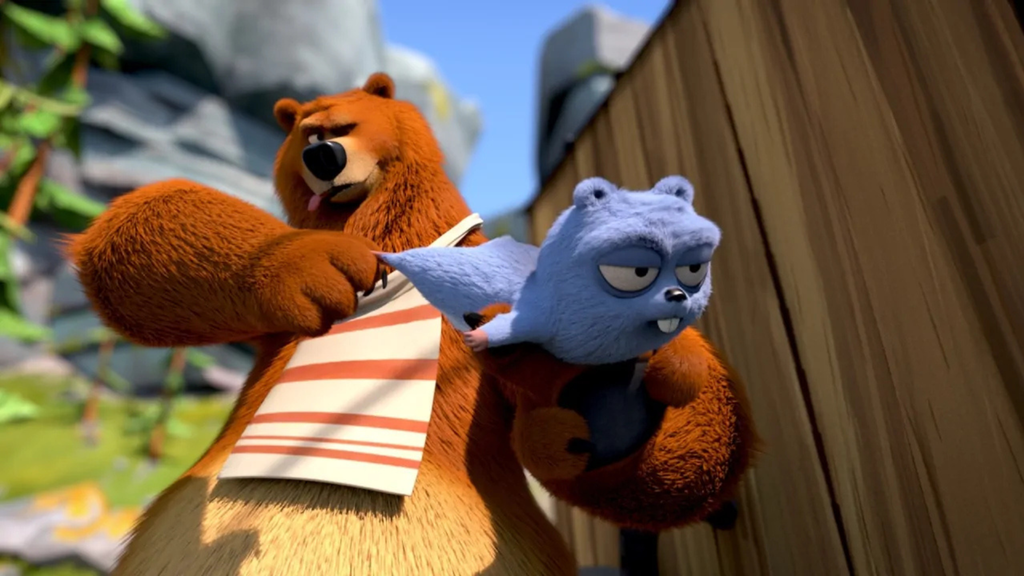
Grizzy & the Lemmings © HARI Studios
Grizzy & the Lemmings (Grizzy et les Lemmings)
Created by Antoine Rodelet & Josselin Charier, 2016–2025, animated TV series, 4 seasons, TV-Y7, recommended for ages 5+
In a vast natural reserve in Canada, there is a small haven of human civilization: the forest ranger’s house. As soon as the forest ranger is away, Grizzy feels it’s only natural that the house becomes his territory. And no other animal would dare to contest this privilege. Nobody? Except the Lemmings! They may look inoffensive, but there are a lot of them, and they want their part of the fun!
Available on Netflix | Amazon Prime Video | The Roku Channel | Tubi | YouTube | Pluto TV | Sling TV | Xumo Play
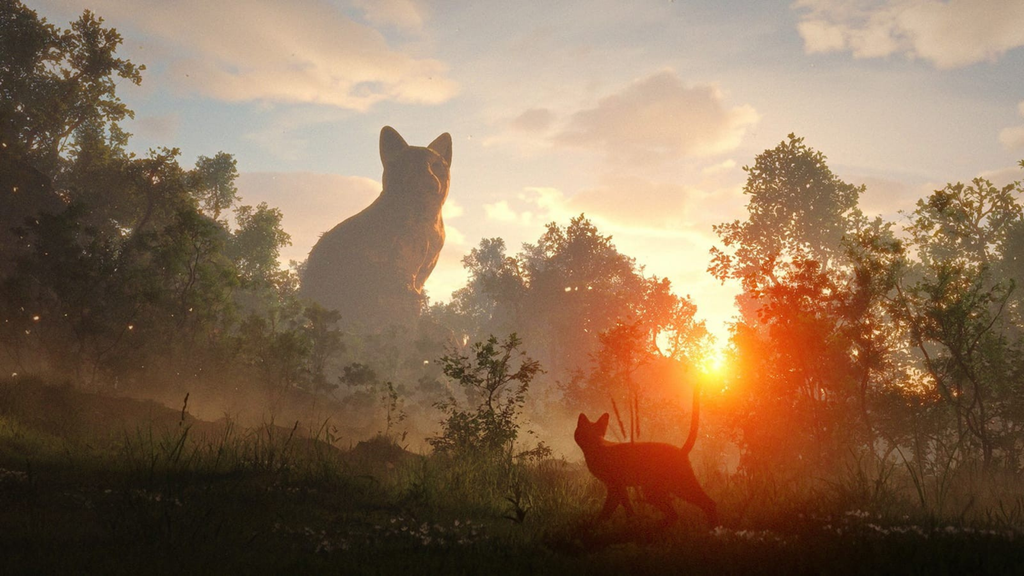
Flow © Janus Films
Flow
Directed by Gints Zilbalodis, 2024, 1h25, Latvia-France-Belgium / PG, recommended for ages 8+
From the boundless imagination of filmmaker Gints Zilbalodis comes this thrilling animated spectacle, a wondrous journey through realms natural and mystical. A courageous cat teams up with a capybara, a lemur, a bird, and a dog in search of dry land after their home is devastated by a great flood. Together they must rely on trust, courage, and wits to survive the perils of a newly aquatic planet. Winner of the Academy Award for Best Animated Feature (2025).
Available on Amazon Prime Video | Apple TV | Fandango | Google Play | YouTube Movies & TV
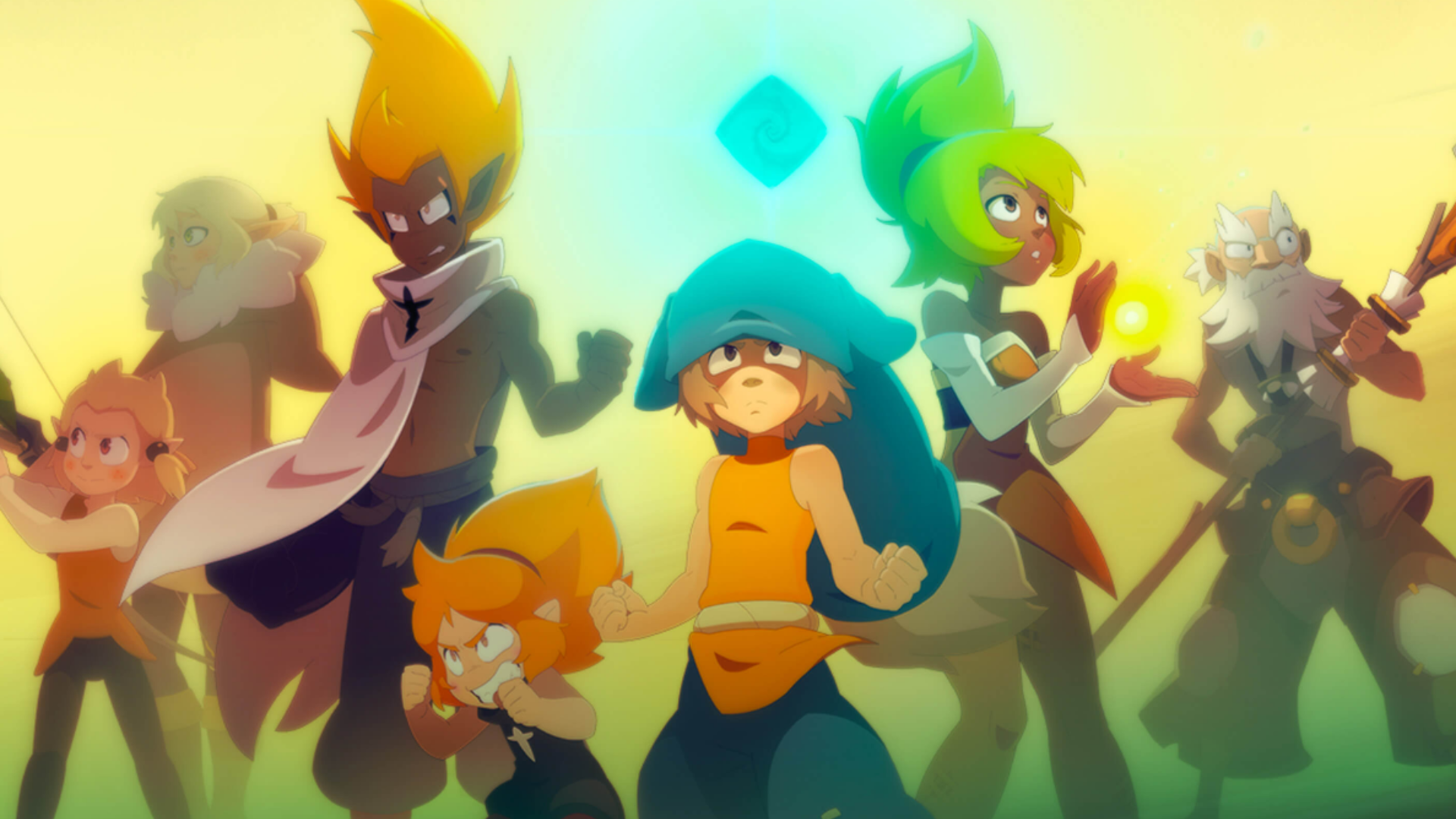
Wakfu © Ankama Animation
Wakfu
Created by Anthony Roux, animated TV series, 2007-2024, 4 seasons, recommended for ages 9+
In a fantasy world, a mysterious figure leaves a baby boy with a retired bounty hunter in a small village with instructions to raise him until the time is right for him to find his biological family. Years later, that boy named Yugo discovers he has powerful magic abilities using the power of Wakfu even as his village is threatened.
Available on Netflix | TV5 Monde+ (in French)

The Summit of the Gods © Wild Bunch
The Summit of the Gods (Le Sommet des dieux)
Directed by Patrick Imbert, 2021, France-Luxembourg, 1h34, PG, recommended for ages 13+
A photojournalist’s obsessive quest for the truth about the first expedition to Mt. Everest leads him to search for an esteemed climber who went missing.
Available on Netflix
Tip: Be sure to click on “Audio & Subtitles” and select audio in French.
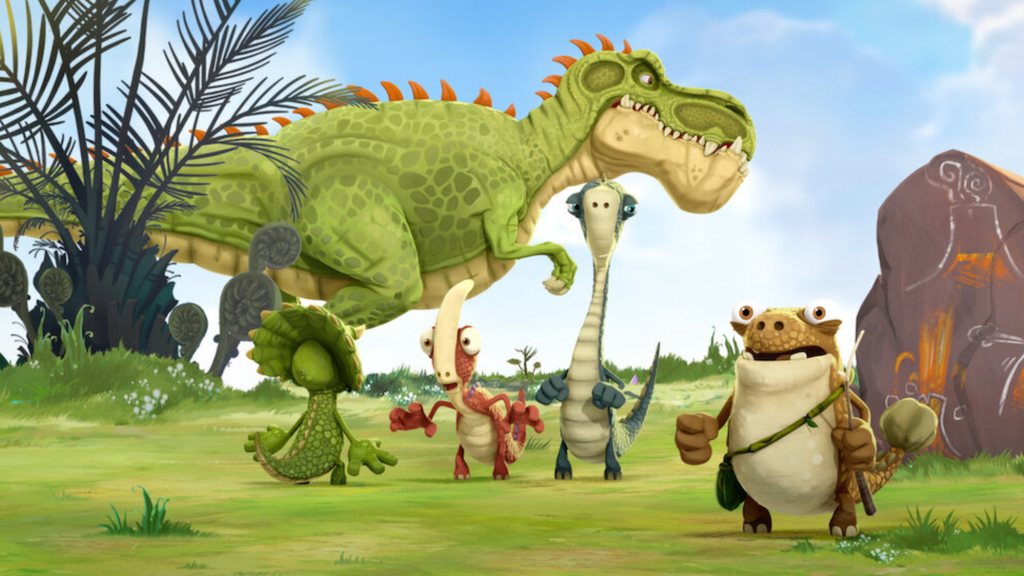
Gigantosorus © Netflix
Gigantosorus
Created by Franck Salomé, Nicolas Sedel and Fernando Worcel, 2019–2022, animated TV series, 3 seasons, TV-Y, recommended for ages 5+
Four young dinosaur friends explore a prehistoric world of adventure where the most exciting mystery of all is Gigantosaurus, the biggest and fiercest dinosaur anyone has ever seen! Inquisitive Mazu, playful Tiny, timid Bill and courageous Rocky all want to discover the secrets of the elusive Gigantosaurus, and will find out they all have something to learn from him too.
Available on Disney+ | Netflix | Amazon Prime Video | Apple TV | YouTube| Fandango
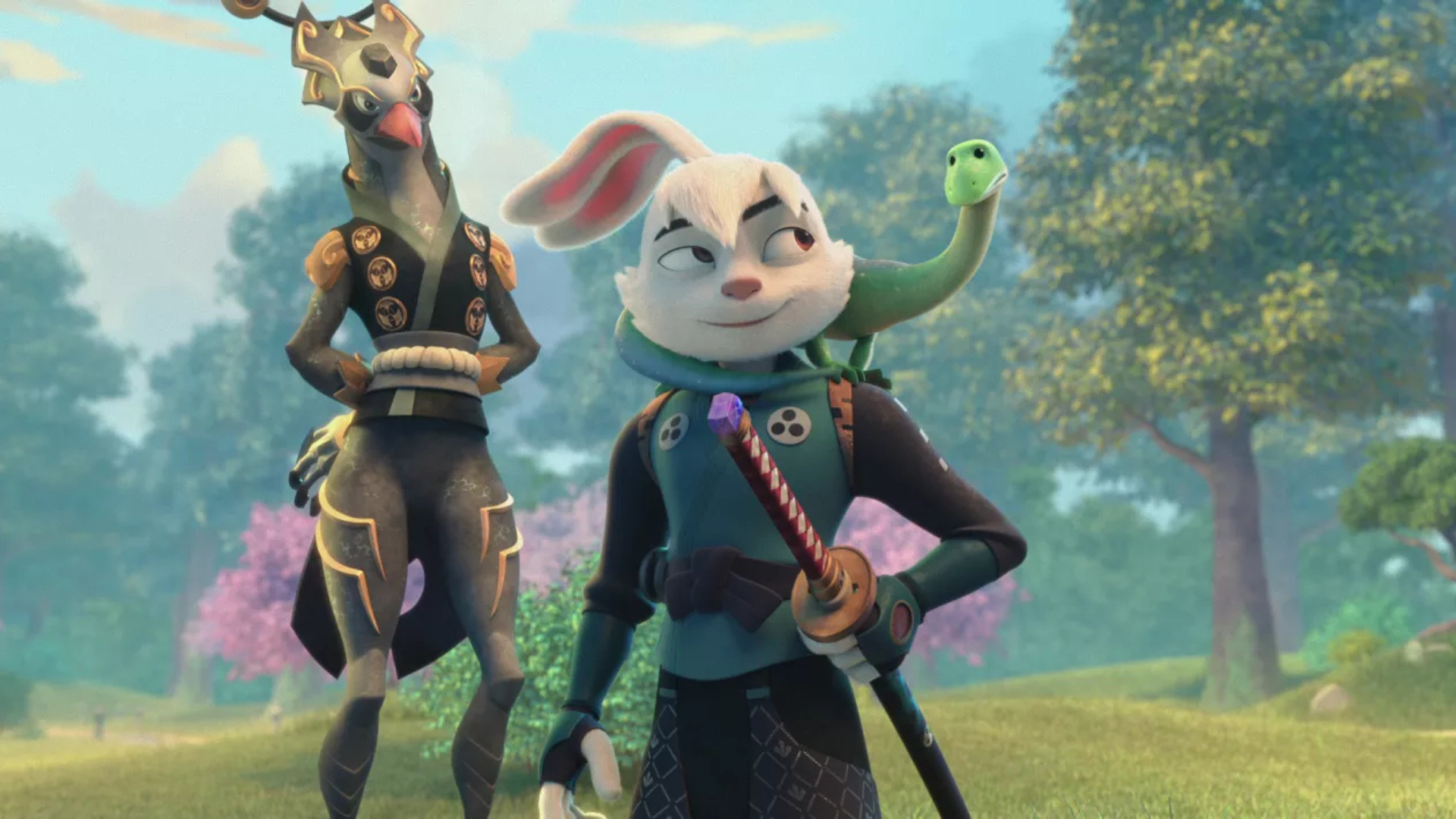
Samurai Rabbit: The Usagi Chronicles © Gaumont
Samurai Rabbit: The Usagi Chronicles (Lapin samouraï : Les chroniques d’Usagi)
Created by Doug Langdale, 2022, animated TV series, 2 seasons, TV-Y7, recommended for ages 9+
Teenage Rabbit Samurai Yuichi, a descendant of the great warrior Miyamoto Usagi, embarks on an epic quest to become a true samurai.
Available on Netflix
Tip: Be sure to click on “Audio & Subtitles” and select audio in French.
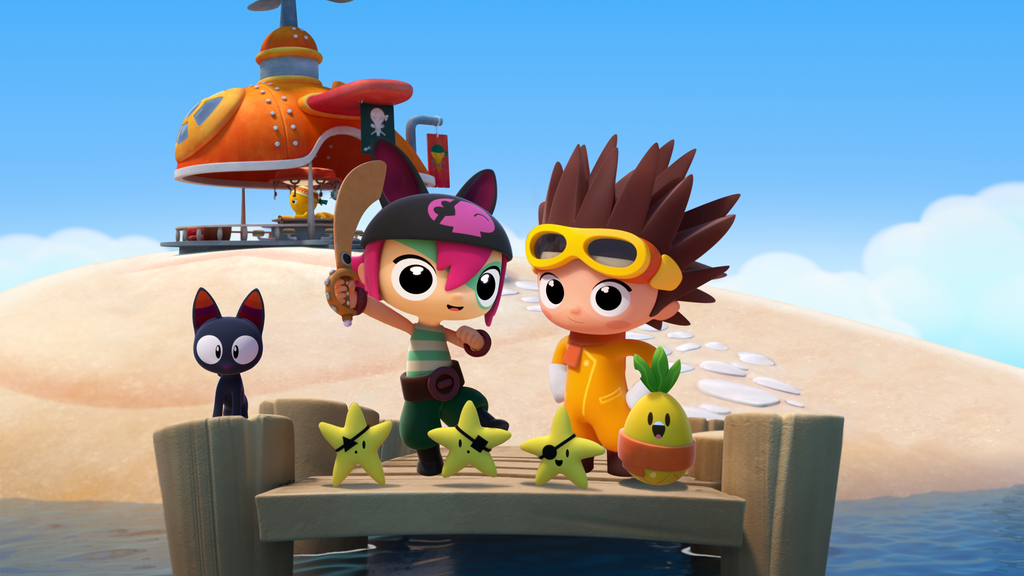
Pirata & Capitano © Millimages
Pirata & Capitano
Directed by François Narboux, 2016, animated TV series, 2 seasons, 11 min episodes, TV-Y, recommended for ages 4+
A colorful pirate crew aboard the Pink Skull searches for riches across the Great Sea, discovering friendship and excitement as they explore mysterious islands together.
Available on YouTube | Apple TV | Sensical Amazon Channel | Philo | Kidstream
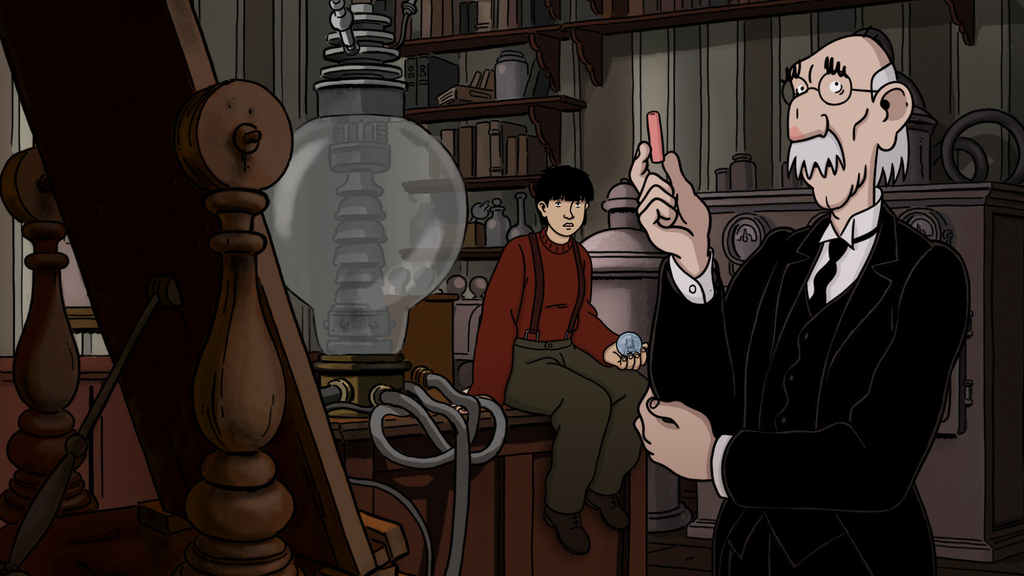
April and the Extraordinary World © GKIDS
April and the Extraordinary World (Avril et le monde truqué)
Directed by Christian Desmares & Franck Ekinci, 2015, 1h46, France-Belgium-Canada / PG, recommended for ages 10+
Paris, 1941. A family of scientists is on the brink of discovering a powerful longevity serum when all of a sudden a mysterious force abducts them, leaving their young daughter April behind. Ten years later, April lives alone with her cat, Darwin, and carries on her family’s research in secret. But she soon finds herself at the center of a shadowy and far-reaching conspiracy, and on the run from government agents, bicycle-powered dirigibles and cyborg rat spies.
Available on Kanopy | Shout! Factory Amazon Channel | Apple TV | Google Play | YouTube
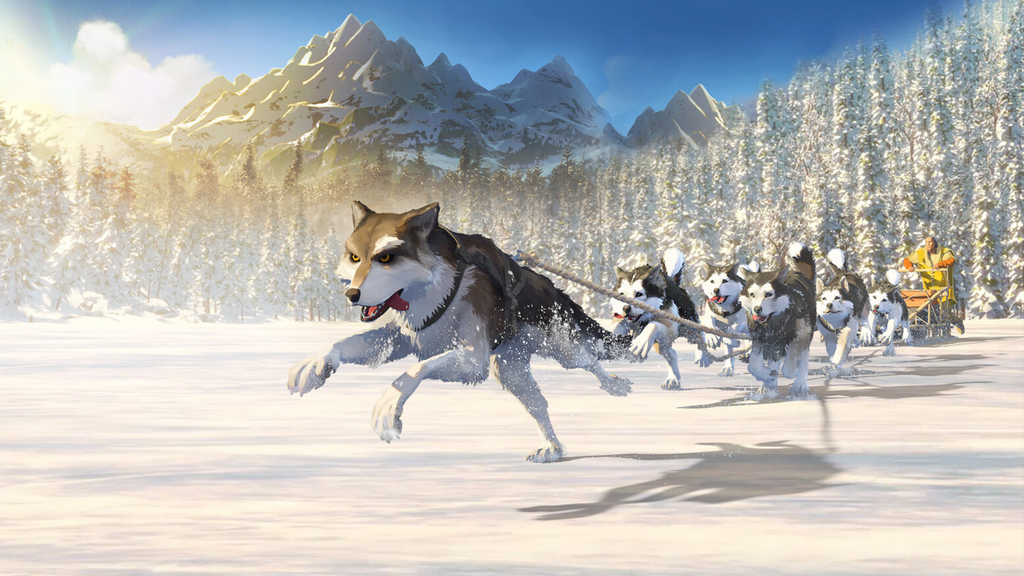
White Fang © Netflix
White Fang (Croc-Blanc)
Directed by Alexandre Espigares, 2018, 1h25, France-Luxembourg-United States / TV-PG, recommended for ages 10+
Based on the timeless novel by Jack London, White Fang is the story of a proud and courageous wolfdog, fighting for his survival among the Canadian wilderness, the cities suddenly became wealthy during the gold rush in the Klondike 1890s. Born in the forest of a sled dog mother who fled their masters, White Fang will overcome challenges imposed not by the hostility of nature itself, but by his encounter with the men who shaped these austere regions.
Available on Netflix
Tip: Be sure to click on “Audio & Subtitles” and select audio in French.

Rabbids Invasion © Netflix
Rabbids Invasion (Les Lapins Crétins : Invasion)
Created by Thierry Fontaine & Don LaFontaine, 2013–2019, animated TV series, 4 seasons, TV-Y7, recommended for ages 7+
Based on a popular video game series, “Rabbids Invasion” features a mysterious breed of rabbitlike creatures that have come from another planet and that cause havoc everywhere they go in the human world. The uncontrollable — and indestructible — creatures don’t respect society’s rules. As far as they’re concerned, there is only one rule: Have fun!
Available on Amazon Prime Video | The Roku Channel | Tubi | Spectrum | Fandango | Xumo Play
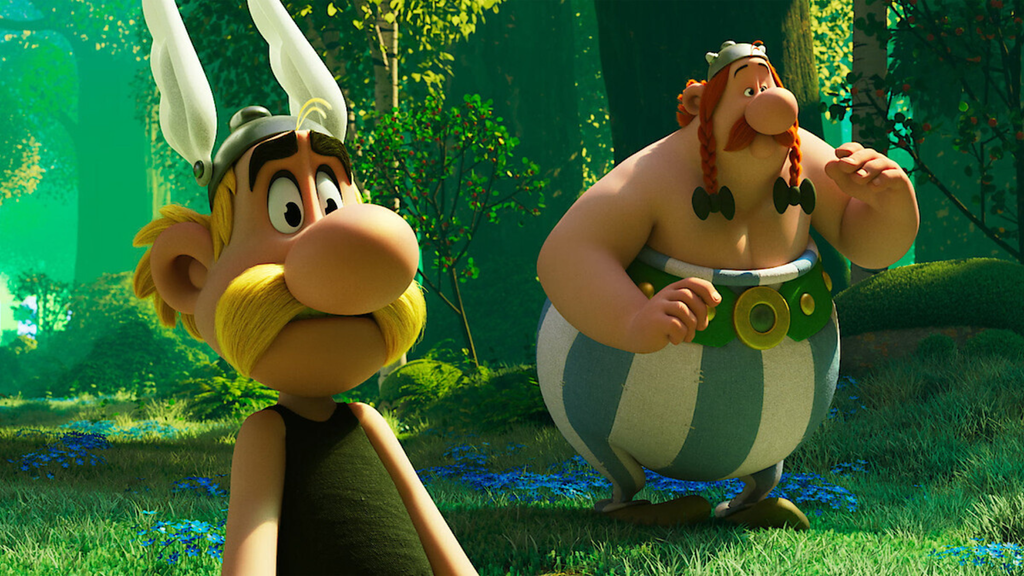
Asterix & Obelix: The Big Fight © Netflix
Asterix & Obelix: The Big Fight (Astérix & Obélix : Le Combat des chefs)
Created by Alain Chabat, directed by Alain Chabat & Fabrice Joubert, 2025, animated TV series, 1 season, 5 episodes, TV-Y7, recommended for ages 8+
When the druid Getafix forgets how to prepare the magic potion, Asterix and Obelix must defend the village as Caesar plots to use a Gallic law against them.
Available on Netflix
Tip: Be sure to click on “Audio & Subtitles” and select audio in French.

Miraculous: Ladybug & Cat Noir, The Movie © Netflix
Miraculous: Ladybug & Cat Noir, The Movie (Miraculous : Le Film)
Directed by Jeremy Zag, 2023, 1h42, France / PG, recommended for ages 8+
Ordinary teenager Marinette’s life in Paris goes superhuman when she becomes Ladybug. Bestowed with magical powers of creation, Ladybug must unite with her opposite, Cat Noir, to save Paris as a new villain unleashes chaos unto the city.
Discover a talk with producers Jérémy Zag and Anton Soumache.
Available on Netflix
Tip: Be sure to click on “Audio & Subtitles” and select audio in French.
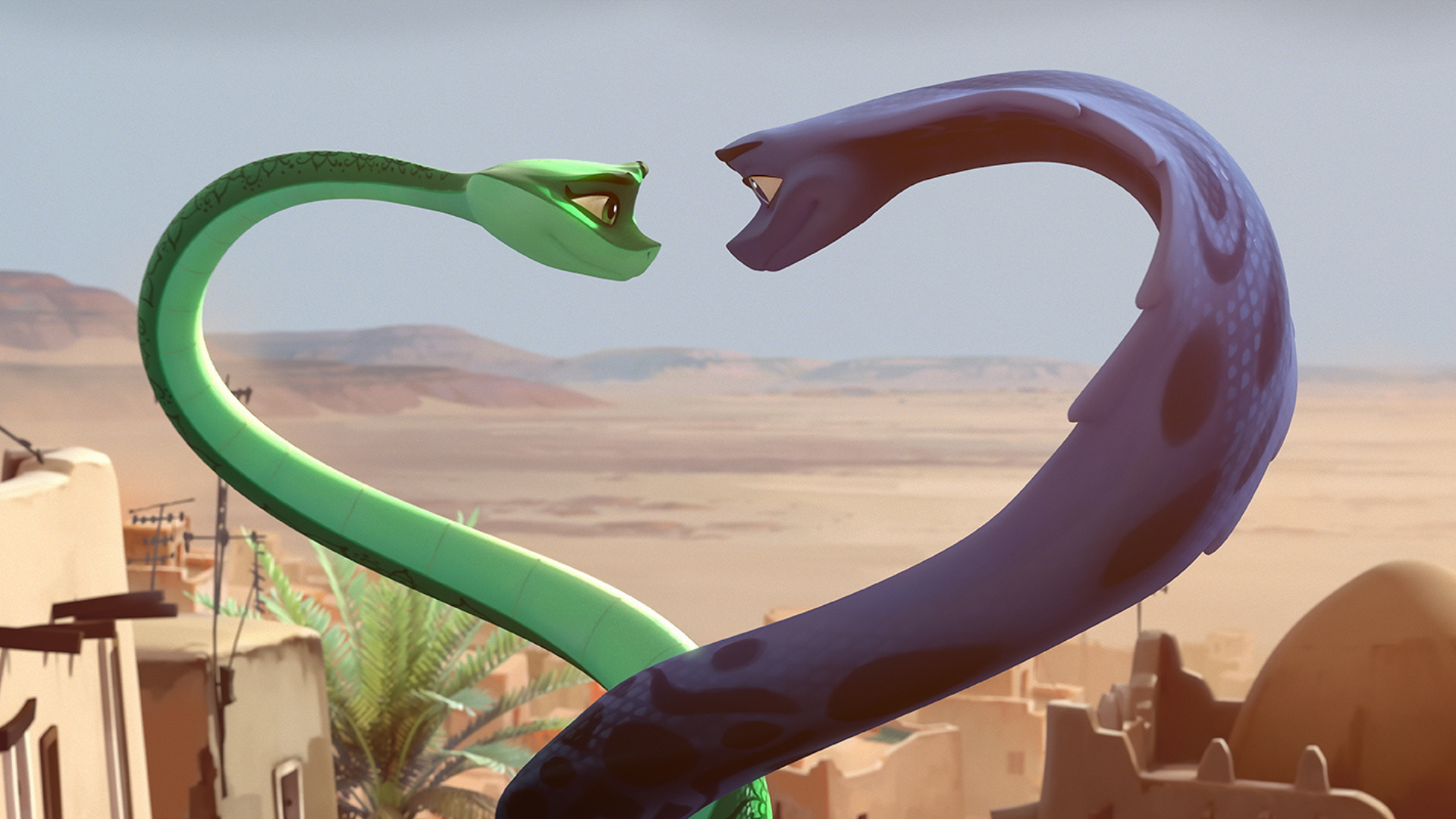
Sahara © 2016 Mandarin Cinéma – La Station Animation – Les films du grand désert – Studiocanal – M6 Films
Sahara
Directed by Pierre Coré, 2017, 1h26, France-Canada / TV-Y7, recommended for ages 10+
The story of Ajar, a young poisonous serpent, laughed at by his peers because he still has not done his first moulting and Eva, a rebellious princess of the oasis who wants to escape from an arranged marriage. The two meet and fall in love. Alas, Eva’s kidnapped by the Tuaregs & Ajar must save her.
Available on Netflix
Tip: Be sure to click on “Audio & Subtitles” and select audio in French.