

Louis-Cyprien Rials
Artist
September-October 2027
- Visual Arts
- Washington, DC

“For a long time, I have looked at American wars from the territories where they took place. I now want to look at them from the territory that prepared and archived them.”
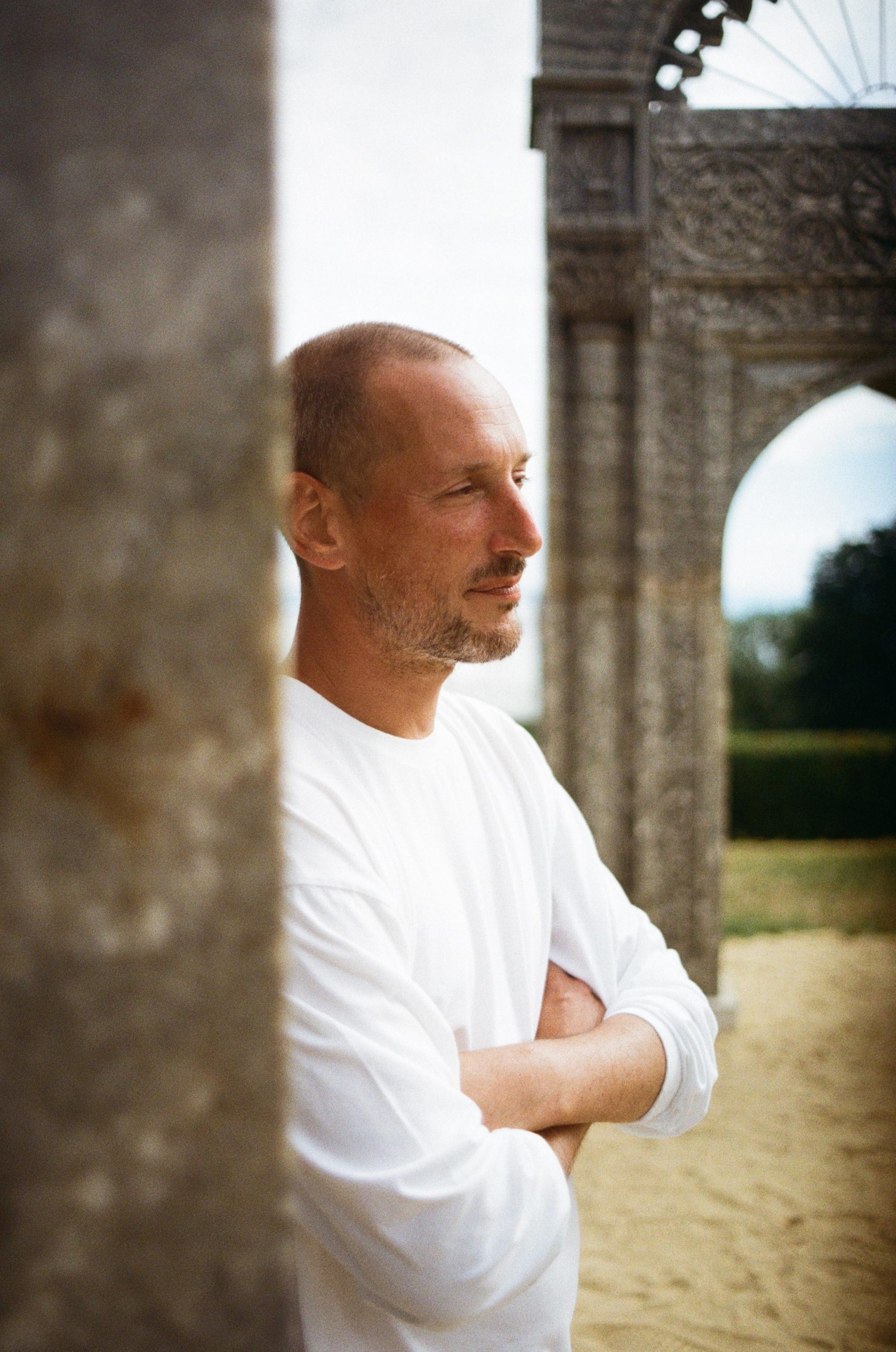
I am an artist working primarily with photography, video, installation, and archives. For the past fifteen years, my practice has developed in territories marked by war, disappearance, or the transformation of their heritage. I am less interested in the event itself than in the traces it leaves behind—in landscapes, architecture, objects, and images.
Iraq occupies a central place in my trajectory. I have worked there since 2011 and now live there. This long-term presence has led me to develop projects around Mosul, the destruction of heritage, landscapes of war, and the different ways in which a society preserves, reconstructs, or transforms the traces of conflict. This research has gradually expanded to other territories, notably Syria, Afghanistan, and Somalia. In each of these countries, I work from what remains: transformed landscapes, destroyed or reappropriated architecture, objects, archives, and images whose meaning evolves with history.
This approach notably gave rise to The Gates of Mosul, three monumental alabaster gates made in Mosul and dedicated to the city’s Muslim, Christian, and Jewish histories. With Foundation, I also began working with photographic archives produced by the U.S. military in Iraq, considering these images not only as historical documents but also as the product of a gaze, an institution, and a system of representation.
My Villa Albertine residency extends this research. After working for many years from territories shaped by contemporary wars, I now wish to shift my perspective and work from the United States, where some of these wars were conceived, prepared, represented, and archived.
This paragraph will be followed by a more formal short biography, written in italics. You may include awards you have received, works you have created, or any other information not mentioned above. Please provide a text of 50 to 100 words written in the third person.
Louis-Cyprien Rials is a French artist whose work explores the landscapes, architecture, and archives of territories marked by conflict. He was awarded the SAM Prize for Contemporary Art in 2017 and the City of Paris’s 1% for Art commission in 2020, and was notably an artist-in-residence in AlUla in 2024. His work has been presented at the Palais de Tokyo, the Musée d’Art Moderne de Paris, and the Fondation Le Corbusier. In 2025, he created The Gates of Mosul, a monumental work selected among the finalists for the Institut du Monde Arabe Design Prize in 2026.
For several years, I have been working with photographic archives produced by the U.S. military during the wars in Iraq and Afghanistan. These images constitute a paradoxical material: they document territories in which I have myself worked and lived, but they do so from a gaze, a purpose, and a history radically different from my own.
With Foundation, I began extracting some of these photographs from their military context in order to question their status as archives. The Villa Albertine residency will now allow me to trace them back to their source. In Washington, I intend to work with U.S. military and institutional collections in order to locate the original documents, their captions, series, and classification systems. This is not only about finding images, but also about understanding how an institution produces a visual representation of a territory at war, and how that representation becomes, twenty years later, a historical archive.
This archival research will be complemented by a second body of work devoted to military simulation architecture. In preparation for deployment, U.S. forces have built replicas of villages, streets, and homes inspired by Iraq and Afghanistan on American soil. I would like to photograph and film these training sets today, using the same tools I have used for years in the actual territories.
The project will therefore unfold between two corresponding geographies: on the one hand, images produced in Iraq and Afghanistan and subsequently preserved in the United States; on the other, representations of Iraq and Afghanistan constructed on American soil even before soldiers went to war.
Between archive and simulation, the same territory emerges: a country imagined, prepared, photographed, and then preserved through war.
The United States is essential to this research because it is where a large part of the images, documents, and representations I study were produced, centralized, and preserved. My work will focus primarily on the wars in Iraq and Afghanistan—two territories where I have worked and which I know directly—while remaining more broadly open to the archives of U.S. conflicts and military interventions since 2001 when they relate to the Middle East and Central Asia.
Washington and its surrounding area hold essential collections for this research. I would particularly like to work at the Library of Congress, the National Archives at College Park, and in collections related to U.S. military history. I also wish to meet archivists, historians, researchers, and former military personnel in order to understand the life of these images: why they were produced; how they were captioned, selected, and classified; as well as what has been preserved, lost, or remains inaccessible.
The residency should also allow me to leave the archives and confront these documents with physical sites. In particular, I would like to visit training sites where environments inspired by Iraq and Afghanistan were built to prepare soldiers for deployment. Having photographed the actual territories, I now want to observe their American double: architecture and landscapes reconstructed from a military representation of distant countries.
For a long time, I have observed the American presence from the territories where it was exercised. This residency will allow me to reverse that gaze: to begin from Iraq and Afghanistan and trace my way back to the places where these wars were prepared, represented, documented, and ultimately transformed into archives.
In partnership with
Galerie Eric Mouchet
Galerie Eric Mouchet is a contemporary art gallery based in Paris and Brussels, primarily representing artists with forward-looking practices that engage with geopolitical, social, ecological, and gender-related issues across a wide range of media.

Cadence Films
Cadence Films is a global creative and production company representing an exclusive roster of directors and producing high-end audiovisual campaigns for leading agencies and international brands.