

Théo Ould
Musician, accordionist
Fall 2025
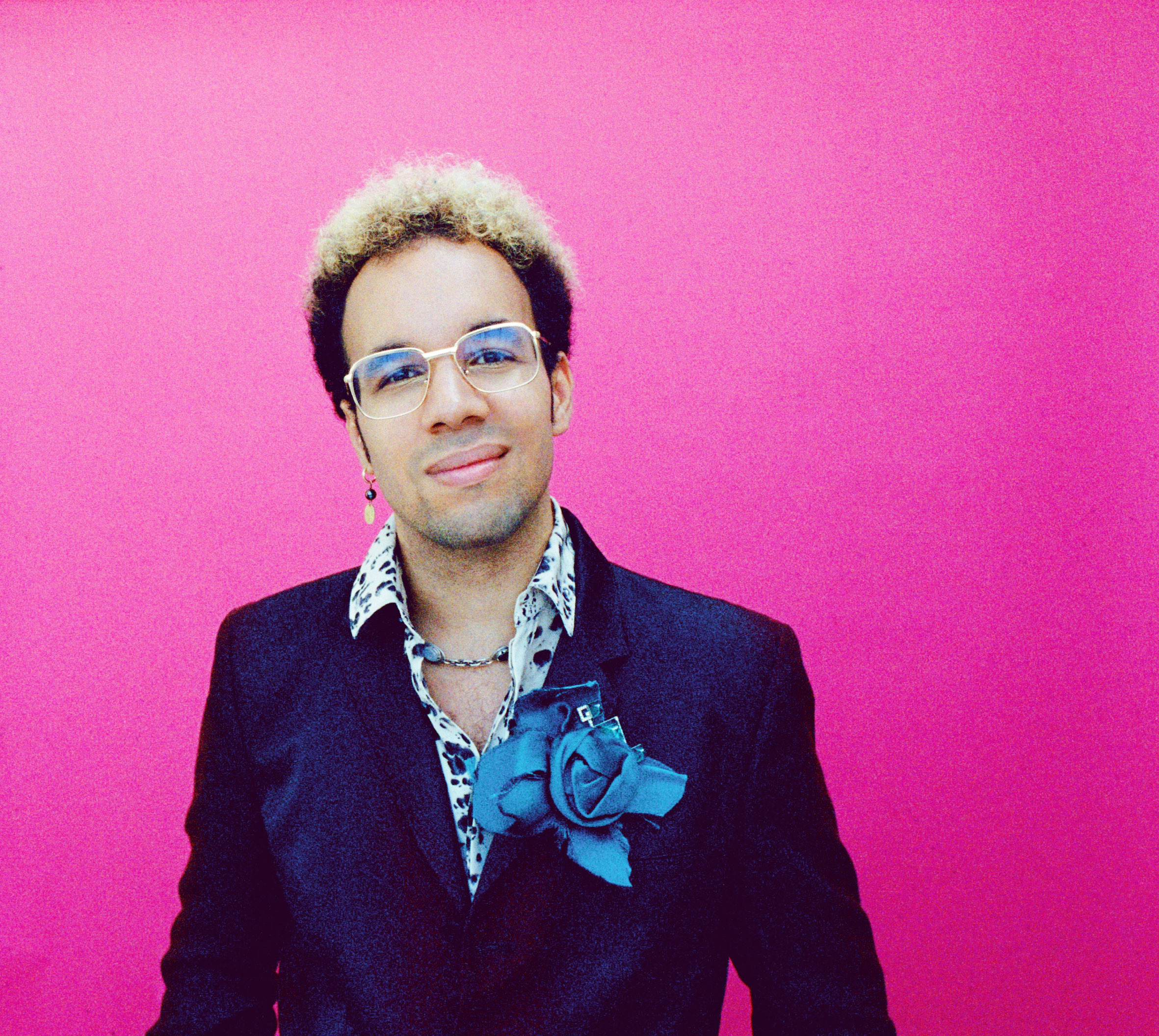
- Music
- Houston

“This project generates a real cultural exchange. I will bring a little-known instrument to the United States, while immersing myself in a culture that has fascinated me since my childhood, thus enriching the classical accordion repertoire.”
I am a classical accordionist. A name that could lead one to believe in an oxymoron and yet it has been more than half a century since accordionists have taken over the classical repertoire. In addition to the need to practice a little self-mockery, this requires always seeking to expand the repertoire of the instrument. To do this, I have been focusing since my studies at the Paris Conservatory on two artistic axes; the creation of new works and the transcription of works originally written for other instruments.
Having tried different musical practices during my childhood in Marseille, it is the creative freedom of this piano with straps that finally seduced me the most. Indeed, the need to broaden the field of possibilities of the accordion amounts to having to constantly imagine, think, create. This is what drives me and what I think best fits the definition of a performer.
In this sense, I have had the chance to create several chamber music groups that are as many laboratories of exploration, such as the Philia Trio made up of a violin, a cello and an accordion, a duo with a clarinetist and more recently, new collaborations with a string quartet and a duo with a viola da gamba.
I also have the pleasure of performing solo, whether in recital or with orchestra. My first solo album: “Laterna Magica” released in October 2023 by Alpha Classics is a reflection of my approach. Bach, Rameau, Mozart rub shoulders with contemporary creations for accordion and electroacoustics.
‘Served by a masterly technique (an unbelievably supple left hand and an inexhaustible wealth of phrasing), Théo Ould’s interpretations show a personality expressing itself naturally in terms of the imagination, with all the enchanting freshness that word implies.’ Pierre Gervasoni – Le Monde
At the age of 24, Théo Ould became the first accordionistto be nominated as a Newly Discovered Talent at the Victoires de la Musique Classique awards.
During his studies at the Conservatoire National Supérieur de Paris, Théo won various competitions in solo and chamber. He became a laureate of the Banque Populaire Foundation in 2019 and the Safran Foundation in 2024.
Passionate about opera as well as the UK rock scene, he has freely rewritten the conventions of the classical concert – not in any way to sacrifice the music, but rather to let it be heard in a different way, one in tune with our time.
When I was 13, I took part in a musical production of Terry Riley’s In C, discovering composers like Steve Reich and John Adams who fascinated me. My interest in American musicians and jazz, such as Gershwin and Bill Evans, has only grown.
Today, as a classical accordionist, I enjoy the creative freedoms of my instrument, while facing challenges, including the perception of the accordion, often associated with the musette, in France. Although the professional vision of the instrument has improved over the past forty years, there is still work to be done for the general audience. To remedy this, I work to establish a real repertoire, combining transcriptions of works of other instruments with original creations by contemporary composers. A lot of creators have written for the instrument in recent years, however, the classical accordion is still little represented in the United States, where it is neither taught in schools nor in universities.
My project aims to fill this void by collaborating with American composers to create new works. Through residencies, I want to work closely with these artists, in order to explore the capabilities of the accordion in real time. All these artists are also teachers. At the same time, I will interact with their composition students to raise their awareness of the accordion and encourage them to compose for this instrument in all its forms.
This project generates a real cultural exchange. I will bring a little-known instrument to the United States, while immersing myself in a culture that has fascinated me since my childhood, thus enriching the classical accordion repertoire. I also hope to present these new works during my tours in Europe, thus sharing the fruit of these collaborations.
I have always been very attracted to the diversity of the United States: its sociological vitality, its multicultural dimension and its interfaces with the international community. The different musical currents carried by a recent and multi-ethnic history, its freedom and its modernity are vectors of enthusiasm and induce an exciting dynamic.
I chose to anchor my project in Houston because its universities are very dynamic there. I realized during my research that it was an absolutely abundant city. I am looking forward to meeting and working with teachers like Panayiotis Kokoras at UNT, or Januibe Tejera at Butler school.
In preparing my application, I solicited other composers and places who then gave me favorable responses in New York and San Francisco.
Thus, although my residency is mainly based in Texas, I will have to travel punctually to broaden the scope of my project a little more.
New York is of course a very inspiring city on an artistic level. It is a true global crossroads where so many genius have rubbed shoulders and where those of today continue to meet.
San Francisco is a metropolis that symbolizes the American counterculture and protest movements. This city has been able to reinvent itself and innovate musically.
These cities, each with their own specificities and strong identity, offer many possibilities in terms of musical creation and are thus fully in line with my project to introduce a little-known instrument, the accordion, to create a new repertoire and new practices around the encounter between my universe and American musical movements.
In partnership with
Societe Generale Foundation
The Societe Generale Foundation contributes to the development of a more inclusive and sustainable society by supporting initiatives that generate a positive social impact in the fields of Education, Culture and the Environment. Driven by an entrepreneurial spirit, it provides support to structures of general interest and cultural organizations that carry out projects with a high impact potential, whether they are incipient or large-scale initiatives. The Foundation operates in France, at both national and regional level, and also supports multi-country or internationally oriented projects.
As a major partner of Villa Albertine’s residencies, the Societe Generale Foundation is committed, through this exceptional partnership, to supporting the career development of artists and promoting artistic excellence. It contributes to transatlantic dialogue through the arts and to the international reach of French culture. The Foundation particularly supports the development of classical music within the residencies through a dedicated call for projects, continuing a commitment spanning nearly 40 years in this field. This partnership also builds upon the Societe Generale Group’s ongoing support of contemporary art for the past 30 years, notably through a collection of nearly 1,800 works — paintings, graphic arts, photographs and sculptures — by French and international artists. Through these commitments, Societe Generale reaffirms its dedication to artistic creation and excellence, in France and internationally.
For more information, visit https://fondation.societegenerale.com/en.

Artmedeo
Austin Butler School of music