Skip to main Skip to sidebar

Laure Gouraige: Writing in the American South

Through writing that is both incisive and sensitive, she combines humor, keen observation of everyday life, and a critical eye at intellectual and artistic circles. Her second novel, Les Idées noires, was praised for its singular tone and its ability to capture the tensions of a generation confronted with today’s political and identity-related issues.

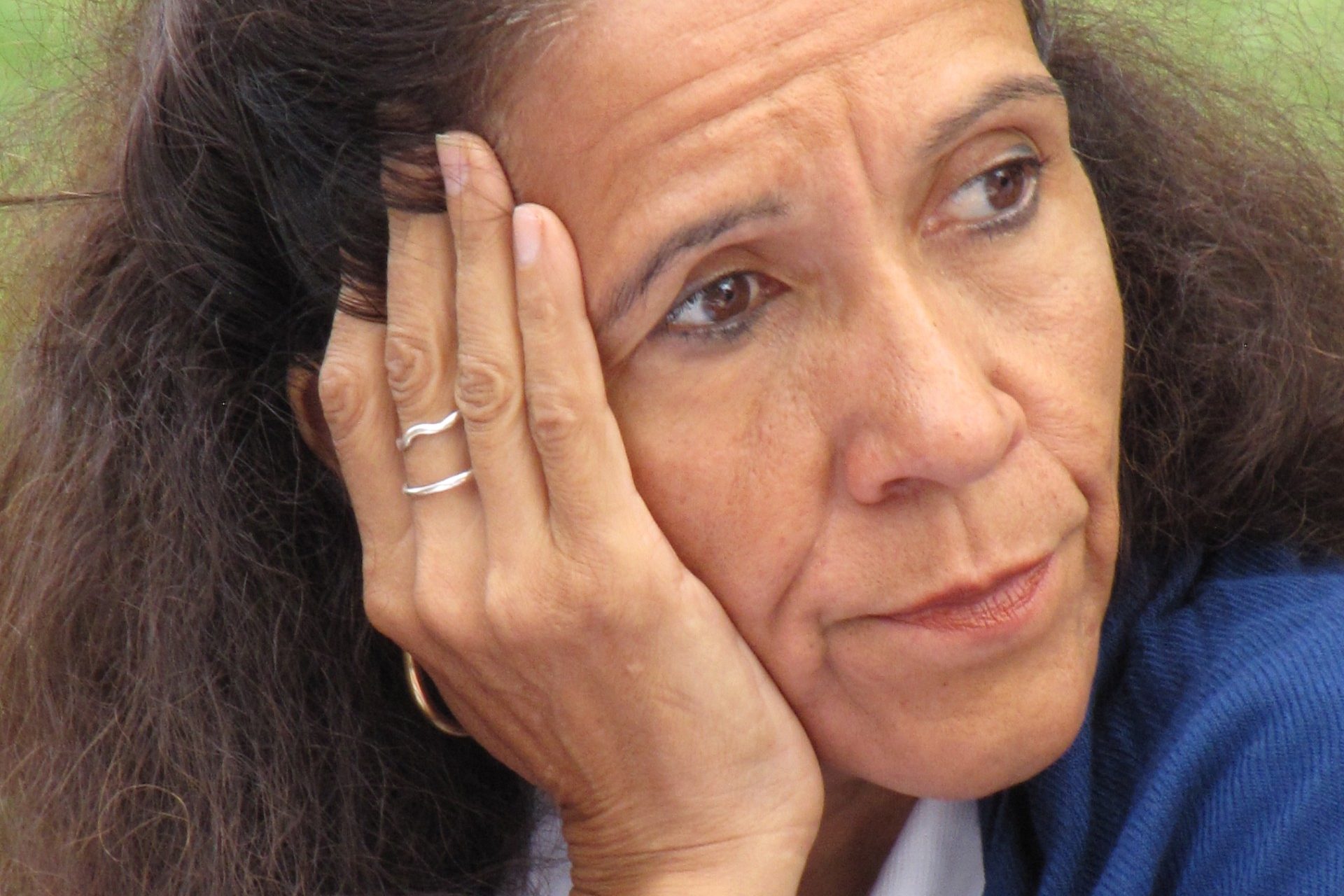
While working on her next book in Boone, North Carolina, Laure Gouraige spoke with Villa Albertine Atlanta about writing her upcoming novel, her Haitian roots, and her impressions of North Carolina and the United States.

Does the book you are currently writing resonate particularly well here?

Yes, it’s a novel inspired by the world of American comic books, so naturally I feel like I’m in the right place! What has really struck me since arriving here is how deeply the world of comics and superheroes is woven into American pop culture. People are very receptive to the subject, and I’ve received a lot of interested reactions because, in reality, very few novels try to borrow the codes of superheroes and comic books. People are intrigued by the idea of translating such a visual universe into writing.

What has also struck me since arriving is that there isn’t the slightly condescending attitude toward comics and superheroes that you sometimes encounter in France. In the United States, I’ve been able to discuss these aesthetics and narrative forms with scholars who take them very seriously and specialize in the subject.

You came to North Carolina to work on this manuscript. Does it resonate with the realities of the American South?

The novel doesn’t directly engage with the realities of the American South, but being here inevitably feeds my imagination. My heroine lives in a fictional city marked by a genocide that took place about twenty-five years before the beginning of the story. Although the event is never explicitly named, the entire city still bears the traces of that violence.

The city in the novel is called Mirapolis. I partly imagined it while thinking about Atlanta and its Beltline, that former abandoned railway loop which has now been heavily modernized. The entire narrative is anchored around this boundary and what the railway line represents socially, politically, and symbolically.

I’m also trying to read a lot of American literature, especially works dealing with memory, segregation, and the way history becomes physically inscribed in a landscape. In that sense, the South is fascinating because you can feel how visible the past still is.

Is it true that you’re coming with your family to see the Morocco–Haiti FIFA football match?

Yes, absolutely. My father’s family is of Haitian origin, and my uncle is a huge football fan, so there was no way he would miss a match! We’re all very excited to attend. It’s a major cultural and family event.

Football has always held a very important place in Haiti. What’s remarkable is that this qualification is the country’s first since 1974, so it’s a truly national event that goes far beyond sport itself. Haiti has been a deeply fractured country for a long time now, marked by terrible crises, and football offers a way to recover a sense of national unity.

And they’ll have tremendous support. The entire Haitian community is expected to travel to see the matches, especially in Atlanta. The event is becoming almost as much a community gathering as a sporting occasion.

What were your impressions of North Carolina during your stay?

It’s beautiful — a vast place, and above all I’m dazzled by the magnificent, lush natural environment. It’s also inspiring for my novel because, although part of the story takes place in a large city, some characters flee to the mountains outside the fictional capital.

What also surprised me in North Carolina — and something I didn’t know before arriving — is the dynamism of the local intellectual life. There are several very stimulating hubs for technology and higher education in the region, with universities, research centers, and cultural infrastructure.

It allows me to write in a perfect balance: both in isolation and tranquility, while still having access to discussions, encounters, and very rich research material on campus. It gives this region a very distinctive identity.