
29th Festival of Films in French in Milwaukee
The Festival of Films in French at the University of Wisconsin-Milwaukee returns for its 29th edition with a program that considers cinema as a space for resistance, artistic freedom, and cultural transmission. Over six days, the festival brings together films that engage with history, justice, identity, and the power of storytelling.
Spanning Europe, North America, Africa, and Asia, this year’s selection moves between past and present, collective memory and contemporary realities. The films highlight moments when art (whether through cinema, theater, or experimental forms) becomes a response to political violence, social injustice, and erasure, offering new ways of seeing and understanding the world.
The program also reflects on the evolution of French artistic innovation, tracing connections between early modern movements, radical cinematic gestures, and cross-disciplinary experimentation. Alongside these historical and artistic perspectives, more intimate narratives explore questions of heritage, family, and belonging, particularly through the eyes of younger generations.
PROGRAM
Godard, seul le cinéma (Godard Cinema) Directed by Cyril Leuthy (2022) — Feature film exploring the work and impact of Jean-Luc Godard, pushing artistic and political boundaries through cinema.
Of Mud and Blood (Le sang et la boue) Directed by Jean-Gabriel Leynaud (2025) — Follows miners and local communities in the Democratic Republic of Congo fighting for environmental and social justice.
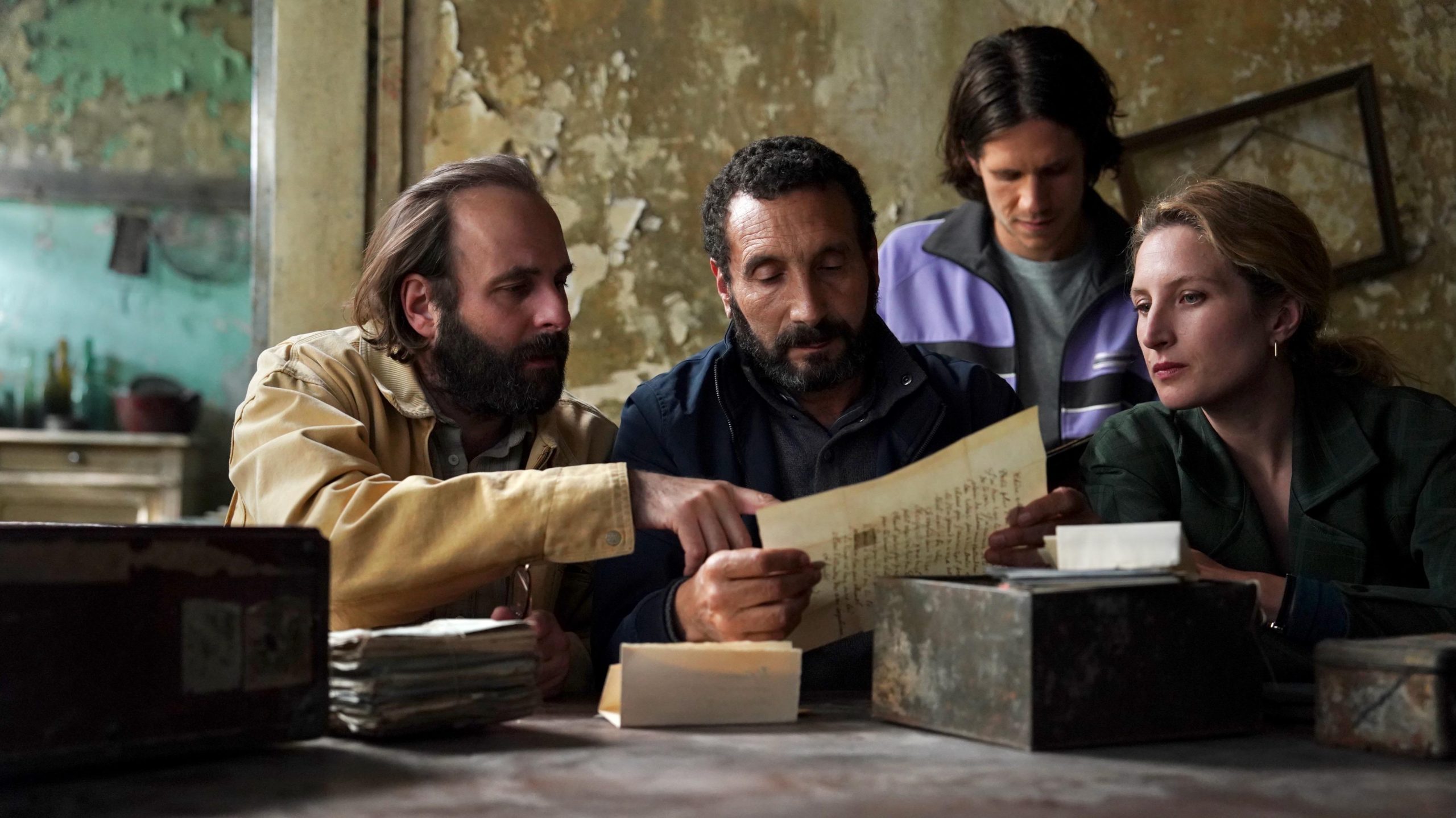
Ghost Trail (Les fantômes) Directed by Jonathan Millet (2025)— Traces the journey of a Syrian refugee navigating the fine line between justice and revenge.
Colors of Time (La venue de l’avenir) Directed by Cédric Klapisch (2025)— Film highlighting the evolution of French artistic innovation, from 19th-century Impressionism and the avant-garde.
Princess Mandane (La Princess Mandane) Directed by Germaine Dulac (1928)— Shown as part of the exploration of the intertwining of the arts in the 1920s silent film era.
Kyiv Theater, an Island of Hope (Aux bords de la guerre, Ariane Mnouchkine et le Théâtre du Soleil à Kyiv) Directed by Duccio Bellugi-Vannuccini / Thomas Briat (2024) — Documentary by Ariane Mouchkine about use of theater as cultural defiance during wartime in Ukraine.
Dounia, The Great White North (Dounia, le grand pays blanc) Directed by Marya Zarif / André Kadi (2025)— Story of a young character reconnecting with her Syrian heritage while embracing friends’ French-Canadian and Indigenous cultures.
Holy Cow (Vingt Dieux) Directed by Louise Courvoisier (2024)— Follows Totone as he seeks to preserve his family’s way of life through cheesemaking (annimated film).
Meeting With Pol Pot (Rendez-vous avec Pol Pot) Directed by Rithy Panh (2024)— Journalists pursue truth in the face of Khmer Rouge propaganda and intimidation.
The Festival of Film in French is a grantee of Albertine Cinémathèque, a program of the Albertine Foundation and Villa Albertine, with support from the CNC (Centre national du cinéma et de l’image animée) and SACEM / Fonds Culturel Franco-Américain.