

TV5MONDE Program Highlights – November 2026
Throughout November, the international French-language network TV5MONDE offers a rich lineup of entertaining films, series, specials, and variety programming.
Discover our roundup of the must-see programs this month below.
TV5 Monde
Films
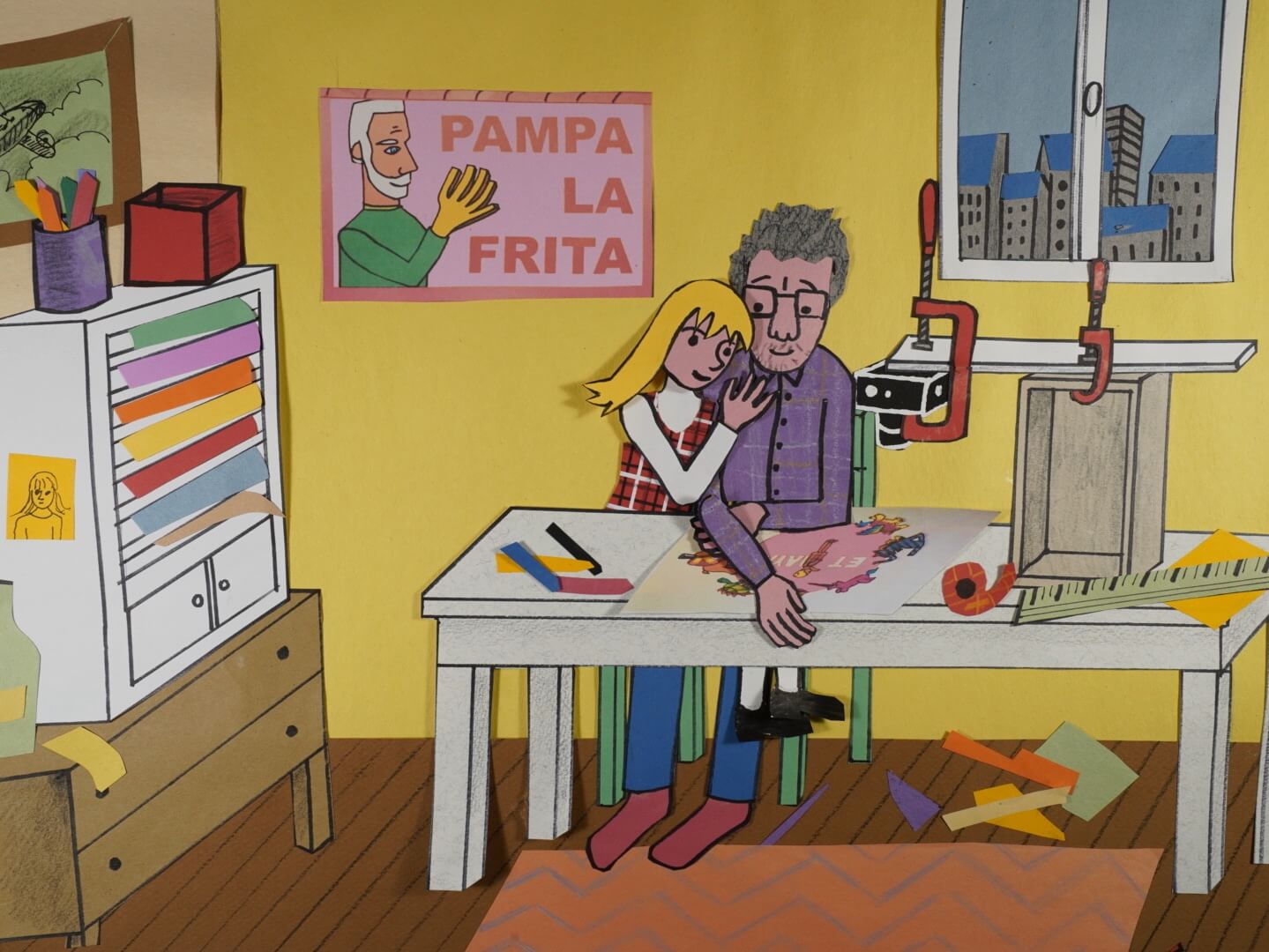
Maya, donne-moi un titre— November 1 at 8:30pm ET/5:30pm PT
Also streaming on TV5MONDE+
(English ST)
Maya’s father travels a lot. To maintain the link with his daughter, he asks her every evening on the telephone: “Maya, give me a title”. Using this as a starting point, he invents a story for her, in which she is the heroine, in the form of a cartoon.
Director: Michel Gondry (France, 2024)
Cast: Pierre Niney, Maya Gondry
Genre: Animation, youth Awards: Crystal Bear for Best Film at the Berlinale (Germany, 2025); selected for the Melbourne International Film Festival (Australia, 2025), the New York International Children’s Film Festival (USA, 2025) and the Hong Kong International Film Festival (Hong Kong, 2025)
La porteuse de pain— November 3 at 8:30pm ET/5:30pm PT
Also streaming on TV5MONDE+
In honor of the 20th anniversary of Philippe Noiret’s death
(English ST)
Jeanne Fortier, a factory worker, is wrongly accused of murdering her employer after rejecting the advances of the real culprit. He flees and changes his identity. Twenty years later, she escapes from prison and, having become a bread carrier, patiently waits for the moment of her revenge.
Director: Maurice Cloche (France, Italy, 1962)
Cast: Suzanne Flon, Philippe Noiret, Jean Rochefort, Jeanne Valérie
Genre: Drama
Tout le monde m’appelle Mike— November 8 at 8:30pm ET/5:30pm PT
Also streaming on TV5MONDE+
(English ST)
Jean, Isabelle and their son Damien have left everything behind to sail around the world. During a call in Djibouti due to engine failure, Jean agrees to take Mike, a resourceful taxi driver, on board.
Director: Guillaume Bonnier (France, 2023)
Cast: Abdirisak Mohamed, Daphné Patakia, Pierre Lottin
Genre: Thriller
Pile ou face— November 10 at 8:30pm ET/5:30pm PT
Also streaming on TV5MONDE+
In honor of the 20th anniversary of Philippe Noiret’s death
(English ST)
A woman is dead, defenestrated. Murder or accident? Inspector Baroni, convinced of the husband’s guilt, goes after him to the point of harassment. Unusual ties are then forged between the two men as a major drugs case mobilises the city’s police forces.
Director: Robert Enrico (France, 1980)
Cast: Philippe Noiret, Michel Serrault, Dorothée
Genre: Thriller Awards: César for Best Actor (Philippe Noiret) (France, 1981)
Diamond Island— November 15 at 8:30pm ET/5:30pm PT
Also streaming on TV5MONDE+ beginning November 4
In celebration of the 20th Francophonie summit (Phnom Penh, Cambodia)
(English ST)
Bora, aged 18, leaves his home village to work on the construction site of an ultra-modern housing complex on Diamond Island, in Phnom Penh. Cambodia’s transformation as a reflection of the metamorphosis of a young man who has only just left his teenage years behind. An urban and sensual elegy.
Director: Davy Chou (Cambodia, France, 2016)
Cast: Sobon Nuon, Cheanick Nov, Madeza Chhem
Genre: Drama
Awards: SACD Prize at Critics’ Week – Cannes (France, 2016); Grand Prix at the Cabourg Film Festival (France, 2016); Special Mention for the Jean Vigo Prize (France, 2016); Bayard Award for Best First Feature Film at the Namur International Film Festival (FIFF) (Belgium, 2016); Golden Gateway Award for Best Film at the Mumbai International Film Festival (India, 2016)
Un barrage contre le Pacifique— November 17 at 8:30pm ET/5:30pm PT Also streaming on TV5MONDE+ beginning November 4
In celebration of the 20th Francophonie summit (Phnom Penh, Cambodia)
(English ST)
Indochina, 1931. Cheated by the corrupt colonial administration and the mother of two grown-up children, Mrs Dufresne is doing everything in her power to save her flooded, uncultivable rice fields. A stifling family drama set behind closed doors and an uncompromising portrayal of the colonial system, based on the famous novel by Marguerite Duras.
Director: Rithy Panh (France, Belgium, 2008)
Cast: Isabelle Huppert, Gaspard Ulliel, Astrid Bergès-Frisbey, Randal Douc
Genre: Drama
Awards: Selected for the Rome International Film Festival (Italy, 2008)
Un nuage entre les dents— November 24 at 8:30pm ET/5:30pm PT
Also streaming on TV5MONDE+
In honor of the 20th anniversary of Philippe Noiret’s death
(English ST)
Malisard and Prévot, journalists for the gutter press, travel Paris in search of a scoop. That day, the two accomplices have to collect Prévot’s sons from school, but during a moment of inattention by their father the youngster’s escape. Thinking they’ve been kidnapped, Malisard and Prévot alert the media…
Director: Marco Pico (France, 1974)
Cast: Philippe Noiret, Pierre Richard, Claude Piéplu, Jacques Denis
Genre: Comedy
Series
En haute mer— Sundays, starting November 1 at 11:30pm ET/8:30pm PT
Season 1 premiere Also streaming on TV5MONDE+
(English ST)
A police inspector is sent to South Africa to escort back a young man suspected of involvement in the disappearance of his girlfriend. He has been arrested aboard a Swiss merchant cargo ship on suspicion of murdering a sailor.
Director: Denis Rabaglia (Switzerland, 2024)
Cast: Maud Wyler, Maël Cordier, Isaline Prévost, Carlos Bardem Genre: Thriller
Maloney— Sundays, starting November 15 at 11:30pm ET/8:30pm PT
Season 1 premiere
Also streaming on TV5MONDE+
(English ST)
The Outrageous Investigations of Detective Philip Maloney, a gruff private eye who conducts his investigations with wit, cunning, and direct looks at the camera. Based on the cult radio plays by Swiss author Roger Graf.
Ep. 1: Marco suspects his girlfriend, recently hired as a secretary in a law firm, of having an affair when she came home in a Porsche. Maloney investigates.
Ep. 2: Emilia Dobek, a sleepwalker, wakes up in a park holding a bloodstained wallet. Panicked, she turns to Maloney to solve the mystery.
Director: Mike Schaerer, Luca Ribler (Switzerland, 2024)
Cast: Marcus Signer, Stefan Kurt, Elisa Plüss, Danny Exnar
Genre: Thriller
Documentaries
Le pays des merveilles— Mondays, beginning November 16 at 6:30pm ET/3:30pm PT
Also streaming on TV5MONDE+
(English ST)
Nik Hartmann presents some of the forgotten or little-known landscapes of Switzerland, each different, each with its own unique beauty…
Ep. 1: With a mountain guide and members of the Swiss Alpine Club, Nik Hartmann heads off to climb the Gantrisch. A biologist and farmer presents the sheepdogs he breeds; a story-teller recounts local legends; a travelling distiller and a horse trainer share their secrets.
Ep. 2: Generally speaking, Ticino is Switzerland’s sunniest region. But when the weather turns to rain Nik Hartmann refuses to be discouraged from going canyoning or taking a boat trip to the Brissago Islands. He also visits the village of Intragna, the thermal baths of Craveggia and the Alpe Sal refuge.
Director: Danielle Guliani (Switzerland, 2023)
Genre: Documentary series
France – Cambodge, si loin, si proche— November 16 at 8:30pm ET/5:30pm PT
Also streaming on TV5MONDE+ beginning November 4 In celebration of the 20th Francophonie summit (Phnom Penh, Cambodia) (English ST)
How did Cambodia, devastated by one of the deadliest genocides of the 20th century, become the host of the 20th Francophonie Summit? What remains, 163 years after the protectorate chosen by Norodom I, of the bond linking Phnom Penh and Paris? A look back at a turbulent yet uninterrupted relationship.
Director: Yves Derai, Michaël Darmon (France, 2025)
Genre: Documentary
Awards: Selected for the Rendez-vous de l’Histoire de Blois (France, 2026)
Cambodge, les traces cachées de la langue française — November 16 at 9:30pm ET/6:30pm PT
Also streaming on TV5MONDE+ beginning November 4 In celebration of the 20th Francophonie summit (Phnom Penh, Cambodia) (English ST)
Passionate about the French language, content creator Athéna Sol wonders why the 20th Francophonie Summit is being held in a country where French is far from being widely spoken. Through archive footage and with the help of Linda Nguon, creator of the Banh Mi podcast, she sets out to investigate.
Director: Sarah Veysseyre, Pierre-Julien Fieux (France, 2026)
Genre: Documentary
Nus & culottés— Thursdays, beginning November 19 at 11:30pm ET/8:30pm PT Season 11 premiere (English ST)
Is it possible to go on a journey carried along solely by a dream, with no belongings and no money? Two intrepid adventurers, Nans and Mouts, set themselves this challenge: to set off with nothing and advance by counting on the generosity of the people they meet along the way.
Ep. 1: Nans and Mouts set off on their adventure from a beach in southern France. Their dream: to reach a volcano in Auvergne and organize a wild cabaret there around a giant soup. To prepare it, they must obtain the ingredients and come up with a way to transport them.
Ep. 2: Organizing a concert around a good soup at the summit of a volcano in Auvergne: nothing could be easier for Nans and Mouts! Along the way, however, they will still need to find a gospel choir willing to make the trip and capable of awakening the said volcano.
Director: Nans Thomassey, Guillaume Tisserand-Mouton, Charlène Gravel (France, 2023)
Genre: Documentary
Le chant du fleuve— November 22 at 8:30pm ET/5:30pm PT
Also streaming on TV5MONDE+ In celebration of the 31st United Nations Climate Change Conference (COP31) (English ST)
Poetic and patrimonial walk along the Loire. This dreamlike escapade, depicted as a love story between the river and the literature it has inspired, highlights the changing beauty of the Loire shores to the rhythm of the seasons.
Director: Pierre Mathiote (France, 2013)
Genre: Documentary
Awards: Excellence award at the IndieFest Film Festival (USA, 2024) and at the Impact Docs Festival (USA, 2024); best international documentary award at the Marina del Rey Film Festival (USA, 2024); selected at the Toronto Film Festival (Canada, 2024) and at the Berlin Lift-Off Festival (Germany, 2024
TV5Monde+
Films
Le Récif de corail— Streaming beginning November 4
(English ST)
Trott Lennard flees the law after committing a crime in Australia and signs on as a cargo ship crew member involved in smuggling.
Director: Maurice Gleize (France, 1939)
Cast: Jean Gabin, Michèle Morgan, and Pierre Renoir
Genre: Adventure, drama
Series
L’indétectable— Streaming beginning November 4
Season premiere
(English ST)
A young osteopath infiltrates a mysterious start-up to prove that a viral racist video of her mother, which destroyed her political career, was actually an undetectable deepfake.
Director: Stéphane Lapointe (Quebec, 2026)
Cast: Sophie Nélisse, Pierre Curzi, Lynda Johnson
Genre: Thriller, miniseries
TV5Monde+ Cinéma
Theme: Hidden Gems of French Cinema
L’épreuve du feu— available beginning November 6
(English ST)
Every summer, 19-year-old Hugo visits his family’s island house. But this time he brings his colorful beautician girlfriend, whose flashy wit contrasts with his shy and discreet nature.
Director: Aurélien Peyre (2025)
Cast: Félix Lefebvre, Anja Verderosa, Suzanne Jouannet
Genre: Dramedy
Un monde merveilleux— available beginning November 6
(English ST)
In the near future, robots are in every household, at the service of humans, replacing them in their daily chores. An unemployed mother and her daughter struggle to earn their living by selling stolen robots on the black market.
Director: Giulio Callegari (2024)
Cast: Blanche Gardin, Laly Mercier, Edouard Sulpice
Genre: Comedy
On est fait pour s’entendre— available beginning November 6
(English ST)
A history teacher in his early 50s learns that he has become very hard of hearing. Unable to own up to his handicap, he resigns himself to living in his bubble, until meeting a widow and mother of a young girl who has stopped speaking.
Director: Pascal Elbé (2021)
Cast: Pascal Elbé, Sandrine Kiberlain, Manon Lemoine
Genre: Romantic comedy
Grand ciel— available beginning November 13 (English ST)
Vincent works the night shift on the construction site of a futuristic district. When a worker goes missing, him and his colleagues suspect their superiors are covering up an accident.
Director: Akihiro Hata (2025)
Cast: Damien Bonnard, Samir Guesmi, Mouna Soualem
Genre: Thriller
Les loups— available beginning November 13
(English ST)
In the mid-18th century, deadly attacks were attributed to the Beast of Gévaudan. Two centuries later, in the same place, patients and caregivers prepare for a play, and the legacy of the Beast seems to awaken once more.
Director: Isabelle Prim (2024)
Cast: Blandine Madec, Charlotte Clamens, Raphaël Thiéry
Genre: Historical drama
N121 – Bus de Nuit— available beginning November 20
(English ST)
After celebrating in Paris, three childhood friends take the night bus home, where a fight breaks out and quickly escalates.
Director: Morade Aïssaoui (2026)
Cast: Riadh Belaïche, Bakary Diombera, Gaspard Gevin-Hié
Genre: Thriller
Profession du père— available beginning November 20
(English ST)
In the sixties, a 12-year-old idolizes his father and his multiple professions. When his father becomes a personal adviser to De Gaulle, he sends his son on dangerous missions to save Algeria.
Director: Jean-Pierre Améris (2021)
Cast: Benoît Poelvoorde, Audrey Dana, Jules Lefebvre
Genre: Drama
L’enfant rêvé— available beginning November 20
(English ST)
After a couple struggles with fertility issues and unsuccessful medical treatments, the husband begins a passionate affair that results in his lover becoming pregnant.
Director: Raphaël Jacoulot (2020)
Cast: Jalil Lespert, Louise Bourgoin, Mélanie Doutey
Genre: Drama
Gaz de France— available beginning November 27
(English ST)
France, 2020. President Bird’s behind-the-scenes adviser must urgently boost the head of state’s popularity ratings to avert the looming fall of the regime.
Director: Benoît Forgeard (2015)
Cast: Olivier Rabourdin, Philippe Katerine, Alka Balbir
Genre: Comedy
Le collier rouge— available beginning November 27
(English ST)
In 1919, in a small town under the crushing heat of summer, a war hero is held prisoner in an abandoned barracks.
Director: Jean Becker (2018)
Cast: François Cluzet, Nicolas Duvauchelle, Sophie Verbeeck
Genre: Drama
Please note: Programs may change due to last-minute scheduling