

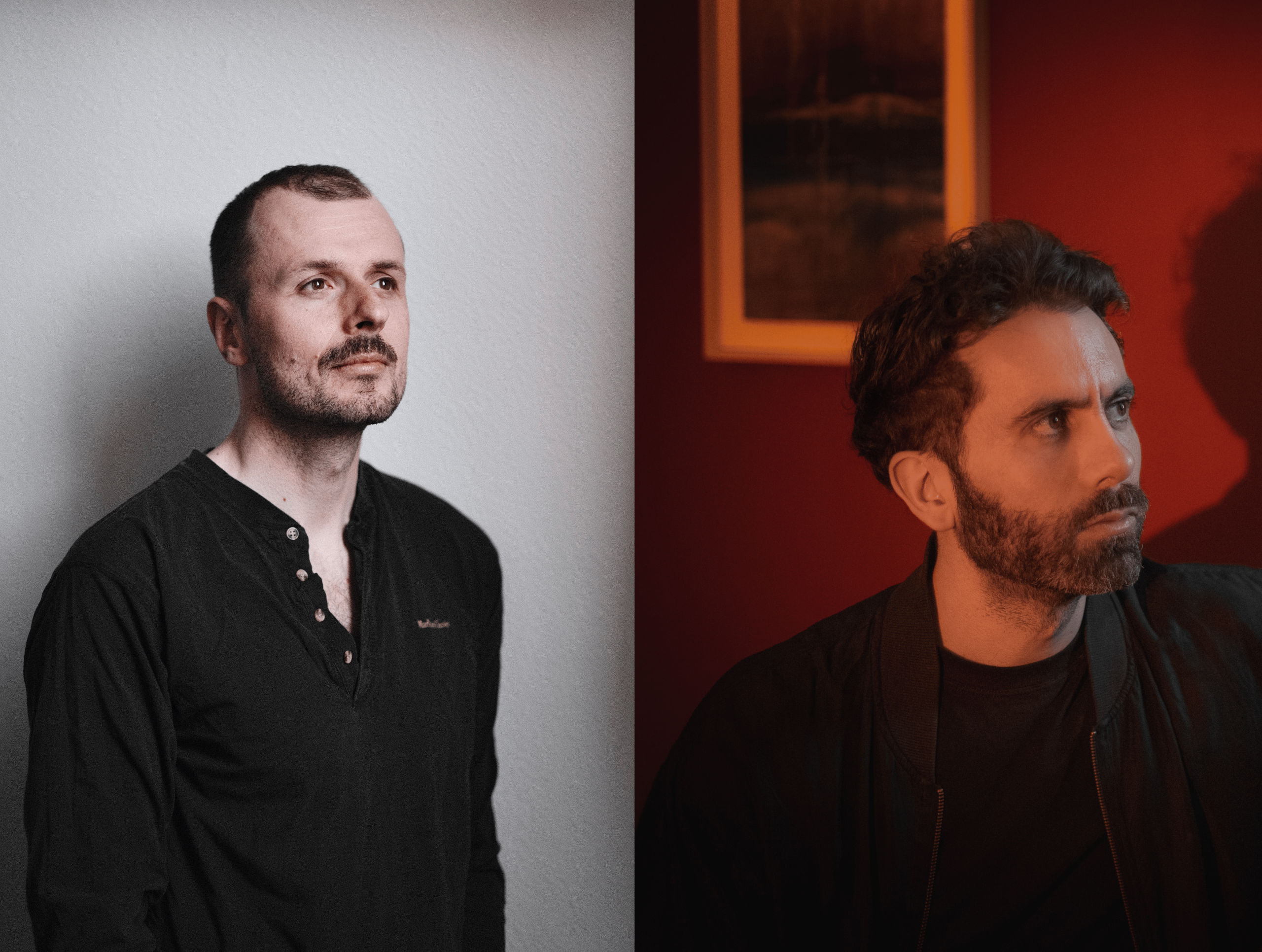
Jean Daniélou & Camille El Bacha
Sociologue, Musician
March - April 2027
- Literature
- Houston
“Following oil : A petroleum soundscape is an interdisciplinary exploration of the acoustic dimension of fossil fuel infrastructures, aiming at turning petroleum into a tangible sonic experience.”
We are Camille El Bacha, a musician, and Jean Daniélou, a sociologist. Our collaboration grew out of a shared desire to move beyond the boundaries of our respective disciplines in order to better grasp the sensory dimension of the oil infrastructures that sustain Western ways of life.
In his musical practice, Camille was looking for sonic materials capable of reflecting our contemporary condition. He sought to disrupt music’s seemingly symbolic abstraction by developing a field-based approach: using the sounds of everyday situations to create a documentary resonance of human activity. For his part, Jean was seeking a way to move beyond scientific demonstration and written analysis in order to examine the role of oil infrastructure in the organization of our societies.
Our project extends these questions to Texas by bringing our disciplines into dialogue and developing a sonic, sociological, and sensory investigation of oil infrastructure.
Jean Daniélou is a sociologist whose research focuses on energy infrastructure and globalization. He has conducted fieldwork in the Philippines, China, Singapore, India, and the United States. Since 2024, he has been an associate researcher at the Centre de Sociologie de l’Innovation at Mines Paris – PSL. His first book, Sortir du monde fossile (Presses des Mines, 2024), is an embedded study within a multinational energy company. His second book, Incorporated: Frictions, Residues, and Affects of Globalization (Premier Parallèle, 2025), explores the unsettling choreography of human and non-human bodies caught up in global production chains.
A pianist, improviser, and composer trained at the Paris Conservatoire (CNSMDP), Camille El Bacha develops an open-ended practice spanning composition, improvisation, and sonic exploration. In 2025, he received the SACEM Award for Best Original Music at FIPADOC. He has collaborated widely, including with Clara Ysé and Dafné Kritharas, while also exploring electronic aesthetics. His debut solo album on Alpha Classics has received international critical acclaim.
Through our discussions, sound emerged both as a fitting material for capturing fragments of reality and as a tool for exploring—and approaching differently—our understanding of oil infrastructure. Guided by this intuition, we began with the following questions: What kind of sound does an oil field produce? Conversely, what can sound teach us about infrastructure? The acoustic dimension of infrastructure seemed to us to be a blind spot in common representations of these vast technical systems. While iconic images of oil platforms abound, we lack an auditory understanding of them.
Having reached this conclusion, we decided to begin a collaboration grounded in joint research combining fieldwork and sound analysis. More specifically, the project involves “listening” to infrastructure by recording the environments in which it is situated, then using those recordings to create a soundscape album that offers an immersive sonic experience of oil’s different modes of existence. Moving away from visual representations and choosing instead to enter a space filled with sound provides a way to grasp the entanglement of a wide range of elements interacting on an acoustic level—and to reconstruct not a landscape, but a soundscape.
This sonic reimagining of infrastructure could thus produce a generic acoustic framework for a shared industrial event—the extraction and transport of oil—which we would then transform into an audible experience.
Petroleum has turned Texas into a prosperous fossil-fueled state and Texas has turned petroleum into a modern myth. For us, going to Texas means going to the place where petroleum as a myth has been brought to life. The many oil elds active in the region offer a vast playground we want to explore. From oil extraction infrastructure in the Permian Basin to coastal areas where ports like Corpus Christi export oil products worldwide, Texas embodies the complex path of petroleum from underground reservoirs to maritime shipment and is dotted with oil towns – major cities like Houston, of course, but also small towns like Anarene where Peter Bogdanovich’s The Last Picture Show was filmed and which has since become a ghost town, a remnant of a bygone petroleum era. We will follow petroleum throughout its multiple embodiments in these Texan places.
In partnership with

Premier Parallèle
Founded in 2015 by Sophie Caillat and Amélie Petit, Premier Parallèle is a Paris-based publishing house.

Outhere Music
Outhere Music is one of the world’s leading independent producers of classical and contemporary music.

University of Texas