

Célia Houdart
Writer
February - March 2027
- Literature
- Houston


“Stars Were Not, They Say is a research project exploring Karankawa culture: a reflection on the historical fate of this Indigenous community of the Texas Gulf Coast, its cultural legacy of poems, songs, and drawings, and France’s role in the history of its colonization.”
I am a fiction writer, primarily, but also increasingly a non-fiction writer and a writer of hybrid literary forms. I have a particular taste for multidisciplinary adventures. Curiosity guides my choices and my life.
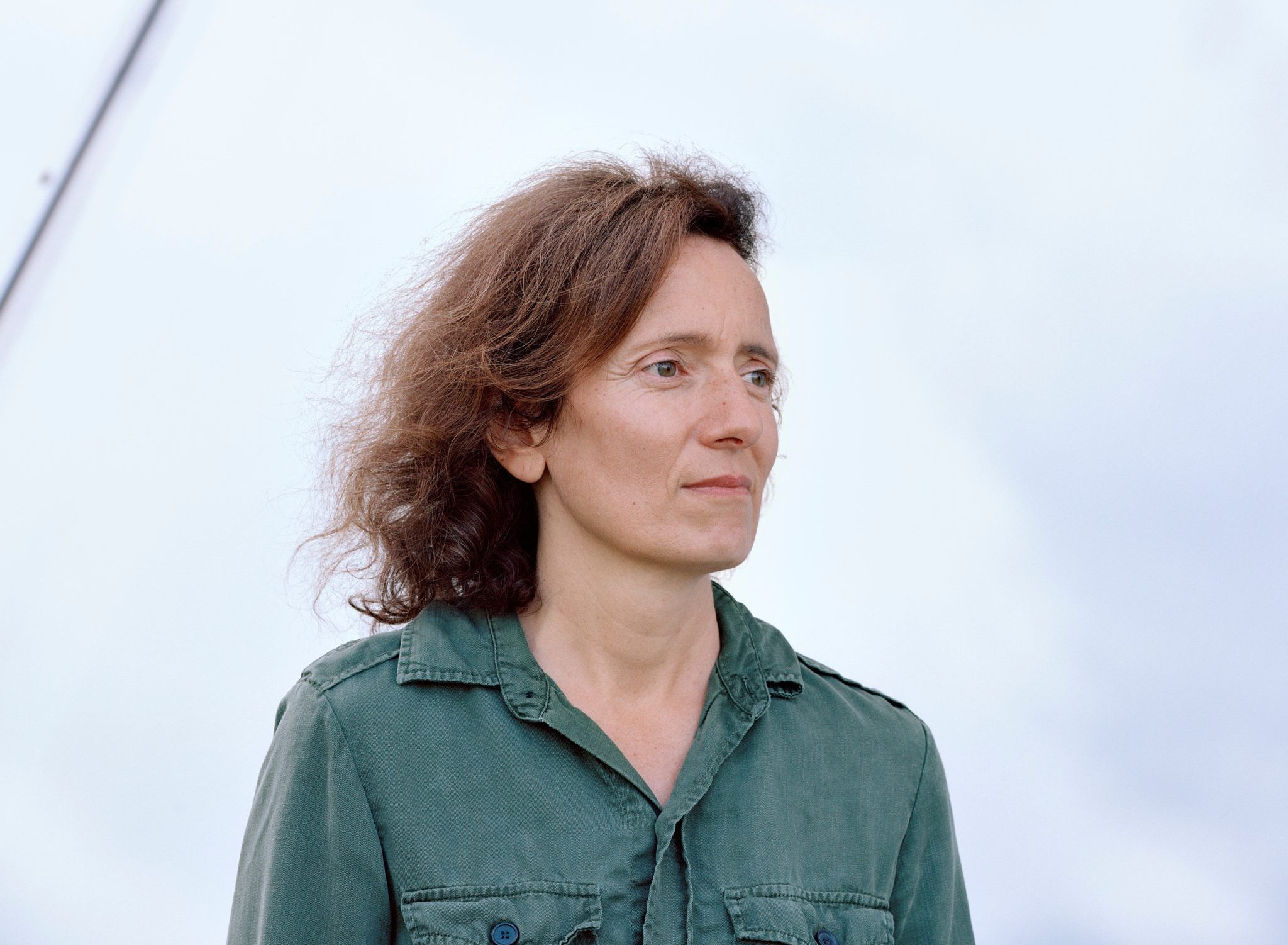
After studying literature and philosophy and spending ten years devoted to theater directing, Célia Houdart turned to writing. She is the author of eight novels published by P.O.L. Her body of work also includes texts for dance, theater, and opera.Célia Houdart has been awarded residencies and grants including the Villa Médicis hors les murs, the Fondation Beaumarchais – Art Lyrique grant, and the Henri de Régnier Prize from the Académie Française for her debut novel. She was also awarded the Orange-SACD Innovative Projects Grant (2010) for Fréquences, an iPhone application, the Françoise Sagan Prize (2012) for Carrare, and the Deauville Books & Music Prize (2015) for Gil (2016). She has been a resident at MAC VAL, the Fondation Jan Michalski, FRAC Franche-Comté in Besançon, Les Correspondances de Manosque, and the BnF. In 2024, she was a recipient of the Simone and Cino Del Duca Foundation – Institut de France residency. In 2025, she received a creative writing grant from the Centre National du Livre for her forthcoming novel Notre-Dame-des-Anges.
Stars Were Not, They Say is a research project exploring Karankawa culture: a reflection on the historical destiny of this Indigenous community of the Texas Gulf Coast, its legacy (poems, songs, drawings), and the responsibility of French colonial history for its fate.
As a young reader, I was deeply moved by Partition rouge, the French translation by Jacques Roubaud and Florence Delay of a collection of Indigenous poems and songs (first published in 1988). The text that gives the volume its title is a manuscript known as the Walam Olum (or “Red Score”), which purports to trace the genesis and migrations of the Algonquian peoples, as well as their views on the arrival of European settlers. More recently, I also read with profound interest Jerome Rothenberg’s Technicians of the Sacred (1968), translated into French by Yves di Manno and republished in a new edition by Éditions Corti in 2025. The book brings together a wide range of poetic and sacred texts from Africa, the Americas, Asia, Europe, and Oceania. It was a major discovery for me and has since become an important reference. The title of my Villa Albertine project is taken from a quotation in Rothenberg’s book: “Fog was not, they say. It didn’t appear, they say. Stars were not, they say. It was very dark. (Cahto [Kato] Indian. Genesis.)” in Technicians of the Sacred.
A few years ago, thanks to a radio program about Henri Castro, I began to question France’s role in the colonization of Texas. French involvement in the colonization of Texas began in 1685, when Robert Cavelier de La Salle set out to establish a colony near the mouth of the Mississippi River. French and Spanish colonization, followed by the arrival of white Anglo-American settlers, had devastating consequences for the Karankawa peoples. The Karankawas were Indigenous peoples who had lived for centuries in southern Texas, along the coast of the Gulf of Mexico. They consisted of several independent, semi-nomadic groups who shared a common language and rich cultural traditions. They were massacred, displaced, and dispersed through successive waves of colonization and settlement. Many also died from diseases against which they had little or no immunity. By the late nineteenth century, the Karankawas were widely considered to have ceased to exist as a distinct people. Today, however, individuals and groups claim Karankawa descent. As historian Tim Seiter writes, “instead of being ‘extinct’ as previously said, the Karankawas persistently survive.”
I would like to meet Karankawa descendants and translate, with them or with the help of specialists, Karankawa texts, poems, and carved inscriptions into French.
I am conscious of the power of stereotypes and of the ways in which cultural appropriation can be harmful. I am neither a savior nor a “beautiful soul.” Absolutely not. But I would like to try something, as a French woman and a white writer: an exploration of what remains of this culture—its poetry and language. As a writer, I also consider myself a translator. An ear. An echo.
My research will take the form of interviews, note-taking, translation, transcription of drawings, and a diary documenting this experience. It will also result in a French-language edition of selected translated poems.
Houston. Tyler, Coastal Bend.
In Houston, I would like to explore archives containing poems, recordings, photographs, and studies relating to the Karankawa peoples, and have the opportunity to hear them narrate their own history, in order to gain a deeper understanding of the tribe’s past and present.
In Tyler, I would like to meet Tim Seiter, Assistant Professor of History at the University of Texas. A historian of colonial Texas, he is currently writing a general history of the Karankawa peoples of the Texas Gulf, entitled Persistent Peoples.
In the Coastal Bend, I would like to visit a nature park and museum near the city of Victoria to see paintings and engravings, as well as carved inscriptions, pictographs, and petroglyphs.
In partnership with

Editions P.O.L
P.O.L is an independent French publishing house founded in 1983, known for publishing contemporary literature, including fiction, poetry, and experimental writing.