

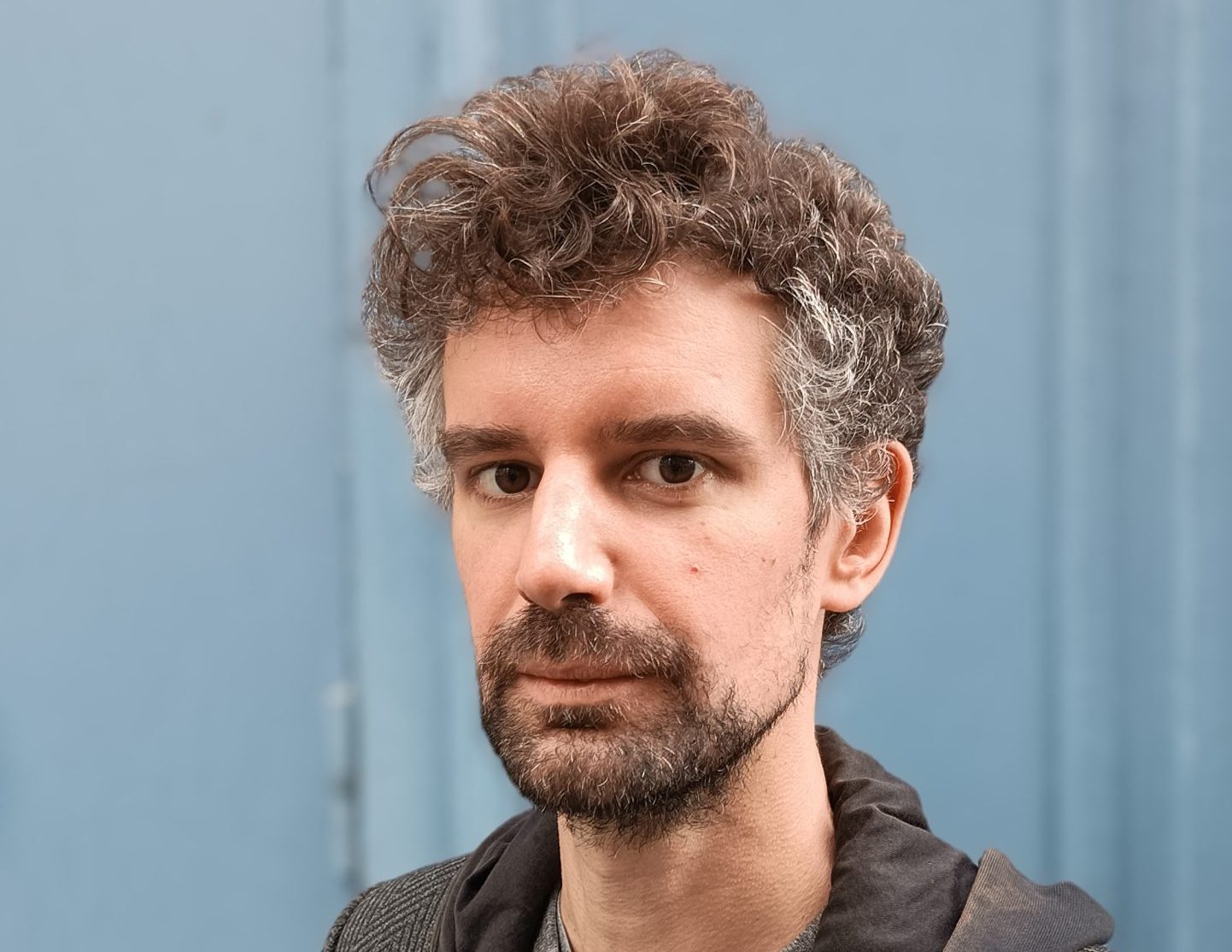
Romain de Becdelièvre
Author of podcasts and playwright
March-April 2027
- New Media
- Atlanta
“What happened on the site of Lake Lanier before it was submerged? What lies beneath its waters? What stories does it reveal, or conceal? Lake Lanier is haunted by American history, and in its shadowy depths, ghosts emerge.”
I am interested in stories and legends, and in the ways voices tell and (de)construct them. For several years, I have been making documentary podcasts that draw on a range of forms of audio storytelling. Artist portraits: comedian Lenny Bruce, writer Joseph Kessel, fashion designer Coco Chanel, and rapper The Notorious B.I.G. Documentary series exploring popular cultures and contemporary arts: stand-up comedy and the worlds of fantasy. Most recently, I conducted a historical investigation into an ancestor who was not guillotined during the French Revolution…
Alongside this, I work as a dramaturg for two theater companies. With Collectif 49701, we adapted Alexandre Dumas’s The Three Musketeers into an anachronistic theatrical series, performed outdoors over six seasons. With the company Manger le soleil, we have worked with texts by Jean Giono, creating traveling and site-specific performances in landscapes, accompanied by an extensive collection of recorded testimonies from farmers about life and working the land.
Romain de Becdelièvre is a documentary maker at France Culture and a dramaturge for the theater companies Collectif 49701 (Les Trois Mousquetaires, la série, based on Alexandre Dumas) and Manger le soleil (Que ma joie demeure and Prélude de Pan, based on Jean Giono, and Manières d’être vivant, based on Baptiste Morizot).
My project in Atlanta aims to sketch a fragmented sound portrait of Georgia’s largest lake, Lake Lanier, located in Forsyth County, northeast of Atlanta. It was artificially created to supply a dam built in the 1950s on the Chattahoochee River. Lake Lanier conceals a part of Georgia’s history: a town once stood beneath its waters, known as Oscarville. According to local historians, the town had a predominantly Black population, including Black landowners. In 1912, Black residents were forced to leave the town following lynchings, the dynamiting of homes, and other acts of violence.
What happened on the site of Lake Lanier before it was submerged? What lies beneath its waters? What stories does it reveal, or conceal? Lake Lanier is haunted by American history, and in its shadowy depths, ghosts emerge. Numerous horror stories, tales of the supernatural, and rumors of drownings surround the site. I want to revisit this place by creating a new sound-based work grounded in a multidisciplinary approach.
Lake Lanier is not what it appears to be. It looks natural, but it is man-made. It seems peaceful and geared toward tourism, yet it embodies a geographical form of violence and has become a contemporary local myth. The idea is to make this silent body of water speak.
My project involves conducting an investigation around and on the waters of the lake, bringing together perspectives and stories that are usually kept separate. I plan to meet with residents of the surrounding communities, hikers, historians, naturalists, and even non-human inhabitants, creating points of friction between the present and the past, facts and rumors, history and fiction, the natural sciences and the social sciences. Do local residents know the area’s history? How can historians respond to the rumors? In what ways can horror stories shed light on history and its violence?
In partnership with

France Culture
France Culture is Radio France’s public-service cultural radio station, dedicated to sharing knowledge, ideas, and creative work.