

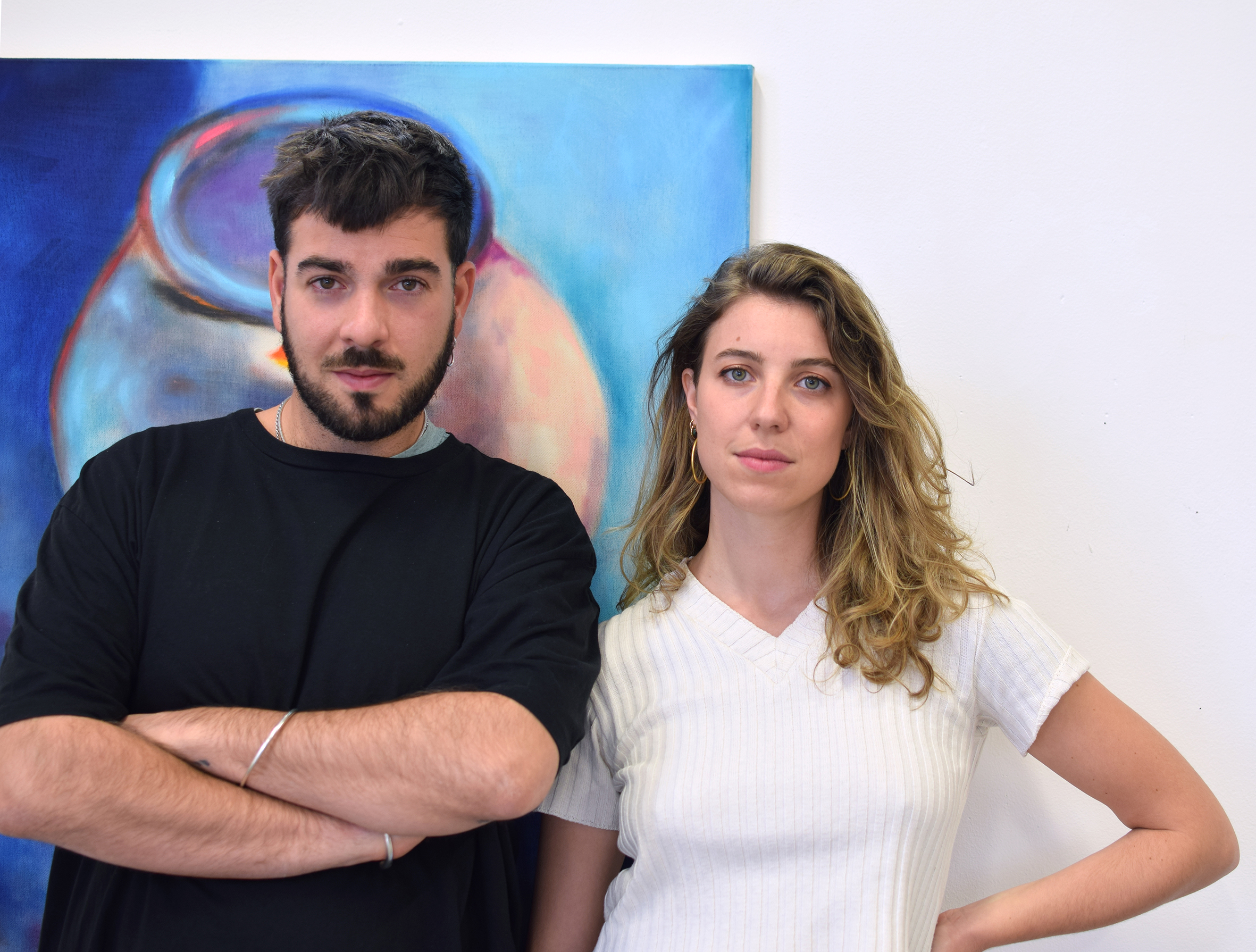
Candice Chemel & Raphaël-Bachir Osman
Artists
Spring 2027
- Gastronomie
- New Orleans

“By gathering food and words in Louisiana, we explore how culinary practices, memories, and stories travel across generations, turning food into a language and conviviality into an artistic practice.”
Our artistic duo explores ideas of mixture, blending, and cultural métissage at the intersection of art and food. Our practice was born from a shared desire to dissolve boundaries between artistic and culinary gestures, and to consider food not only as nourishment but as a language—capable of carrying memory, images, emotions, and social relations.
Through painting, performance, installation, writing, conversation, and shared meals, we investigate ways of being together and producing collective meaning. At the core of our work lies the meal-performance, conceived as a choreography that unfolds through close observation of a territory, encounters with its landscapes and inhabitants, the gathering of ingredients, and the intimate space of preparation. The shared meal becomes a site of exchange, transformation, and transmission, where stories, memories, fragments of history, and present conversations circulate freely.
We conceive food as a system of communication: a vocabulary of gestures, images, and rituals. Our work seeks to activate a form of culinary speech nourished by inherited narratives and contemporary voices. This approach also dialogues with the history of painting, particularly genre scenes, still lifes, and representations of food as a form of social theater. We consider the table as a pictorial landscape where colors, textures, objects, and gestures compose a living image in constant transformation.
Our project in Louisiana extends this research. By engaging with a territory shaped by encounters, migrations, and reinventions, we wish to explore how food and language intertwine to transmit personal and collective memories, and how these traces can be transformed into artistic and performative forms.
Candice Chemel and Raphaël-Bachir Osman develop a multidisciplinary practice combining visual arts, performance, publishing, and culinary research. Through meal-performances, installations, writings, and collaborative projects, their work explore the connection between food, memory, territory, and transmission. Rooted in encounters and participatory processes, their projects bring together oral histories, vernacular knowledge, and contemporary artistic practices.
Their research investigates food as a language and a medium through which collective narratives, gestures, and memories can be activated, shared, and transformed.
Gathering Food and Words is a research and artistic project rooted in encounters in Louisiana, shaped by culinary practices, relational aesthetics, and the intergenerational transmission of memories held at the table.
At the heart of the project is the idea that food operates as a living archive through which histories are preserved, transformed, and shared. Louisiana—and New Orleans in particular—offers a unique context shaped by centuries of encounters, displacements, and reinventions.
Our methodology combines observation, conversation, documentation, and artistic experimentation. Throughout the residency, we will conduct interviews, record conversations, gather recipes and oral histories, and develop notebooks bringing together texts, drawings, images, and sensory observations. We conceive this process as a form of listening through which stories emerge from gestures as much as from words.
These oral, sonic, and visual materials will form the raw substance of a polymorphic body of work combining paintings, writings, installations, and performances. They will also nourish a speculative “edition of taste”: a cookbook-art object that reimagines encounters and oral traditions through collected recipes, stories, and gestures, intertwining food and words.
This residency is conceived as a time of listening and experimentation, allowing us to be transformed by encounters and to translate stories into artistic and performative forms. By gathering food and words, we ultimately question the experience of conviviality: what remains after the meal, and how traces—memories, sensations, residues—can become artistic material.
We wish to develop this project in the United States because questions of cultural hybridity, migration, and transmission are deeply woven into everyday life there. In Louisiana, Cajun and Creole cultures emerge from a complex entanglement of French colonial heritage, African diasporas, Indigenous knowledge, Caribbean influences, and American social histories. This layered cultural identity finds one of its most vivid expressions in food.
For our research, New Orleans can be understood as a city shaped by the table, where cooking is inseparable from music, language, ritual, and community life. From neighborhood kitchens to street food stalls and backyard crawfish boils, food functions as a living archive through which memories and stories continue to circulate.
We wish to immerse ourselves in this culinary and social landscape by meeting farmers, fishmongers, cooks, market vendors, foragers, environmental workers, artisans, artists, and residents whose practices are rooted in the region. We are particularly interested in community kitchens, local markets, workshops, cultural institutions, and the landscapes of the bayous and wetlands.
These encounters will allow us to observe how traditions evolve through exchange and adaptation, and how collective memory is transmitted through everyday gestures. We are especially interested in the ways French culinary traditions have been transformed through contact with other cultures, giving rise to practices defined by resilience, creativity, and métissage.
Being in residence in Louisiana will allow us to develop a form of sensory culinary archaeology grounded in encounters, observation, and shared experiences. It is a place where food and language intertwine, making it an ideal context for our ongoing research into conviviality, transmission, and collective ways of being together.
In partnership with
La Kunsthalle, Mulhouse
La Kunsthalle Mulhouse is Mulhouse’s Centre for Contemporary Art of National Interest. Located in a former industrial foundry, it presents exhibitions, residencies, and projects dedicated to contemporary art, artistic research, and exchange.