Albertine Conversations is a program created by Villa Albertine in partnership with universities and cultural institutions across the United States. Bringing together academics, policy experts, scientists, and community advocates from France and the United States, it explores some of the most pressing questions of our time, with a particular focus on democracy, ecology, history, and emerging technologies.
The Democracy Series focuses on the future of democracy, examining current challenges to democratic values and institutions, whether cultural, legal, economic, technological or environmental.
The Ecology Series centers on our evolving understanding of what constitutes life on earth, and the social and cultural implications of those shifts in the context of environmental crises.
The Emerging Technologies Series interrogates the notion of progress in relation to the fast-evolving fields of AI, digital media, as well as biotechnologies, weighing on the promises and risks each involves.
In 2027, Villa Albertine will launch a new cycle, the Marc Bloch Series, devoted to history and historiography, inspired by the 2026 induction of the French historian and Resistance hero Marc Bloch into the Panthéon. The series will explore the relationship between democracy and historical scholarship while examining major currents of contemporary French historiography.
Albertine Conversations is made possible through the generous support of the Judy and Peter Blum Kovler Foundation, the Andrew Carnegie Foundation, formerly Carnegie Corporation of New York, and the Institut français.
Upcoming Events
City Living: Reimagining Urban Ecology in a Changing World
Oct 13 – University of California, Los Angeles | Oct 15 – Columbia University
See more
Oct. 13 – UCLA: Register here
Oct. 15 – Columbia University: Register here
The conversations at UCLA and Columbia University will explore different ways of effectively integrating ecological considerations into urban planning and design, preserve biodiversity in cities, protect species and their habitats, and transform our built environments and landscapes to address the climate crisis, support the shift to a renewable economy, and grow more vibrant and resilient cities.
With
Éric Daniel-Lacombe is an award-winning architect, urbanist, and geographer. He holds the chair for “New Forms of Urban Living in the Face of Natural Disasters” at the prestigious Villette Architecture school in Paris. He was the co-designer of the French Pavilion for the 19th Venice Architecture Biennale and received numerous awards for his innovative, floodable neighbourhood in the city of Romorantin, started in 2007. He is the author of Vers une architecture pour la santé du vivant (Presses Universitaires de Montréal, 2023) and Inventer l’architecture de l’Anthropocène (Le Moniteur, 2026)
Aminata Niakaté is Deputy Mayor of Paris in charge of green development and the protection of biodiversity. Since 2022, she has served as a national spokesperson for The Ecologists (Les Écologistes), France’s Green political party. She has been a member of the Paris City Council since 2020. Niakaté also serves as a member of France’s Economic, Social and Environmental Council (CESE), a constitutional advisory body that provides guidance on economic, social, and environmental policy issues.
Democracy, Ecology, and the Politics of Change
Nov 9 – Duke University | Nov 11 – Hofstra University | Nov 12 – Columbia University
See more
As we take stock of the devastating fires, droughts and floods affecting countries across the globe, we are also witnessing growing resistance to government-led policies addressing climate change. How can we develop a political ecology that reconnects social justice with ecological concerns? And how can we meaningfully involve those who fear they may lose out from the energy transition in shaping and implementing the policies that will affect them?
The event will explore how ecological and democratic issues intersect, highlighting different perspectives on how best to foster collective action on environmental challenges.
With
Marine Braud, consultant, co-founder of Alameda Sustainability, and a former environmental policy advisor to the French Prime Minister and the office of the President. She is the author of Qui aurait pu prédire ? Leçons de dix ans de politiques écologiques depuis l’accord de Paris
Joëlle Zask, professor of philosophy at Aix-Marseille University. She is one of France’s leading thinkers on participatory democracy and pragmatism. Her work examines the notion of shared culture in relation to topics such as ecology, agriculture, education, politics, and art. She is the author of Participer: Essais sur les formes démocratiques de la participation (Le bord de l’eau Editions, 2011); La Démocratie aux champs (La Découverte, 2016); Quand la forêt brûle (Premier Parallèle, 2019), Zoocities (Premier Parallèle, 2020), Écologie et démocratie (Premier Parallèle, 2022), among other major works
Building Ethical AI: Alignment and Public Trust
Nov 16 – Fordham University | Nov 16 – Brown University | Nov 18 – The University of Texas at Austin
See more
Nov. 16 – Brown University: Register here.
Nov. 18 – The University of Texas at Austin: Register here.
As AI systems become increasingly capable and autonomous, questions about how they are designed, governed, and kept aligned with human values are becoming ever more urgent. This conversation cycle explores AI alignment and the broader ethical, security, and technical challenges raised by rapidly evolving systems, from algorithmic bias, manipulation, privacy, and opaque decision-making to questions of transparency, accountability, and public trust. It will also examine the current and future risks posed by increasingly autonomous AI, the role of governance and regulation in addressing those risks, and the challenge of ensuring that powerful technologies remain under meaningful human control and support, rather than replace, human judgment.
With
Lola Carbonell is co-founder, Secretary General, and Director of International Affairs at the General-Purpose AI Policy Lab (GPAI Policy Lab), a French research organization established in 2024. Based at Campus Cyber in Paris, the Lab focuses on national security and international cooperation in the development of frontier AI models, bridging the gap between cutting-edge technical research and the practical needs of French institutions. Carbonell also teaches at Sciences Po’s School of Public Affairs, where she focuses on the security challenges posed by advanced AI. Previously, she worked in the Europe Program at Institut Montaigne, a leading French public policy think tank. She holds a degree in political science from Sciences Po’s School of Research.
Thomas Klein is an artificial intelligence expert and Director of Technology Strategy at Microsoft, where he advises organizations on the strategic adoption of AI, particularly in healthcare. He is the author of AI for Healthcare and its French edition, L’IA au service de la Santé, which explore the deployment of AI in high-stakes environments while preserving human judgment. A graduate of Télécom Nancy and the University of Leicester, he pursued further executive education at MIT and Harvard. Previously, he served as a city councilor in Suresnes, France, with responsibility for Responsible Artificial Intelligence, leading initiatives to integrate AI into local public services. Based in the United States since 2024, he also serves on the board of French Tech Atlanta.
Past Events
Mending the Living World
Columbia University, Maison Française
January 28, 2026
See more
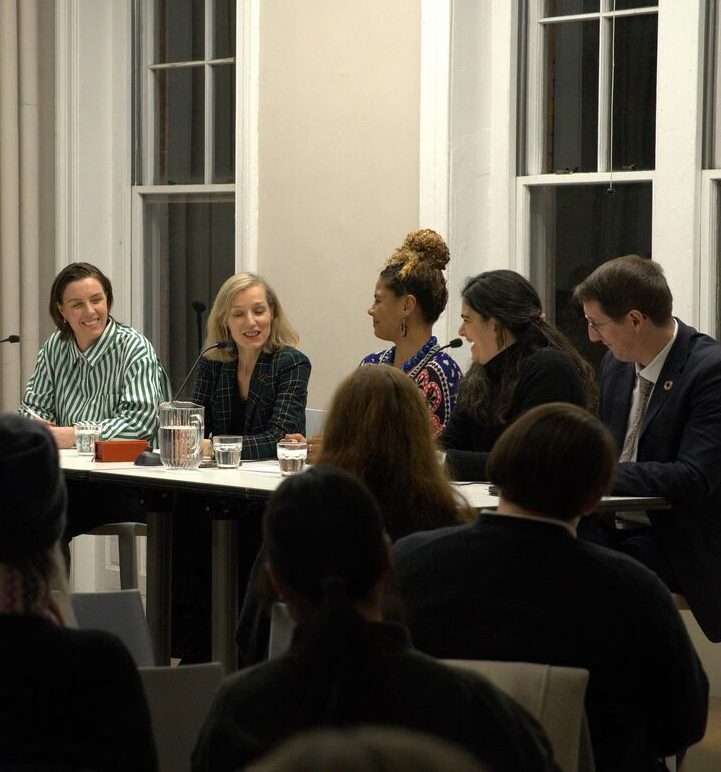
A discussion organized by Villa Albertine, the Columbia Maison Française, the Alliance Program, and the Columbia Climate School.
The inaugural event brought together Corine Pelluchon, a French philosopher whose work examines the moral and political underpinnings of our relationship with the environment; Ana Porzecanski, Director of the Center for Biodiversity & Conservation at the American Museum of Natural History; Cyrille Barnerias, Director of International Relations at the French Office for Biodiversity; and Kristina Douglass, an archaeologist and professor at the Columbia Climate School. The conversation will be moderated by Sarah Sax, an award-winning investigative journalist and researcher specializing in environmental issues.
Together, they reflected on the idea of a “New Enlightenment” for the Anthropocene era. As we confront the decline of biodiversity, the discussion explored emerging forms of interdependence among human, animal, and plant life. How might the ways earlier societies and ecosystems co-adapted to climate pressures inform us today? Can we imagine a new social contract that would bring forth a more equitable coexistence between human and nonhuman worlds? How might an expanded sense of “the other” and a heightened awareness of contemporary vulnerabilities be translated into public policy? How can public engagement be designed to turn these concepts from ideals to actions?
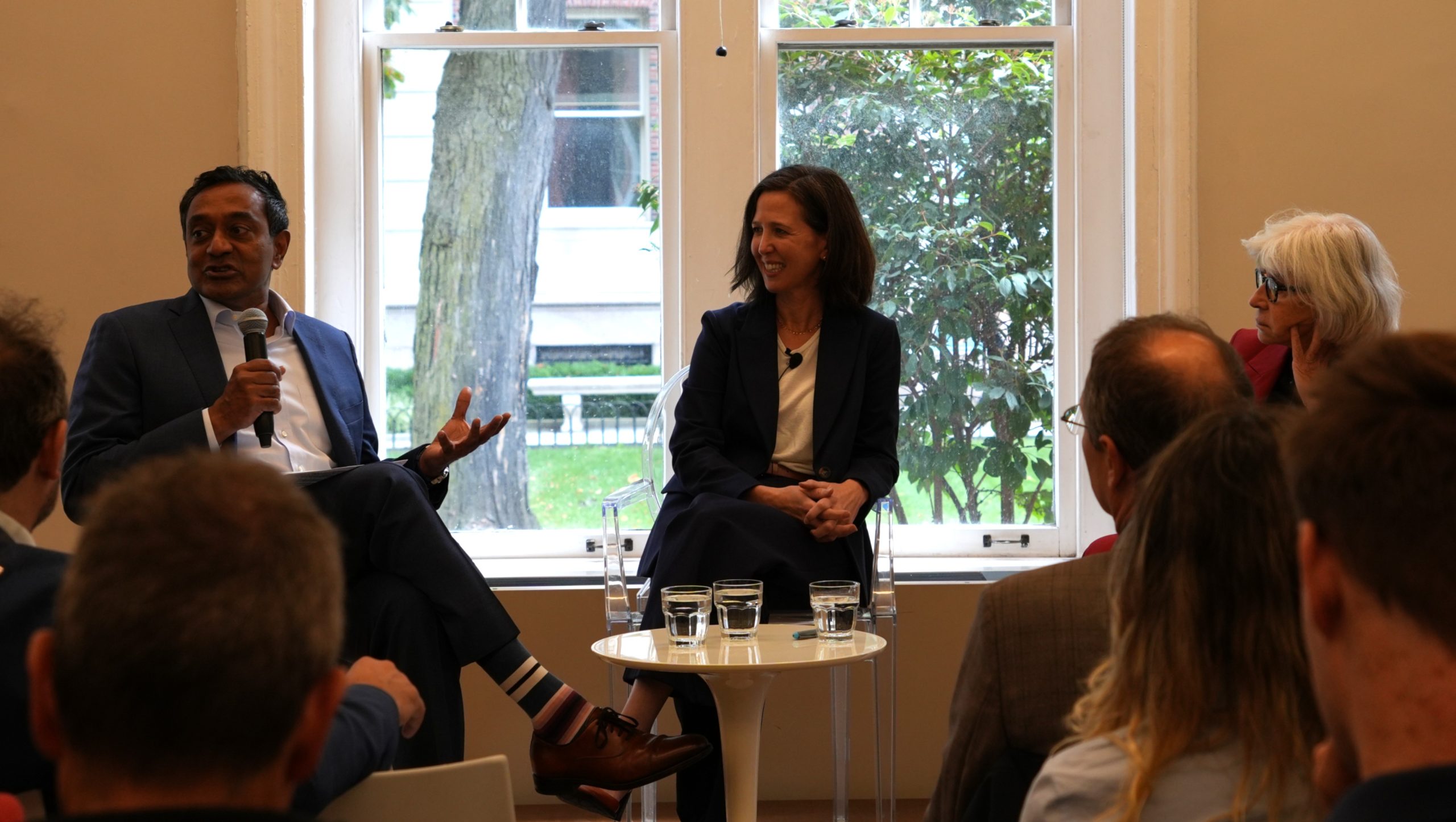
What Is Left of the Paris Climate Agreement?
Columbia University, Maison Française
September 23, 2026
See more
A conversation with Laurence Tubiana and Alexis Abramson, moderated by M. Sanjayan
The Paris Climate Agreement was unanimously adopted by 194 countries in 2015 against considerable odds. The Agreement set an ambitious goal of limiting the global average temperature increase to well below 2°C above pre-industrial levels and pursuing efforts to restrict the increase to 1.5°C. The United States, a major force in the successful ratification of Accord, has since pulled out of the agreement twice, most recently in January 2026.
Can international policymaking still play a significant role in addressing the climate crisis? Laurence Tubiana, Dean of the Paris Climate School at Sciences Po and a primary architect of the Paris Agreement, joined Alexis Abramson, Dean of the Columbia Climate School, to explore how countries can continue to strengthen international cooperation in face of the climate crisis. As the two Climate Schools come together to launch a Dual Master’s in Climate, Tubiana and Abramson asked how multilateral platforms can still be relevant to generate action to combat climate change. Their conversation was moderated by M. Sanjayan, CEO of the New York Climate Exchange.
This event was organized by Villa Albertine in partnership with the Columbia Maison Française, Alliance Program, and Columbia Climate School, and with the participation of the New York Climate Exchange.
With
Alexis Abramson is Dean of the Columbia Climate School and a professor of climate. She is a recognized climate leader and an expert in sustainable energy technologies. Before assuming her role at Columbia in January 2025, Professor Abramson served as Dean of the Thayer School of Engineering at Dartmouth. She also served as Director of Case Western Reserve University’s Great Lakes Energy Institute, where she focused on developing sustainable energy technology solutions. During the Obama administration, she was chief scientist and manager of the Emerging Technologies Division in the U.S. Department of Energy’s Building Technologies Office.
Laurence Tubiana is an economist, diplomat, and dean of the Paris Climate School at Sciences Po. She has served as CEO of the European Climate Foundation since 2017 and was the Special Envoy for Europe at COP30. She was France’s ambassador for the COP21 climate negotiations and co-chaired the French Citizens’ Convention on Climate in 2020. Widely regarded as one of the principal architects of the Paris Agreement, signed in 2015, she also co-founded the Paris-based Institute for Sustainable Development and International Relations (IDDRI) in 2001.
M. Sanjayan is the CEO of the New York Climate Exchange. He is an internationally recognized conservation scientist and a leading public voice on climate. From 2017 to 2025, he led Conservation International, transforming the organization by forging strategic partnerships with leading companies, governments, and philanthropies to advance conservation goals. A scientist by training, he previously served for a decade as lead scientist at The Nature Conservancy. He is also an Emmy-nominated broadcaster and host of award-winning documentaries.