Villa Albertine and Albertine Foundation are pleased to announce the laureates of the first session of the 2025 Albertine Translation program.
Villa Albertine works alongside Albertine Foundation, the Institut français, and the Ministry for Europe and Foreign Affairs to promote French and Francophone literature, and to encourage English-language translations across all genres, including fiction, nonfiction, children’s books, comics, and poetry.
Created in 2022 with the support of the Florence Gould Foundation, the Albertine Translation Fund brings French-language books that highlight the richness and diversity of the contemporary French and Francophone literary landscape to American readers. Grants are awarded by a panel of experts who consider the quality of both the original French-language work and its English translation.
While the majority of these titles have found an American publisher, some remain available for rights acquisition—they are marked with *.
To learn more about the next cycle of the grant and our activities across the U.S., sign up for our monthly newsletter here.
Sign to learn more about French-related events in NYC here.
![]()
Doan Bui, La Tour (Grasset, 2022)*
Fiction
Translated by Ly Lan Dill
See more
Doan Bui’s debut novel is set in Les Olympiades, a large housing complex in Paris’ Chinatown. This is where the Truongs, a family of boat people who fled Vietnam after the fall of Saigon, live. From Victor, who adores Victor Hugo and the imperfect subjunctive, to his daughter Anne-Maï, forty and single after a childhood spent dreaming of being “truly” French, their story unfolds within this modern Tower of Babel, alive with a thousand languages and eccentric figures: an exiled Romanian pianist turned nanny; an undocumented Senegalese reader of Proust and con artist; and a conspiracy-obsessed man convinced he is the reincarnation of Michel Houellebecq’s dog.
Published in 1978, Georges Perec’s Life: A User’s Manual appeared just as Les Olympiades were being built. How would Perec describe the Paris of today? Bui offers explores this question, composing a meticulous portrait of contemporary France, from the 1998 World Cup to the 2015 attacks, rendered with dark, incisive humor.
—
Doan Bui is a journalist and writer. An award-winning reporter for l’Obs, she received the Albert Londres Prize in 2013. Her debut novel La Tour (2022) was shortlisted in Goncourt Premier Roman and Prix Orange, and won the Prix Littérature de l’Exil. The book was also adapted into a multimedia performance. Bui was a 2025 Villa Albertine resident.
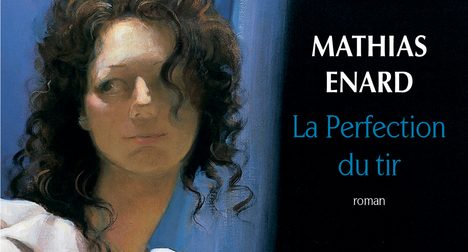
Mathias Enard, La Perfection du tir (Actes Sud, 2023 | New Directions, forthcoming)
Translated by Charlotte Mandell
See more
In his debut novel, the acclaimed author Mathias Énard tells the story of a young sniper who, in the midst of a civil war, becomes obsessed with mastering the art of the perfect shot, his only source of joy in a world overshadowed by cruelty and violence. His life takes a turn when the young Mirna is hired as a domestic helper to care for his ailing mother.
—
Mathias Enard is an award-winning French novelist. He is the author of Compass (winner of the Prix Goncourt, the Leipzig Prize, and the Premio von Rezzori, and shortlisted for the 2017 Man Booker International Prize), The Deserters, The Annual Banquet of the Gravediggers’ Guild, Tell Them of Battles, Kings, and Elephants, among many others. He has spent many years in the Middle East and is also a translator from Persian and Arabic. He currently lives in Barcelona.
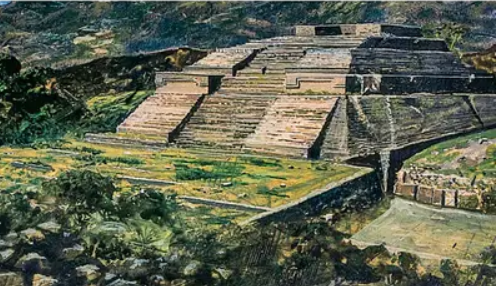
Edouard Glissant, Tout-monde (Gallimard, 1993 | University of Nebraska Press, forthcoming)
Fiction
Translated by Matt Reeck
See more
One-World (Tout-monde, 1993) is an epic, postmodern novel that follows the narrator Mathieu Béluse, the literary avatar of Glissant, through time and space. From Martinique to France, and across the world, the novel outlines a subaltern history of Martinique, writes an auto-ethnographic history of the Caribbean, and projects a world future in which cultural genesis/genius and affiliations are open and not tied to national circumscription. The novel exemplifies Glissant’s ideas about the poetics of relation and extrapolates this trajectory into the idea that would dominate his thinking during the last twenty years of his life, namely, the idea of an interconnected One-World.
The unforgettable female character and spiritual medium Mycéa makes another appearance in Glissant’s work, and Glissant uses the techniques of auto-fiction to include many contemporaries as characters. The work’s impressive scope matches that of famous postmodern novels such as Infinite Jest, Gravity’s Rainbow, and The Underworld. This novel, too, should be considered an integral postmodern novel of the Americas in line with those by Foster Wallace, Pynchon, and DeLillo, as we work to expand the geographic limits of our American cultural interpolations. Its style is serpentine, which embodies the aesthetics of Glissant’s famous “detour” and “drift.” Its tone is in equal proportions poetic, philosophical, and novelistic.
—
Édouard Glissant has been recognized as one of the most important writers and thinkers in the French and Francophone world. Along with other writers from the French West Indies, Glissant inaugurated a radical interrogation of the French literary canon from the margins of the traditionally Paris-centered literary world. Several of his novels and essays have been published in English, including Mahagony (University of Nebraska Press, 2021), The Fourth Century (Bison, 2001), and The Overseer’s Cabin (Bison, 2011).
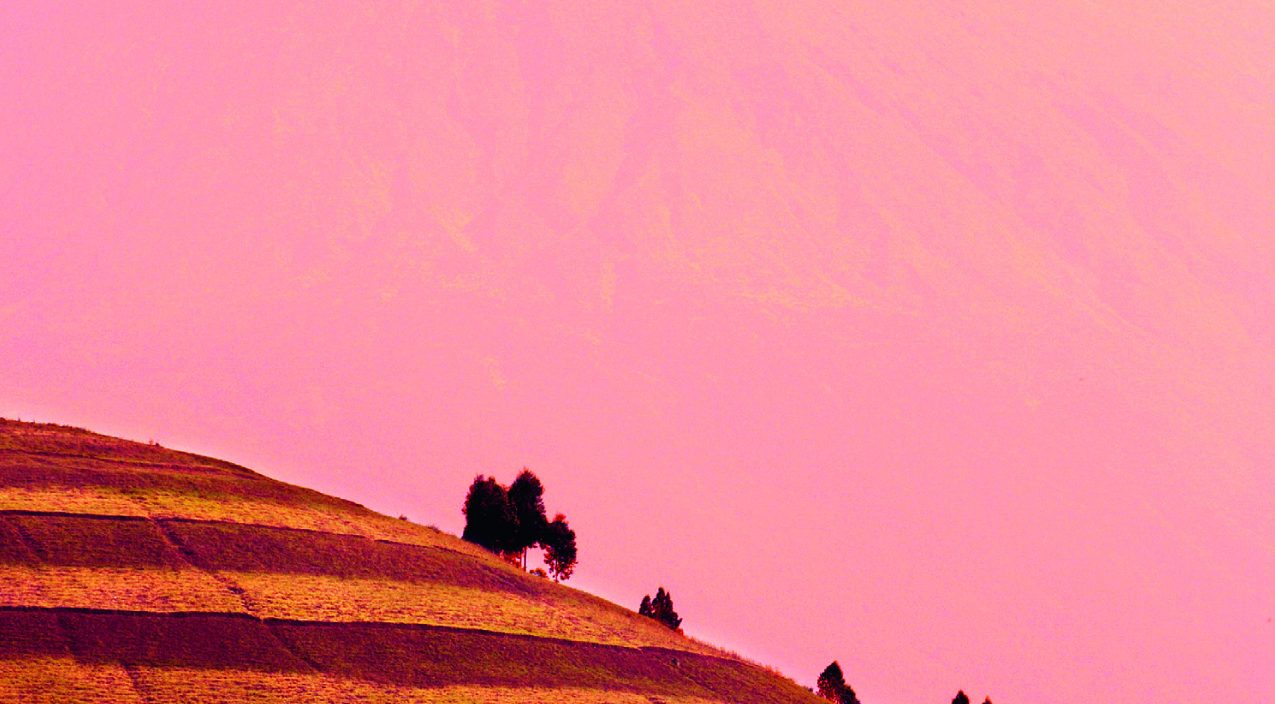
Scholastique Mukasonga, Ce que murmurent les collines (Gallimard, 2014 | Archipelago Books, forthcoming)
Fiction
Translated by Mark Polizzotti
See more
In Murmurs from the Hills, the stories collected teem with detail: from the thin cord that a character Viviane wears around her waist, to the rattling of a black iron bridge that a family must cross, exiled from their home, to the swirls in the murky riverbeds where mothers bathe their children to protect them from danger.
A collection of short stories that showcases Mukasonga’s talents as a weaver of tales. In these stories, she threads memory to memory – culling the depths of her own life alongside tales of the Rwandan people. By parsing through official records, old maps, letters, and newspapers, Mukasonga renders the hillsides of Rwanda as a bright tapestry. Here, Mukasonga deepens and enriches her practice of re-contextualizing old tales which risk falling into oblivion.
—
Born in Rwanda in 1956, Scholastique Mukasonga experienced from childhood the violence and humiliation of the ethnic conflicts that shook her country. In 1960, her family was displaced to the polluted and under-developed Bugesera district of Rwanda, and later forced to flee to Burundi. She settled in France in 1992, only two years before the brutal genocide of the Tutsi swept through Rwanda, killing 37 of her family members. In 2006, Gallimard published her autobiographical account Inyenzi ou les Cafards (Cockroaches), which marked her entry into literature. She is the author of several award-winning novels, memoirs, and short story collections, six of which were previously published by Archipelago Books.

Camille Neveux, Le Verger de Damas (JC Lattès, 2024)*
Fiction
Translated by Maren Baudet-Lackner
See more
Syria, 1995. Seven-year-old Aissa dreads going to school, where violence and state propaganda rule, until he discovers the teachings of a reformist sheikh, awakening him to freedom and human rights. Sixteen years later, he helps lead the uprising that sparks the Syrian Revolution. But a tragic first protest forces him into exile in France, carrying a dark secret.
Lebanon, today. Twelve-year-old Nermine, living in exile across the border, rebels against the conservative society that raised her. When she uncovers a secret on her mother’s phone, she, headstrong like her uncle Aissa, will stop at nothing to uncover the truth haunting her family.
Set against the Syrian Revolution and the Arab Spring, this multi-generational drama explores exile, rebellion, and the enduring weight of family secrets.
—
International correspondent Camille Neveux spent fifteen years covering the Middle East and the Arab world for major French news outlets. She holds a degree in Classical Arabic from INALCO and lives outside Paris with her husband, who grew up in Darayya, Syria, and their three children. An Orchard in Damascus is her first novel—the story of her husband’s family. To
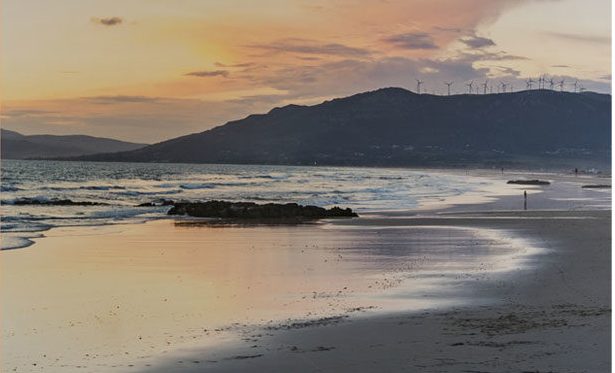
Walid H. Rachedi, Qu’est-ce que j’irais faire au paradis (E. Collas, 2022)*
Fiction
Translated by Alexandra Hudson
See more
When Malek, 17, travels to Lille to visit his cousin Ali, newly arrived from Algeria, he meets Atiq, a young Afghan in exile. Atiq is searching for his twin brother Wassim, hoping to stop him from taking justice into his own hands — against the Americans, against Fate itself.
This encounter awakens in Malek a desire to see the world with his own eyes, to no longer rely on secondhand stories. On his way to the Arab world, in Tarifa, he meets Kathleen, a young Londoner he falls in love with. Her father, a humanitarian worker, disappeared upon returning from Afghanistan. In Paris, Kabul, Granada, London, Algiers, Cairo, it’s always the same story Malek tells and hears: the tale of a fantasized elsewhere that no longer exists, or perhaps never did: nostalgia, a lost Paradise.
Rachedi’s debut novel takes readers on a journey across continents, ending in London, where destinies collide on the eve of the 2004 U.S. presidential election.
—
Walid Hajar Rachedi is a novelist and narrative essayist working across fiction and cultural reportage. Qu’est‑ce que j’irais faire au paradis ? was shortlisted for the 2022 Goncourt Prize in the debut novel category. He is co‑founder and director of Frictions, an online media platform renowned for its long‑form narrative podcasts. Rachedi was a 2025 Villa Albertine resident.
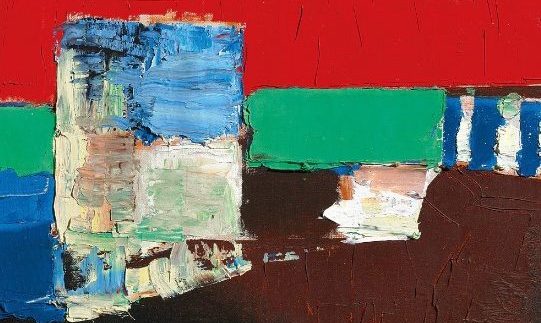
Yves Ravey, Taormine (Editions de Minuit, 2022 | New York Review of Books, 2026)
Fiction
Translated by Alyson Waters
See more
Unhappy couple Melvil and Luisa are on holiday in Sicily in a last-ditch effort to save their broken marriage, but one wrong turn off the highway leaves them stranded in a thunderstorm in the middle of nowhere. The road is muddy, it’s late, they hit something indeterminate in the dark.
The next day, the local newspaper reports that a child from a refugee camp was hit by a car and fatally injured. Melvil and Luisa hasten to find a garage in Taormina to repair their rental and hide evidence of their possible involvement, but the repairs are costlier than expected, the police are sniffing around, tensions between the couple are rising, and soon their money will run out…
An elegantly laconic modern noir, brimming with the darkest of dark humor, Taormina presents a keen-eyed commentary on migration, police corruption, and the mediocrity and self-absorption of the middle class.
—
Yves Ravey has published some twenty spell-binding novels since 1989, for the most part with the prestigious Les Éditions de Minuit. His novel Le drap won the Prix Marcel-Aymé in 2004. He lives in Besançon, France.

I. Backouche, S. Gensburger and E. Le Bourhis, Appartements témoins… (La Découverte, 2025 | Rutgers University Press, forthcoming)
Nonfiction
Translated by Hilary Handin
See more
lPublished in France on the occasion of the 80th anniversary of the end of the Second World War and the return of survivors, this book recounts, street by street, the spoliation carried out by French and German authorities and ratified by the restored French Republic. It tells the story of tens of thousands of Jewish Parisians and tenants who, replaced by non-Jews, lost the right to live in their own homes. The authors reveal the covetousness surrounding these apartments and retrace a little-known history that exposes the complicity of a large part of Parisian society in the disappearance of the Jews.
In twenty-six short chapters and a narrative style grounded in newly discovered archives, this book sheds new light on the Occupation, representing a significant renewal in the study of the Holocaust in France.
—
Isabelle Backouche is a lecturer and Director of Studies of the Urban History Chair at Ecole des hautes études en sciences sociales (EHESS). Sarah Gensburger is a full research professor in political science, a sociologist of memory and an historian of the Holocaust at French National Center for Scientific Research (CNRS) and Sciences Po Paris. Eric Le Bourhis is associate professor at Institute for Oriental Languages and Civilizations (INALCO, Paris) and researcher at the Europe-Eurasia Research Center.

Pierre Charbonnier, Vers l’écologie de guerre (La Découverte, 2024 | Polity Press, forthcoming)
Nonfiction
Translated by Andrew Stephen Brown
See more
Pierre Charbonnier challenges the philosophical foundations of political ecology associated with pacifism and universalism, explaining why peace after 1945 was built at the expense of the environment, and why this peace is no longer sustainable. He argues that are now living in the “ecology of war.”
The daring hypothesis underlying this book is that the only thing more dangerous now than war for nature and climate is peace. He retraces an environmental history of peace that culminated in the current crisis, in which ensuring population security and respecting planetary limits appear contradictory. We are the heirs of an intellectual and political history that has repeated the axiom that creating the conditions for peace requires exploiting nature, exchanging resources, and providing sufficient prosperity for all. In this logic, for envy, conflict, and the desire for war to disappear, it was first necessary to fight against the scarcity of natural resources. We also needed a universal language for humankind: the language of science, technology, and development.
These ideas, rooted in the eighteenth century, found full expression in the mid-20th century, which saw the development of fossil fuel infrastructures, coupled with a pacifist and universalist discourse designed to undermine the causes of war by liberating productivity. What was called “carbon peace” was based on the idea that trade between nations, and in particular trade in energy resources, was necessary to preserve peace. In the 21st century, this paradigm has become obsolete, since we must guarantee peace and security while considering planetary limits.
—
Pierre Charbonnier is a researcher at the CNRS, a member of the Centre d’études européennes, and a Professor at Sciences Po, Paris. His acclaimed book Affluence and Freedom: An Environmental History of Political Ideas was published by Polity Press in 2021.
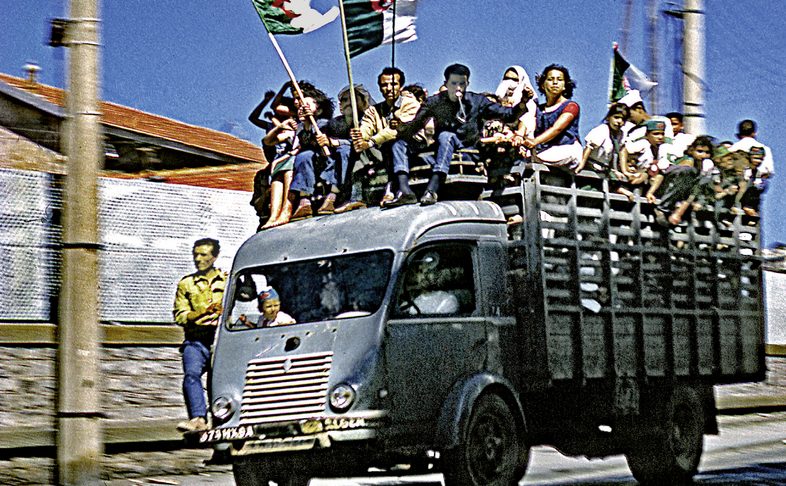
Malika Rahal, Algérie 1962 : Une Histoire populaire (La Découverte, 2022 | Verso Books, forthcoming)
Nonfiction
Translated by David Broder
See more
In Algeria, the year 1962 marked both the end of a war and a difficult transition to peace. Bringing to a close a long era of French colonization marked by violence and alienation, it also saw the emergence of an Algerian state primarily concerned with ensuring its own stability and the survival of its population. While in many formerly colonized countries, 1962 has come to symbolize the year of independence for their peoples, in France it is known above all through the experiences of the pieds-noirs and the Harkis. In Algeria, historiography of the year 1962 has largely been reduced to the political crisis within the FLN (National Liberation Front), which was torn by internal conflicts, while little is known about the experiences of ordinary Algerians who remained in the country at the time.
This book makes an unprecedented and essential contribution to the history of Algeria and its independence, drawing on popular sources and personal accounts to offer a complex and vivid portrait of life in the country at the time.
—
Malika Rahal is a historian specializing in contemporary Algerian history. She is the director of the Institut d’histoire du temps présent in Paris. With Fabrice Riceputi, she launched a research project entitled “Mille autres”, on forced disappearance during the battle of Algiers.
Pierre Rosanvallon, Les institutions invisibles (Le Seuil, 2024 | Polity Press, forthcoming)
Nonfiction
Translated by Catherine Porter
See more
eWe share the instinctive feeling that institutions are an essential part of how our societies operate, mixed with a vague understanding of what they are or how they work. Retracing the long story of our relationship to the concept of “the institution”, the leading historian and political scientist Pierre Rosanvallon focuses on their invisibility, even as they function as vehicles of authority, trust and legitimacy. Institutions address and shape what we have in common, binding economic, social and political needs in durable fashion. But they are invisible in that they are not defined by rules or status, and nor do they have the ability to constrain. Rather, they are built upon the nature and quality of relationships between individuals, or between individuals and organizations. Authority, trust and legitimacy thus intertwine within a system.
Rosanvallon’s conceptual framework broadens the analysis of contemporary societies while situating it within a renewed comparative history. At the same time, it opens up new avenues for action aimed at overcoming the intellectual perplexity and the imaginative dearth that fuel a form of fatalism in which populist illusions thrive today.
—
Pierre Rosanvallon is Professor of Modern and Contemporary History of Politics, Collège de France. His works are dedicated to French political history and democracy, the role of the state and the question of social justice in contemporary societies. He has published widely in English, especially with Princeton University Press, Columbia University Press and Cambridge University Press.
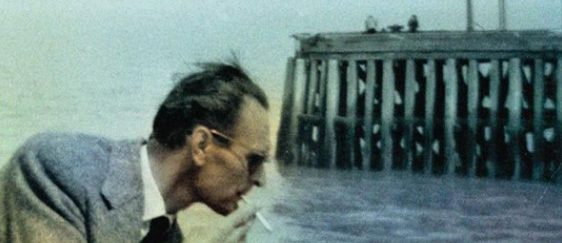
Vanessa Springora, Patronyme (Grasset, 2025 | Polity Press, forthcoming)
Nonfiction
Translated by Jody Gladding
See more
Following the death of her father, who passed away on the day her memoir Consent was published, Vanessa Springora sets out on the trail of family legends, questioning the heritage of her name, fraught with mystery and the unspoken. As she prepares to appear on TV to discuss Consent, she gets a call from the police, who asks her to come and identify the lifeless body of her father, Patrick, whom she had not seen in ten years. Patrick, a toxic and complicated father figure, died an isolated man. While clearing out his apartment, she is shocked to discover photos of her paternal grandfather, Josef, wearing Nazi insignia, a revelation that prompts her to explore this enigmatic parent further. So begins an obsessive quest to understand the story of her Czech grandfather, a member of the Sudeten German minority. From Nazi collaborator to American employee after the Liberation, Josef changed sides, names, and identities, before being granted refugee status in France.
—
Vanessa Springora is a French publisher, writer, and film director. She is the author of the memoir Consent, which recounts the sexual abuse she experienced beginning at age 14 from the author Gabriel Matzneff, then 49. The book became a bestseller and prompted changes to the French age of consent. Born and raised in Paris, Springora holds a degree in Modern Literature from the Sorbonne University. She started her career at the Institut national de l’audiovisuel as a writer and director before joining the publishing world at Éditions Julliard in 2006, where she was named director in 2019.
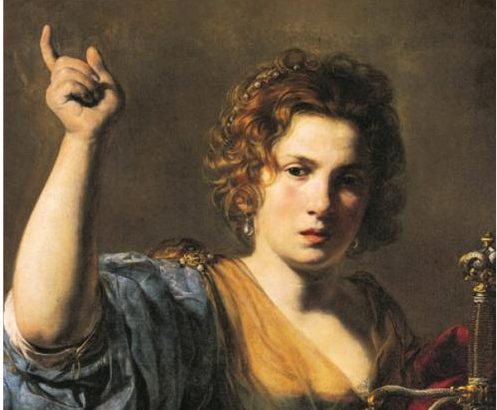
Jennifer Tamas, Au NON des femmes… (Le Seuil, 2023 | University of Delaware Press, forthcoming)
Nonfiction
Translated by Elisabeth Lyman
See more
Nothing seems more incongruous than to draw on the society of the Ancien Régime to think about female refusal. Assigned to the duty of “reserve” by treatises on civility and to silence or “feigned resistance” by codes of seduction, the heroines of classical literature would have nothing to transmit to us, especially not the power to say “no”. However, in their own way, the women of the Grand Siècle resisted, they disobeyed, and traces of these obscured battles remain. Under the images of sleeping princesses celebrated by the entertainment industry are hidden powerful refusals, obscured by centuries of patriarchal interpretations.
Jennifer Tamas unearths them with subtlety, tracking down the expression of the feminine under the male gaze and skillfully listening to the murmurs of recalcitrant voices. Inviting dissident figures from centuries past, from Little Red Riding Hood to Berenice, she invigorates feminist discourse and finds in Marilyn Monroe the secret of Helen of Troy. She thus reveals, not without a touch of irreverence, a magnificent tradition, too long silenced.
—
Jennifer Tamas is an Associate Professor of French at Rutgers University. She holds a Ph.D in French Literature from Stanford University and a PhD in French Stylistics from Paris-Sorbonne University. She specializes in early modern theater and gender studies, examining how classical culture influences contemporary social norms. She is the recipient of the 2025 Presidential Outstanding Faculty Scholar Award at Rutgers University.
Hélène Gaudy, Je Veux Manger Mon Frère (Éditions Cambourakis, 2023 | Levine Querido, 2025)
Children's Literature
Translated by Julia Grawemayer
See more
It’s dinnertime at Oskar’s house, and his parents have lots of luscious suggestions: chicken skewers? A peanut stew? Maybe he’d like a shrimp ragout?
But Oskar would prefer something off the menu — he wants to eat his brother!
With lush illustrations from Simone Rea, Hélène Gaudy’s tale is a charming read-aloud packed to the gills with wordplay that’s perfect for bedtime.
—
Hélène Gaudy has written five novels (including Un monde sans rivages, selected for the 2019 Goncourt Prize, and Archipels, finalist for the 2024 Goncourt Prize), and several children’s books. The illustrator Simone Rea graduated from the Academy of Fine Arts in Rome, specializing in illustration. He has taken part in various exhibitions and competitions in Italy and abroad.
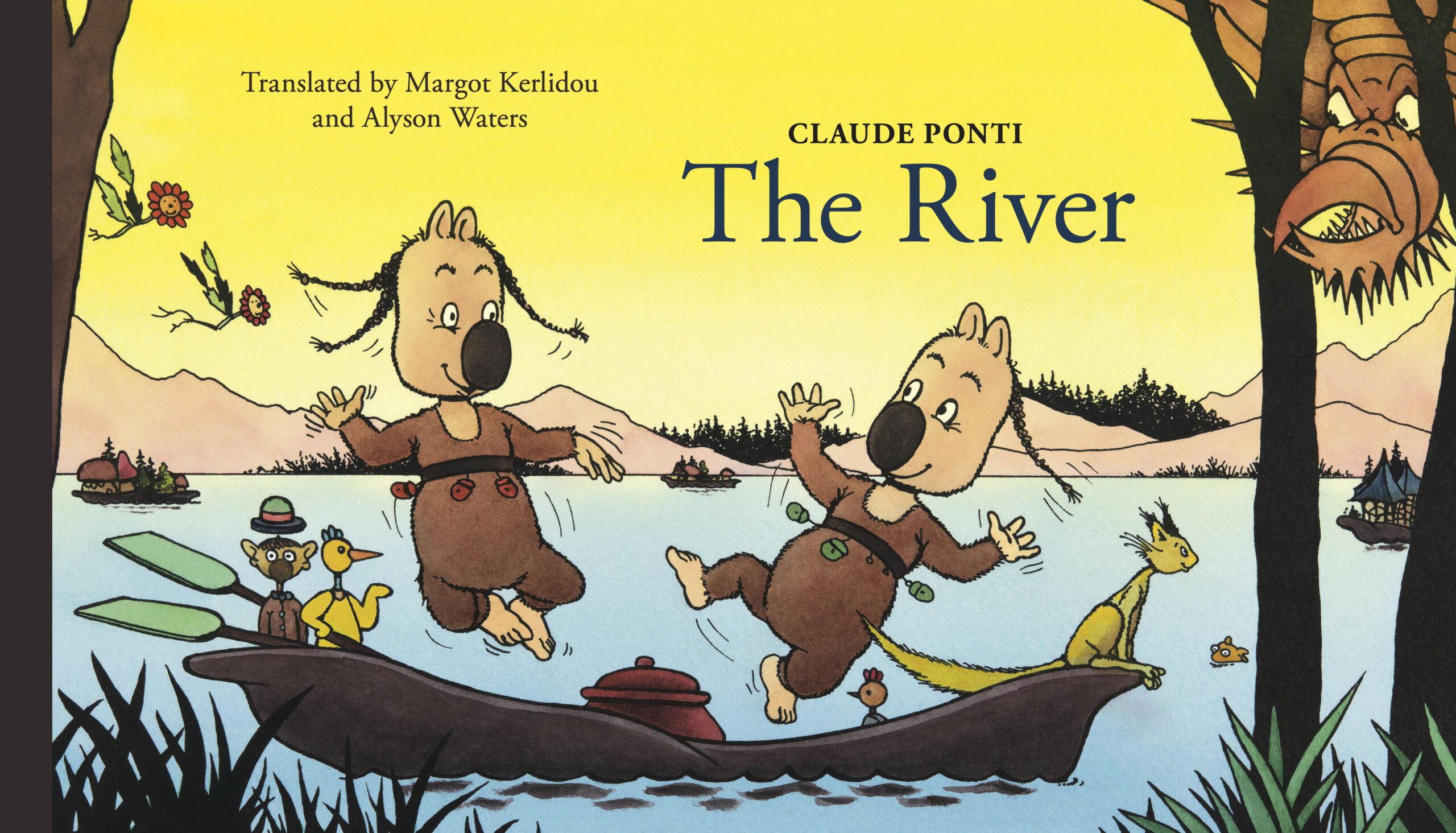
Claude Ponti, Le Fleuve (L’Ecole des Loisirs, 2018 | Elsewhere Editions, 2026)
Children's Literature
Translated by Margot Kerlidou and Alyson Waters
See more
In two floating villages on the river Longo live the Oolongs and the Dongdings, sailing where their whim or the current takes them. The Oolongs are known for the delicious roots, fruits, and flowers they gather; all day long, they harvest fidgetpeas and flexipods, feverlily stems and liverleaves. The Dongdings pick healiherbs, and prepare powerful potions that help them feel their best. For Lu Cha (an Oolong boy) and Ali Roo (a Dongding girl), life on the Longo is chockfull of charm… but somewhere, far beyond the shiverbanks and the boobam brambles, all is not what it seems.
In Claude Ponti’s wonderfully detailed illustrations and sparkling wordplay, young readers will find a faraway world of pleasure, fright, and friendship.
—
Claude Ponti is one of France’s most celebrated children’s writers and illustrators. His works create captivating fictional universes through wordplay and illustrations of incredible detail and beauty. Ponti found his vocation as a children’s author with the birth of his daughter, Adèle, for whom he created his first picture book, L’Album d’Adèle. He has since won numerous awards, including the 2006 Prix Sorcières Spécial for his lifetime achievement.
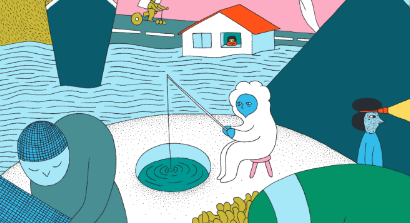
Delphine Panique, Creuser Voguer (Cornélius, 2023 | New York Review Comics, forthcoming)
Graphic Novels
Translated by Devorah Fischler
See more
Delphine Panique’s graphic novel tells the story of migrant workers, women who do labor no one else wants to, far from their homes and families. In ten stories, each representing its own journey, Delphine Panique introduces us to an unfamiliar world whose customs and workings, however quaint they may seem, ultimately reflect the structures of our own society and the ways it wears down the people who sustain it. Flippa, Plopine, and Raoula each have their own story, yet they are united in their experience as seasonal workers, which takes them away from homes and families for months at a time. Unseen, unacknowledged, and unprotected, they are the invisible women whose fate most people are indifferent to. Still, a life force guides them, from which emerges pride, affection, solidarity, and sometimes revolt.
With deliberately understated means, Delphine Panique makes tangible the most complex joys and sorrows, the subtlest emotions. Avoiding heavy-handedness or spectacle, she offers a moving portrait of women whose labor is disregarded by society, but whose humanity remains stubbornly alive.
—
Delphine Panique has been publishing comics and graphic novels since 2013. Her work is known for its unique departures from realism and perceptive treatment of gender. Panique’s most recent full-length graphic novel, Creuser Voguer, was a 2023 Official Selection of the Angoulême International Comics Festival and continues to garner critical acclaim. Creuser Voguer is her first book translated in English.